Jackpot Jill payment methods and withdrawals
 Available in US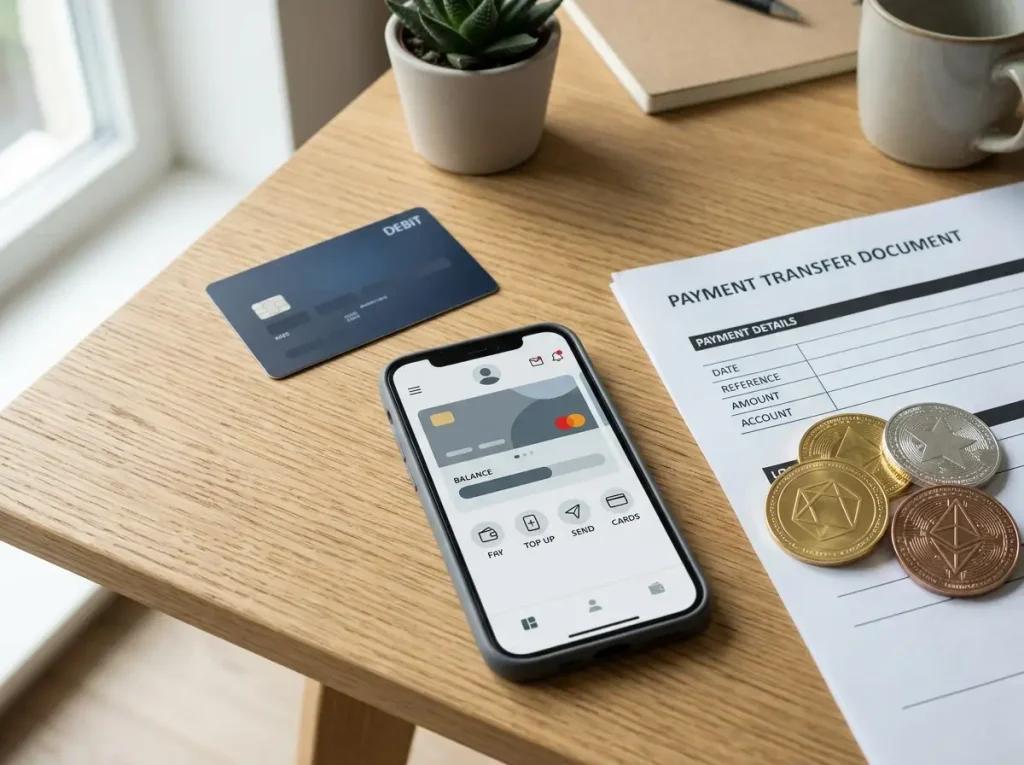
Jackpot Jill combines conventional payment rails with cryptocurrency options. The current payment picture includes Visa, Mastercard and bank transfer, with Neosurf also listed independently, EzeeWallet promoted by the brand, and five cryptocurrencies: Bitcoin, Litecoin, Ethereum, Dogecoin and Bitcoin Cash. AUD is one of the listed account currencies alongside CAD, EUR and NZD. A withdrawal cap of AUD 10,000 per week is the clearest hard cashout limit for planning larger balances.
Table of Contents
- Verification can be part of withdrawal checks
- The known withdrawal cap is AUD 10,000 per week
- Bitcoin, Litecoin, Ethereum, Dogecoin and Bitcoin Cash are listed
- AUD sits alongside CAD, EUR and NZD
- Fiat, wallet and crypto methods cover several payment rails
- Common questions about Jackpot Jill payments
- A broad payment mix with a defined weekly withdrawal cap
Verification can be part of withdrawal checks
Payment access and account verification intersect most clearly at the withdrawal stage. Jackpot Jill uses identity and document checks as part of its account and cashout process. The practical point is that a withdrawal can trigger or depend on identity checks, so account details and payment ownership need to be consistent before a cashout is requested.
That makes preparation more useful than guessing how long a cashout will take. A reader can make sure the name and personal details on the casino account are consistent with the payment account, keep clear copies of identity documents available where appropriate, and respond carefully to requests shown inside the account. The separate account verification guide covers the KYC process and the brand’s account controls in more detail.
- Check that the payment account and casino account details belong to the same person.
- Review any verification request inside the account before resubmitting a withdrawal.
- Keep transaction references and copies of support conversations if a cashout is delayed.
- Treat any request for credentials, passwords or wallet seed phrases as unsafe; legitimate verification should not require those secrets.
Crypto introduces an additional operational step because blockchain transfers are normally irreversible. A wrong address or wrong network can create a loss that cannot simply be charged back. For any crypto transfer, use the exact network shown in the live cashier and wallet interface rather than infer one from the coin name alone.
The known withdrawal cap is AUD 10,000 per week
The listed maximum withdrawal amount is AUD 10,000 per week. That is the most useful concrete cashout figure because it changes how a larger balance may need to be planned and how many capped withdrawal cycles may be required for a high balance.
A simple example shows the practical effect. If a player has AUD 24,000 available for withdrawal and the weekly cap applies to that balance, no more than AUD 10,000 could be withdrawn in the first week and another AUD 10,000 in the second, leaving AUD 4,000 for a later week. This is arithmetic based on the stated weekly cap, not a prediction about approval time or the exact calendar used by the cashier.
| Example balance | Maximum under AUD 10,000 weekly cap | Balance remaining after one capped week |
|---|---|---|
| AUD 6,000 | AUD 6,000 | AUD 0 |
| AUD 10,000 | AUD 10,000 | AUD 0 |
| AUD 14,500 | AUD 10,000 | AUD 4,500 |
| AUD 24,000 | AUD 10,000 | AUD 14,000 |
The weekly ceiling is therefore most relevant to larger balances. For smaller withdrawals, method availability and verification may matter more than the cap. For larger withdrawals, the cap can extend the number of withdrawal cycles even when every individual request is accepted. The example is only cap arithmetic; actual review and transfer timing remains a separate operational question.
Cashout planning is easier when the cap is treated as a capacity limit rather than a speed estimate. A weekly maximum tells you how much can fit within one cap period; it does not tell you when a request will be reviewed, when verification may be requested or when funds will reach a bank, card, wallet or blockchain address. Keeping those concepts separate prevents a mathematical example from becoming an unsupported promise about timing.
Bitcoin, Litecoin, Ethereum, Dogecoin and Bitcoin Cash are listed
Jackpot Jill lists five cryptocurrency options: Bitcoin (BTC), Litecoin (LTC), Ethereum (ETH), Dogecoin (DOGE) and Bitcoin Cash (BCH). This gives crypto users several asset choices, but a coin list by itself does not define the network used for every transfer or the fee charged by a wallet or blockchain at a particular moment.
For practical use, three variables should be kept separate. The first is the amount of cryptocurrency being transferred. The second is the network fee, which can change independently of the casino and may be charged by a wallet or network. The third is price movement between the time value is measured in AUD and the time the transfer or withdrawal is completed. A transfer can therefore arrive with a different AUD-equivalent value even when the coin quantity itself is unchanged.
- BTC: use the exact deposit address and network instructions shown for Bitcoin.
- LTC: confirm that the destination is a Litecoin address before sending.
- ETH: do not assume a particular token network or bridge if the cashier does not specify it.
- DOGE: check address details carefully because crypto transfers are generally irreversible.
- BCH: distinguish Bitcoin Cash from Bitcoin addresses and instructions.
These cautions explain why a payment method can be supported while the exact cost of using it still depends on the user’s wallet, network conditions and the cashier instructions shown at the time of the transaction.
For a crypto deposit, the safest operational habit is to copy the destination address from the cashier, compare the first and last characters after pasting, and verify the network instruction before sending. A small test transfer can reduce address-entry risk when a wallet permits it, although it also creates another network fee. For withdrawals, the same address discipline applies in reverse: the destination wallet must be able to receive the exact asset and network selected in the cashier.
AUD sits alongside CAD, EUR and NZD
AUD is listed as one of Jackpot Jill’s supported currencies, together with CAD, EUR and NZD. For an Australian-dollar user, selecting or holding a balance in AUD can simplify mental accounting because deposits, balances and withdrawals can be compared without converting every figure back from another fiat currency. It does not remove crypto volatility where a crypto asset is used as the transfer rail.
Currency choice also matters when a bank card or account is denominated differently from the casino balance. A card issuer, bank or wallet may apply its own conversion rate or charge where currency conversion occurs. The practical check is to compare the account currency, the payment method currency and the amount shown before confirming a transaction.
For crypto, the distinction is sharper: the casino may display an AUD-equivalent value while the actual transfer is denominated in BTC, LTC, ETH, DOGE or BCH. That means the fiat reference can move with the market value of the asset. Anyone using crypto for gambling should treat that volatility as an additional money risk on top of gambling losses.
Fiat, wallet and crypto methods cover several payment rails
The known methods form four practical groups: bank cards, bank transfer, prepaid or wallet-style options, and cryptocurrency. Visa and Mastercard are the conventional card routes. Bank transfer provides a direct banking rail. Neosurf appears in the independent payment profile, while EzeeWallet is promoted by the brand. The crypto list adds BTC, LTC, ETH, DOGE and BCH.
| Rail | Known methods | Currency context | What to check before use |
|---|---|---|---|
| Cards | Visa, Mastercard | AUD, CAD, EUR, NZD listed at account level | Name matching, issuer rules and any conversion shown by the payment provider |
| Bank | Bank transfer | Fiat | Account details, reference information and any bank-side charges |
| Prepaid / wallet | Neosurf, EzeeWallet | Depends on the method and account currency | Whether the method is offered for the transaction type in the live cashier |
| Crypto | BTC, LTC, ETH, DOGE, BCH | Crypto with AUD-equivalent value changing over time | Address, network instructions, network fee and price movement |
The matrix focuses on the payment rails, listed currencies and the weekly withdrawal cap. Transaction-specific conditions should be read in the live cashier before a deposit or cashout is submitted.
Method choice can therefore be reduced to a practical checklist rather than a ranking. Decide whether you want fiat or crypto exposure, confirm that the method appears for the transaction you are making, check the account currency, and review any provider-side conversion or network cost before confirmation. If a withdrawal is materially larger than AUD 10,000, include the weekly cap in the plan from the start rather than treating it as an afterthought.
Different rails suit different operational priorities. A card can be familiar for fiat funding, a bank transfer can suit users who prefer direct banking, and a prepaid or wallet method can keep casino funding separate from a primary bank card. Crypto adds faster value movement in some contexts but also introduces address, network and price-risk considerations. None of those categories is automatically superior. The useful choice is the one that matches the account currency, the withdrawal route offered in the cashier and the level of transfer risk the user is prepared to manage.
Payment access is also easier to manage when the interface works cleanly on the device being used. The mobile access guide explains Jackpot Jill’s browser-based use on Android and iPhone without assuming a native app.
Common questions about Jackpot Jill payments
Which fiat payment methods are listed for Jackpot Jill?
Visa, Mastercard, bank transfer and Neosurf are listed, while EzeeWallet is promoted by the brand.
Which cryptocurrencies are listed?
Bitcoin, Litecoin, Ethereum, Dogecoin and Bitcoin Cash are listed.
What is the known Jackpot Jill withdrawal cap?
The listed withdrawal cap is AUD 10,000 per week.
Can account verification affect a withdrawal?
Yes. Identity and document verification can form part of account and withdrawal checks, so a cashout may intersect with the account verification process.
A broad payment mix with a defined weekly withdrawal cap
Jackpot Jill’s payment setup covers cards, bank transfer, prepaid or wallet-style options and five listed cryptocurrencies, with AUD available as an account currency. The strongest planning fact is the AUD 10,000 weekly withdrawal cap because it can directly shape larger cashouts. Verification may also become part of the withdrawal process. For transaction-specific conditions, readers should rely on the values shown in the live cashier for method availability, network instructions and costs at the point of use.