A practical guide to checking access, comparing venue information and understanding the limits of online and venue-level claims.
If you are planning to visit a Canberra venue, “open now” is useful only if it answers the practical question: can you enter and use the relevant part of the venue when you expect to arrive? It is not a rating of the pokies, a comparison of venues, or evidence about what a game might return. Opening status and game performance are different questions.
A result marked open can be a starting point, not a guarantee. The information may refer to the venue as a whole rather than the area you intend to visit. It may also be out of date by the time you travel. Before setting out, check the venue’s own current information or contact it directly. If you cannot confirm that the relevant area is available, treat the status as uncertain rather than assuming the visit will work.
Be precise about what you need to confirm. Ask whether the venue is open at your expected arrival time and whether the area with pokies is accessible then. Those details are not interchangeable: a general “open” label does not necessarily settle the question you came to answer. If your plans depend on a particular service or entrance, ask about that too.
Choosing pokies for Canberra means checking the details that matter to you before you play. Use these operator notes as a starting point, and verify the current terms for your location.
Wild Tokyo
You can start with a minimum deposit of A$10. The stated payout speed is 30–60 minutes for crypto and 1–5 days for fiat.
SkyCrown
You can deposit from A$30. The stated payout speed is around 10–15 minutes for crypto and 1–5 days for fiat.
Rollero Casino
You can note its listed licence: Curacao Gaming Control Board OGL/2023/176/0095, held by Hollycorn N.V.
DragonSlots Casino
You can note that it is listed under the Curacao Gaming Authority, with Jumpman Gaming Ltd as the named operator.
GoldenCrown
You can note its listed licence: Curacao Gaming Control Board OGL/2023/176/0095, held by Hollycorn N.V.
Uptown Pokies
You can start with a minimum deposit of A$20. It is listed as operating under a Curacao licence since 2017.
Ricky Casino
You can deposit from A$20, though A$30 is required to qualify for the bonus. The stated payout speed is under an hour for crypto and 1–3 business days for PayID.
Vegaz Casino
You can note its listed licence, Curacao OGL/2024/1335/0780. Its stated minimum deposit is EUR 20.
7Bit Casino
You can note that it is listed as Curacao-licensed and operated by Dama N.V.
Kingmaker
You can deposit from A$30. The stated payout speed is around 90 minutes for crypto and 1–5 days for fiat.
Timing matters most when your visit falls outside ordinary daytime routines. Searches for early-morning or late-night access are attempts to establish a schedule, not proof that a venue operates at those times. Do not infer an opening time from an old listing, a search result, or another visitor’s account. Confirm the relevant hours directly before you leave.
It also helps to check close to the visit rather than relying on information saved earlier. A listing can remain visible after circumstances have changed, while a direct response from the venue may resolve a specific uncertainty. If you are travelling a substantial distance, make that confirmation before committing to the trip. A short check is more useful than an optimistic assumption.
Keep your question narrow. You do not need to begin by asking which venue is “best” if the immediate issue is whether you can visit at all. First establish access at the time you intend to arrive. Only after that does it make sense to consider other criteria. The winner depends on what you need; for this decision, the relevant criterion is confirmed access, not reputation or a search-result label.
The same distinction applies to a phrase such as “open now.” It describes an apparent status at the time the information was checked, not necessarily the status when you arrive. The gap between checking and travelling is enough to make a direct confirmation worthwhile, particularly if the visit is time-sensitive. “Open” without a time and a clear description of what is open is incomplete information.
If you are comparing opening information from different places, look for consistency rather than choosing the most convenient answer. Check whether each source appears to refer to the same venue and the same part of it. When details conflict, ask the venue to clarify instead of treating one result as definitive. There is no advantage in building a plan around the answer you hoped to find.
An opening check also cannot tell you anything about a Canberra pokies payout percentage. Availability is about access; payout information concerns a game and its settings. One does not establish the other. Keep those questions separate so that a convenient opening time is not mistaken for evidence about the games inside.
A useful pre-visit check is simple: identify the venue you intend to visit, confirm its current hours directly, and ask whether the relevant area will be accessible when you arrive. If you receive an unclear answer, seek clarification before travelling. If you cannot confirm access, make a different plan rather than treating uncertainty as approval.
This is a modest standard, but it prevents a common planning mistake: reading “open” as a promise that every part of a venue is available at the moment you need it. For Canberra visits, the dependable answer comes from confirming the intended time and access with the venue itself. A label is not a schedule.
“Best” depends on the criterion you care about. If you are comparing pokies by their published return-to-player figure, you are looking at a long-run theoretical measure—not a forecast for your next session. If you care about how a game feels, that figure alone cannot tell you how often wins may occur or how large they may be. Keep those questions separate.
Return to player, or RTP, describes the proportion of wagers a game is designed to return over a very large number of plays. It is a statistical expectation across extended play, not a promise that an individual player will receive a particular amount back. A higher stated RTP can be a useful comparison point between otherwise comparable games, but it does not guarantee a better result for you in a short session.
There is another detail worth checking: a specialist review reports that some providers let casinos choose between more than one RTP setting for the same pokie. That means a game’s name alone may not identify the return setting in use. If the figure matters to your comparison, look for the RTP stated for the specific version available to you, rather than relying on a figure attached to the game elsewhere.
Treat missing or unclear RTP information as an unknown, not as evidence of a high or low return. A neat number in a general description is only useful if it applies to the actual configuration being offered. The label is not the setting.
| Criterion | What it helps you compare | What it cannot establish |
|---|---|---|
| Stated RTP | Theoretical long-run return setting | Your result in a particular session |
| RTP for the specific version | Whether the figure applies to the configuration you can access | That the setting will produce a win |
| Randomness | Why past outcomes do not predict the next spin | Which game will pay next |
A pokie uses a random number generator to determine each spin. Each result is generated independently, so a run of losses does not make a win “due”, and a recent win does not mean another is more likely on the next spin. Previous outcomes are not a reliable guide to what follows.
This matters when comparing claims about the best-paying pokies in Canberra. A player’s recent experience can describe what happened in that session, but it cannot show that a particular game has a better chance on your next visit. Nor does a machine’s apparent quiet spell provide a reason to expect a payout. Randomness offers no schedule to read.
For a practical comparison, record the stated RTP and whether it is clearly tied to the version available. Then note what you want from the game: a particular pace, features, or style of play. Those preferences are personal, while RTP is a technical measure; one should not be used as a substitute for the other.
If two games have comparable, clearly stated RTP settings, the figure may not settle which one suits you. You may prefer one game’s presentation or play structure, but that is a preference—not proof that it pays more. If the published figures differ, the higher figure indicates a higher theoretical return over extensive play under that setting, not an advantage you can count on in an individual session.
A Canberra casino search can turn up broad claims about “best” games, but the useful comparison is specific: which version, which stated RTP, and what does the measure actually mean? Apply the same questions whether you are considering a Canberra venue, a game in the CBD, or a game you have seen discussed elsewhere. The city label does not change the mathematics.
The soundest ranking is therefore conditional. A game may rank higher for stated long-run RTP when its applicable setting is known; another may suit you better for reasons unrelated to return. Neither ranking predicts the next spin. If the setting is unclear, mark it unknown rather than filling the gap with a guess.
That is the useful distinction: compare the published measure carefully, treat preferences as preferences, and leave chance where it belongs. No pattern to chase.
A search for online pokies from Canberra can blur two separate questions: what the law prohibits operators from offering, and what happens to a person who accesses an offshore site. Those are not the same thing. Under the Interactive Gambling Act 2001, companies cannot provide real-money online pokies to people in Australia without a domestic licence. No such licences have been issued, and there is no Australian-licensed online casino.
That means a website offering real-money pokies to Australian residents is not made lawful by describing itself as a casino, accepting Australian customers or displaying an overseas licence. The domestic rule concerns the service provided to people in Australia. It is not a local approval system that an offshore operator can satisfy by pointing to a licence from another country.
The law targets operators rather than individual players. Australians can legally play on offshore sites that accept them, but that does not give those sites Australian authorisation or make the arrangement equivalent to a domestic consumer service. In particular, if an offshore casino refuses to pay winnings, an Australian player has no legal recourse in Australia to recover them.
That is a practical risk, not a technical footnote. A promotion for a no-deposit offer or a claim about high-paying pokies does not change the legal position, and it cannot establish that a game pays better. No online operator can be identified as an Australian-licensed casino, because none exists. Treat bonus language as marketing, not as evidence of local oversight or dependable payment.
Legal Risk
Offshore casinos are not Australian-licensed, and players have no legal recourse in Australia to recover winnings if an offshore site refuses to pay.
The Australian Communications and Media Authority (ACMA) is the primary domestic regulator and enforces the Interactive Gambling Act 2001. Its role is relevant when assessing the status of an online service; it does not turn an offshore site into a locally licensed one. Access being possible is not proof of approval. A page may load, and an account may be offered, while the operator remains outside Australia’s licensing framework.
If you are comparing claims about online play, separate the criteria rather than letting a headline do the work:
| Claim | What it establishes |
|---|---|
| “Available in Canberra” | It does not establish Australian licensing. |
| “No deposit” or “real money” | It describes an offer or play model, not a domestic authorisation. |
| “Best paying” or “high limit” | It does not prove a better return or a safer service. |
| “Licensed overseas” | It does not provide Australian legal recourse if winnings are withheld. |
The winner depends on the criterion. If your criterion is an Australian-licensed online casino, there is no qualifying option. If you are considering an offshore service, the central trade-off is that a player may access one, but does not gain Australian recourse if a dispute over winnings arises. An attractive bonus or a large advertised bet limit cannot remove that exposure.
BetStop is not a safeguard for offshore casino accounts: it applies only to Australian-licensed operators and does not bind offshore sites. Do not assume that registering with it will prevent access to, or marketing from, an offshore casino.
For Canberra residents, the key distinction is therefore between online availability and Australian authorisation. The law does not make an offshore casino locally licensed simply because it accepts Australian customers; nor does it make an individual player the target of the operator rule. If a claim promises the benefits of a local casino online, check what it actually means before relying on it. Access is not protection.
A venue described as “near Canberra Airport” or “near the CBD” still needs to be checked against a reliable address. Those labels can cover different distances, and a search result or map pin does not by itself establish how close a venue is to the place you have in mind.
Start with the exact destination you are travelling to, then compare it with the venue’s current street address. If the venue does not publish a clear address, or the address differs between listings, do not assume that a nearby-sounding name settles the question. Check the venue’s own current information before setting out. A pin can be misplaced; a label can be broad.
For the airport, distinguish a venue located at the airport from one elsewhere that might be described as nearby. Those are not interchangeable claims. If you need to know whether a venue is inside the airport, within a particular part of it, or simply in the surrounding area, look for an explicit address and a clear description from the venue. Avoid relying on wording that leaves the distance open to interpretation.
The same approach applies to the Canberra CBD. “Near the CBD” does not tell you whether a venue is in the centre, on its edge or in a different suburb. Check the street address against the specific destination you mean, rather than treating the CBD as one precise point. If you are comparing several places, put the addresses beside your destinations and use the same map service for each. That keeps the comparison consistent.
North Canberra is also too broad to work as a precise location. A suburb name, a district label and an actual street address answer different questions. If you are looking for a particular part of the north, compare the full address with that specific area rather than relying on a general regional description.
There is a separate ambiguity in searches that pair Canberra with “Vic”. Canberra is in the Australian Capital Territory, while “Vic” commonly refers to Victoria. Check that a result is for the Canberra you mean before treating it as relevant; a shared or abbreviated place label can send you to the wrong location.
For a “near me” result, location settings can affect what appears, but proximity in a results list is not proof of a venue’s address or facilities. Confirm both directly before making a trip. If a listing does not clearly identify the venue and its location, set it aside rather than filling in the gaps yourself.
The useful comparison is not which result sounds closest. It is which address can be checked against your actual destination. A map can help with that. A vague label cannot.
A venue’s machine count and its approach to gambling-harm incidents are more useful comparison points than a broad label such as “best”. They can tell you something about oversight, but they do not establish that a particular Canberra venue is better for every visitor.
A report by regionriverina.com.au describes a requirement for venues with more than 20 gaming machines to have a dedicated Responsible gambling officer (RGO) on duty while those machines are operating. The report also describes a one-month grace period for venues to remove certain signage and introduce the officers. Because the report does not establish the rules’ application to any particular Canberra venue, treat it as context for what oversight can involve—not confirmation that a venue in the city meets a requirement.
The RGO’s presence is one point to check. A further measure in the report is a gambling incident register. Venues are to record occurrences, including situations where a patron’s behaviour indicates they may be at risk of, or affected by, gambling harm. This shifts the question from whether a venue simply has machines to how it records and responds to signs of harm.
| Comparison point | What it can tell you | What it cannot tell you |
|---|---|---|
| Machine count | Whether the reported threshold for an on-duty RGO may be relevant | Whether a specific venue has the required arrangements |
| RGO on duty | Whether a dedicated staff role is part of the venue’s oversight | Whether every incident is handled well |
| Incident register | Whether incidents are recorded under the described requirement | Whether the register is complete or publicly available |
If you are assessing Canberra pokies venues, ask the venue directly whether an RGO is on duty when its machines are operating and what process staff follow when someone appears affected by gambling harm. You can also ask whether staff record such incidents. A direct answer is more informative than assuming that a venue’s size, reputation or location proves its practices.
Keep the evidence in separate columns: what the venue confirms, what a report describes, and what remains unknown. The distinction matters. A published account of a requirement is not a venue inspection, and a register is not a public scorecard. Neither tells you which venue has the “best pokies” or guarantees a particular experience.
For a fair comparison, use reporting as an oversight criterion, not as a ranking shortcut. If a venue cannot clarify its procedures, mark that point as unconfirmed rather than filling the gap with a guess. Small distinction. Big difference.
“24-hour pokies” sounds like a simple promise: arrive whenever you want and find the machines available. In practice, the phrase needs checking against the specific venue and the time you plan to go. A listing or brief description is not enough to establish that a venue is open around the clock, or that its gaming area is accessible at every hour.
For Canberra, treat round-the-clock availability as a question, not a confirmed feature. Before setting out, check the venue’s own current information or contact it directly. Ask about the hours that matter to your visit: when the premises are open, whether the pokies area is open during those hours, and whether access changes on the day you intend to go. A venue’s general opening time may not answer the separate question of machine access.
Be precise when you check. “Open” can refer to a bar, dining area or other part of a venue rather than the area with pokies. Ask directly whether the gaming area will be operating at your intended arrival time. If you are told that access is available all day and night, confirm that this applies on your chosen date, rather than assuming a general description covers every day.
A quick check should establish:
That last point is practical rather than dramatic: plans depend on the day, and a label without a date can leave the key detail unresolved. If the venue’s information is unclear, use its official contact details and keep the answer specific to your planned visit. Do not rely on a third-party listing to settle a question the venue can answer directly.
The same approach applies when you see a claim that a Canberra venue offers 24-hour pokies. It may be a useful lead, but it is not a substitute for checking the actual hours. The comparison that matters here is not which venue has the longest-looking description; it is whether the place and gaming area will be available when you intend to be there.
If you cannot confirm both points, avoid treating the visit as assured. A short call or message can prevent a wasted trip and gives you a clearer answer than an unqualified “open now” label. For opening hours, the venue’s direct confirmation is the useful detail. The rest is wording.
The Crown name should not be taken as confirmation that a Crown casino operates in Canberra. Nor does a reference to Crown establish that pokies bearing that association are available in the city. These are separate claims: one concerns the existence and identity of a physical venue; the other concerns the machines or games offered there. Neither follows simply from a name appearing in a listing or conversation.
If you are checking a Canberra venue, look for confirmation tied to the specific address and operator. An official venue page or direct confirmation from the venue can help establish whether the place exists, what it calls itself and whether it has a gaming area. A directory entry alone may be incomplete or refer to a different location. Do not use a Crown label as a substitute for checking the actual venue.
The same distinction matters when you are looking for the best pokies room in Canberra. “Best” needs a criterion: you might mean a room’s location, facilities or the games it lists. A Crown association does not establish any of those qualities, and a name by itself cannot support a ranking. Compare only details that can be confirmed for the particular room. If the information does not identify the venue or specify what it offers, there is no sound basis for calling it the best.
A maximum cash payout is another claim that needs to be tied to a particular machine and its terms. A venue-wide figure cannot be inferred from a brand name, and an advertised maximum should not be assumed to apply to every game or every payout. Check the machine information and ask the venue to clarify any conditions before relying on a stated limit. No figure should be treated as confirmed unless it is attached to a clearly identified source and applies to the game in question.
Keep the three checks separate: whether a Crown-branded casino is actually in Canberra, whether that venue offers pokies, and what payout conditions apply to a particular machine. Evidence for one does not settle the others. That is a less dramatic answer than a ranked room or a maximum payout figure, but it avoids turning an unconfirmed name into a promise.
A club in Canberra’s central business district is not automatically a venue with pokies. The suburb label tells you where to look, not whether a particular club operates gaming machines. Without confirmation from the club itself or an authoritative venue listing, naming a place as a pokies venue would be guesswork.
If you are comparing CBD clubs, separate two checks. First, confirm directly whether the club has gaming machines and whether access is available to you. Then consider the practical details that matter for your visit, such as entry conditions and accessibility. Do not use a general description of a club as proof that pokies are on site.
“Best” depends on your criterion. If you want a club that has pokies, the first test is confirmed availability; if you are choosing between venues for other reasons, compare those separately. A list that cannot establish which clubs have machines cannot responsibly rank them. A neat table of guesses is still a table of guesses.
If you want to stop or restrict your gambling, ask the venue about its self-exclusion process and the responsible gambling support available there before you play. Self-exclusion is a responsible-gambling tool, but the arrangements are not something to assume from a club’s name or location. Ask how the process works, what areas or activities it covers, and whom to contact if you need help.
For online gambling, BetStop has a narrower scope: it applies to Australian-licensed operators and does not bind offshore sites. That distinction matters if you are trying to extend an exclusion beyond a physical venue. An exclusion at a club should not be treated as a blanket block on every gambling service.
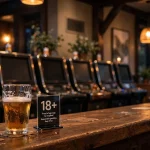
The legal age for gambling in Australia is 18. If you are below that age, do not seek access to pokies.
Before setting out, use information published by the club or contact it directly to confirm its gaming-machine facilities and relevant entry rules. Treat third-party descriptions as leads to verify, not as proof. That is a more reliable basis for choosing a CBD club than a confident label with no clear confirmation behind it.
Parkes is a Canberra suburb, but a suburb name alone cannot tell you whether a particular club, hotel or other venue has pokies. Treat claims about a machine being on site as something to confirm with the venue, not as a conclusion drawn from its address or from the word “club” in its name.
If you are considering a Parkes venue, check its own current information and contact staff to ask specifically whether gaming machines are available to patrons. A general venue listing may describe dining, events or membership without saying anything about pokies. Likewise, a photograph or an old review can show what was present at one time, not necessarily what you will find now.
Keep the question narrow: does this named venue have pokies? That is different from asking which Canberra suburb has the most options or whether a venue is convenient for a wider trip. Avoid turning a nearby address, a club listing or a passing online mention into proof. It is a small distinction with a large effect on whether your plans are based on fact.
“Best” also needs a criterion. If you have not established which venues actually have pokies, ranking Parkes options would create a confident-looking answer without a sound comparison. Decide first what you mean by best—such as the venue’s facilities or suitability for your visit—then verify those details directly. A location cannot establish the quality of a game or the terms attached to it.
For a practical check, use the venue’s official contact details and ask about gaming-machine availability, any entry conditions, and the facilities you intend to use. Confirm that the response refers to the Parkes address you plan to visit; similar names can cause avoidable confusion. If the venue cannot confirm the detail, do not rely on a third-party listing to fill the gap.
This approach keeps “pokies in Parkes” grounded in a specific, confirmed venue rather than a suburb-level assumption. No guesswork required.
PayID is a payment identifier, not a separate bank account or a sign that a gambling service is licensed. It sits over Australia’s New Payments Platform (NPP), letting someone direct a transfer using an email address, mobile number or ABN instead of entering account details. The NPP is supported by major banks and protects transfers with end-to-end encryption. Those features describe the payment system; they do not establish anything about the service receiving a payment.
For real-money online gambling, PayID would need to be linked to a bank account before it could be used. That practical step does not make online pokies lawful to provide in Australia, nor does it show that an operator is suitable. A payment option is not a licence.
There can also be bank-side friction. A specialist review reports that some Australian banks, including the major banks, sometimes block PayID transfers to known gambling merchants. This is a reported practice, not a promise that a particular transfer will be accepted or declined. Check your bank’s current terms rather than treating a payment method displayed by a service as proof of access.
Cashless play at a physical venue is a different question from making an online transfer. The presence of PayID says nothing about whether a Canberra venue offers cashless pokies, how its payment arrangements work, or whether cashless play is available at all. Likewise, comparing Newcastle with Canberra would require reliable venue-level information for both places; a shared payment label cannot supply that comparison.
The useful distinction is simple: PayID describes how a bank transfer can be addressed. It does not identify a venue, confirm its machines or establish the status of an online gambling service. Payment plumbing is not venue evidence.
There is no Australian-licensed online casino, and you have no legal recourse in Australia if an offshore casino refuses to pay your winnings. Check the operator’s terms, withdrawal limits and identity-verification requirements before depositing.
Australian players can legally play on offshore sites that accept them, but the Interactive Gambling Act makes it illegal for companies to offer real-money online pokies to Australians without a domestic licence. No such licences have been issued, and players have no legal recourse in Australia if an offshore casino withholds winnings.
Each spin is an independent event determined by a random number generator, so previous outcomes do not determine the next spin. The same game can also use different RTP settings at different casinos, so check the stated RTP for the version you can play.
E-wallets such as Skrill and Neteller are popular for their speed. Check the casino’s withdrawal terms and limits, as some cap weekly or monthly withdrawals at AU$5,000–AU$10,000.
Some game providers let casinos choose between multiple RTP settings for the same game. Check the RTP for the specific version offered, rather than assuming every casino uses the same setting.
Compare the bonus with its wagering requirement, any cash-out cap on free spins, and the casino’s withdrawal limits. For example, a $500 bonus with a 40x requirement means AU$20,000 in bets before you can withdraw winnings; if the requirement applies to a $500 deposit plus a $500 bonus at 35x, it means AU$35,000 in bets.