General statements about crypto payments do not establish that a casino offers Litecoin or makes it available to Australian users.
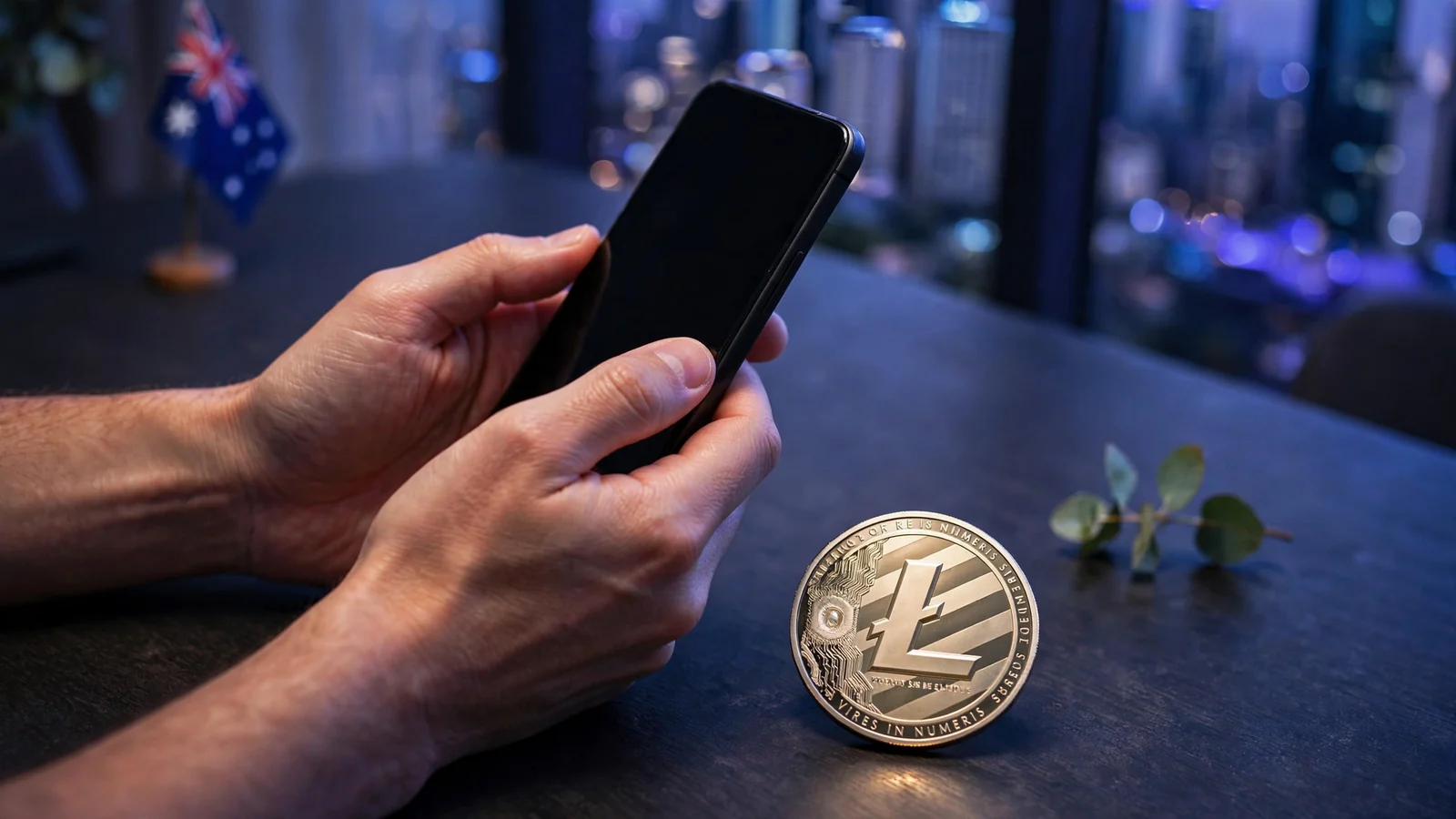
A claim about cryptocurrency payments needs to be read at the level it actually supports. A general statement about crypto does not establish that a particular casino accepts Litecoin, that its cashier offers Litecoin to Australian users, or that a payment option is available now. Those are separate claims, and one cannot stand in for the others.
The general payment point is limited: cryptocurrencies such as Bitcoin and Ethereum are described as allowing instant deposits and withdrawals with limited or no fees. That is not a Litecoin-specific promise. It does not confirm the timing or cost of a Litecoin transaction, and it says nothing about whether a casino supports Litecoin at all. Treating the broader statement as proof of a specific coin’s availability would turn a category-level description into an operator-level claim.
The distinction matters because “crypto accepted” can sound more precise than it is. It may refer to one or more currencies, a particular payment route, or a general feature described without confirming what an individual customer can use. A mention of digital currency alone does not tell you which currency is involved. In particular, Bitcoin and Ethereum cannot be used as evidence that Litecoin is supported.
Nor does a general statement about deposits settle what happens with withdrawals. A description that covers both directions in broad terms still does not identify a casino, confirm its cashier options, or establish that the same process and costs apply to every cryptocurrency. Payment claims need to be tied to the named currency and the specific service before they can answer a practical question.
That is the boundary for claims about a Litecoin online casino: the phrase describes what a reader is trying to find, not a confirmed payment arrangement. The same applies to searches for a mobile service or a live casino with Litecoin. A result using those words is not, by itself, proof that Litecoin is accepted, that the relevant format is offered, or that the service is available to someone in Australia. The label may describe an intended feature, a broad category, or an unverified assertion. It cannot do the work of confirmation.
This is also why a general crypto description should not be stretched into a current offer. Payment methods can be presented differently across operators and can change. Without a specific, current statement tied to Litecoin, there is no sound basis for saying that a casino currently accepts it or for implying that a reader can complete a transaction with it. A confident label is still only a label.
A useful reading habit is to separate three questions. First, which cryptocurrency is explicitly named? Second, does the statement concern deposits, withdrawals, or both? Third, does it refer to a particular service and to the reader’s location? If a claim answers only the broad question of whether cryptocurrency can be used in some casino context, it does not answer the more specific questions. That distinction is not a technicality; it is the difference between general background and usable payment information.
The wording “instant” also needs to stay attached to the claim it describes. Here, it belongs to a general description of cryptocurrencies such as Bitcoin and Ethereum, not to a verified Litecoin transaction or to a particular casino’s processing promise. Likewise, “limited or no fees” is a broad description, not a guarantee that every payment route is free of charges. It should not be converted into a claim about Litecoin costs.
For you, the practical takeaway is modest but clear: general crypto information can provide context, but it cannot verify a Litecoin payment option. It cannot establish a casino’s current cashier menu, a Litecoin-specific deposit or withdrawal condition, or an Australian-facing offer. Those details require direct, current confirmation for the named currency and service. Until then, “crypto” and “Litecoin” are not interchangeable terms.
Precision matters. A broad claim stays broad.
If you’re looking for a casino that accepts Litecoin in Australia, check that Litecoin is currently available in its cashier before depositing. The details below offer a few other points to consider, but do not confirm Litecoin support.
Wild Tokyo
You can note its Curacao licence, A$10 minimum deposit and stated crypto payout time of 30–60 minutes. These details do not confirm that Litecoin is accepted.
SkyCrown
You can consider its Tobique Gaming Commission licence, A$30 minimum deposit and stated crypto payout time of about 10–15 minutes. The available details do not specify whether Litecoin is supported.
Rollero Casino
You can note that Rollero Casino is listed with a Curacao Gaming Control Board licence, OGL/2023/176/0095, held by Hollycorn N.V. The available details do not confirm Litecoin support.
DragonSlots Casino
You can note its listing under the Curacao Gaming Authority, with Jumpman Gaming Ltd named as the operator. No Litecoin payment information is provided here.
GoldenCrown
You can note that GoldenCrown is listed with a Curacao Gaming Control Board licence, OGL/2023/176/0095, held by Hollycorn N.V. The available details do not confirm Litecoin support.
Uptown Pokies
You can note its Curacao licence, operation since 2017 and A$20 minimum deposit. The available details do not say whether Litecoin is accepted.
Ricky Casino
You can note the stated crypto payout time of under an hour and A$20 minimum deposit; the minimum is A$30 to qualify for the bonus. The available details do not identify Litecoin as a supported crypto.
Vegaz Casino
You can note its Curacao licence, OGL/2024/1335/0780, and EUR 20 minimum deposit. The available details do not confirm Litecoin support.
7Bit Casino
You can note that 7Bit Casino is listed as licensed in Curacao and operated by Dama N.V. The available details do not specify its Litecoin payment options.
Kingmaker
You can note its A$30 minimum deposit and stated crypto payout time of about 90 minutes. The available details do not confirm that Litecoin is accepted.
“Best” is not a measurable feature. It is a conclusion drawn from comparison, and the conclusion changes with the criterion. A site could appear preferable for one payment-related reason and less suitable for another. Without a clear basis for comparison, calling any online casino the best choice for Litecoin users says more than the available information can support.
A meaningful comparison would begin with details confirmed for Litecoin specifically. General statements about cryptocurrency payments do not establish that a particular casino accepts Litecoin, or that a payment option works in the same way for every digital currency. The distinction matters: a claim about crypto as a broad category cannot, on its own, settle a Litecoin-specific question.
The criterion should come next. If your priority is whether a payment method is supported, that is one test. If you are comparing how clearly an operator explains its payment conditions, that is another. A ranking based on one measure cannot silently stand in for all the others. “Best” without a declared measure is just a label.
A comparison table would make those distinctions visible. Its columns might identify whether Litecoin support has been confirmed, what the operator says about relevant conditions, and when those details were checked. Each entry would need evidence that refers to Litecoin and to the operator being assessed. A broad statement about cryptocurrencies, or a description of an unrelated payment method, would not fill that cell. Empty cells should stay empty rather than being converted into confident-sounding ratings.
That approach also separates three different claims that are easily blurred together: that a casino accepts cryptocurrency, that it accepts Litecoin, and that Litecoin is available for a particular transaction or account. Each claim needs its own support. Evidence for one does not automatically establish the others. A name in a list or a general payment badge would not, by itself, answer every part of the comparison.
The same discipline applies when a reader is looking for a Litecoin casino online or an online casino with Litecoin. Those phrases describe a desired combination, not proof that the combination is available from any specific operator. Before comparing options, the relevant details would have to be confirmed and tied to the exact criterion being judged. Otherwise, the apparent comparison is only a set of untested labels.
Even a well-supported table may not produce one universal winner. A reader who values confirmed payment support may reach a different conclusion from someone who values clear, consistent terms. That does not make comparison useless; it means the result needs to be read against the measure that produced it. The winner depends on what you are measuring.
A useful review would also distinguish observed facts from interpretation. “Litecoin support is stated in the operator’s payment information” is a claim about what the operator says. “This is the best site” is a judgement that requires a comparison and a reason. Combining the two without showing the reasoning makes an opinion look like a verified feature.
For someone seeking the best Litecoin casino site, the sensible question is therefore not simply which name sits at the top of a list. It is what the ranking measures, whether its Litecoin details are current and specific, and whether the same test has been applied to every entry. If those conditions are not met, a numbered order creates an impression of precision without providing it. Neat table, weak evidence.
This is why broad labels such as “best online Litecoin casino” or “best online pokies with Litecoin” cannot substitute for a stated method. A category name does not verify payment support, and a ranking does not explain its own criterion. To make either claim meaningful, a comparison would need confirmed Litecoin-specific information and a transparent rule for judging it.
The standard is simple: name the criterion, verify the claim against that criterion, and avoid an overall winner when the comparison cannot support one. That is less dramatic than a top pick. It is also more useful than a confident answer with no measurable basis.
A verdict about a casino’s suitability for Australian readers cannot rest on a payment label alone. It would need to establish that the service actually accepts Litecoin from people in Australia, that the stated conditions apply to those customers, and that the service can lawfully be offered to them. Without those points, calling a site the best choice for Australians turns an untested claim into a recommendation.
The legal setting matters before any comparison does. Under the Interactive Gambling Act 2001, operators must not provide real-money online casino games to people located in Australia. That prohibition covers casino-style services such as poker, table games and pokies. The Australian Communications and Media Authority (ACMA) enforces the Act, and offshore services may be subject to blocking. An offshore operator’s willingness to accept a customer or a payment would not, by itself, show that its service is lawful or suitable for an Australian resident.
There is an important distinction here: the Act’s prohibition is directed at operators, and it does not explicitly make a player’s use of an offshore casino a criminal offence. That does not give the player the protections they might expect from a lawful local consumer service. Australian consumer law does not protect people who use offshore casinos. If a dispute arises over an account, payment or winnings, a reader should not assume that Australian consumer remedies will be available.
A credible assessment would separate several questions that are often compressed into the word “best”:
These are not interchangeable tests. A payment option could be described on a site without being available to every customer; a service could be accessible without being lawful to offer in Australia. Neither circumstance supports a blanket claim that it is a suitable local choice.
The same discipline applies to labels such as “latest” or “best for Australia”. A recent change to an operator’s payment page would not settle whether Australian residents can use that service lawfully, nor whether the published terms apply to them. A list of sites would be no stronger than its underlying evidence. Names without current, Australia-specific support provide no reliable basis for choosing.
This is where a comparison table earns its place: it forces each claim to be tied to a criterion and a jurisdiction. It is an unresolved claim. No recommendation follows.
That distinction is especially important when a page uses familiar local language or displays Australian currency. Those details may make a service look tailored to local readers, but they do not establish legality, consumer protection or a valid basis for a verdict. Presentation is not evidence.
Legal Risk
Under the Interactive Gambling Act 2001, operators must not provide real-money online casino games to people in Australia, and Australian consumer law does not protect players using offshore casinos.
For you, the practical takeaway is narrow but consequential: treat an Australia-specific endorsement as credible only when it addresses both the legal position and the actual terms for Australian users. An offshore casino’s payment claims cannot substitute for either. And because Australian consumer law does not protect players using offshore casinos, a confident ranking should not be mistaken for a safeguard.
A Litecoin-labelled bonus is a claim about an offer, not proof that the offer is available to you. The wording might suggest a welcome reward, a deposit-related promotion or free play without a deposit. Those are different arrangements, and the label alone does not establish which one applies, who qualifies or what conditions attach.
That distinction matters when you encounter claims about a Litecoin casino deposit bonus or a no-deposit offer. A headline can leave out the terms that determine whether an offer can be used at all. Without clear conditions, you cannot tell whether the stated reward is a real-money credit, a restricted promotional balance or something else. Nor can you tell what action, if any, is required before it can be used or withdrawn.
“Free play” is equally open to interpretation. It may refer to access that does not involve a cash stake, or it may describe promotional credit subject to conditions. The phrase does not tell you whether Litecoin is involved in claiming the offer, whether the credit can be used on the advertised games, or whether winnings are subject to separate restrictions. A free-play label is not a complete description.
A useful review of any bonus would need to show the full terms in plain language. You would need to know who may claim it, how the promotion is activated, which games are included, whether a deposit is required, and what restrictions apply to any resulting balance or winnings. The terms should also explain how the operator handles a claim that fails or a promotion that is changed or withdrawn.
Those details are not minor print. They define the offer. If the headline promises a welcome bonus but the terms do not establish eligibility for Australian users, the headline cannot answer whether you qualify. If an offer is described as Litecoin-related but its terms do not explain the payment requirement, the description leaves an important gap. Attractive wording cannot fill it.
The same test applies to claims about free Litecoin play. “Free” does not by itself mean unrestricted, cashable or available to every visitor. A reader should be able to distinguish a no-deposit promotion from a demo mode or another form of access, rather than assuming that all uses of “free play” mean the same thing.
Bonus claims can also blur two separate questions: what games an offer covers, and what conditions govern the offer. A promotion mentioning online slots does not, on its own, establish that particular games are available, that Litecoin can be used with them, or that the promotion can be claimed by someone in Australia. Each part would need to be stated clearly.
Likewise, calling an offer the best Litecoin slots bonus does not supply a comparison. To judge an offer against another, you would need comparable terms and a criterion that matters to you. A headline offers neither. Without comparable, specific conditions, “best” is a sales adjective, not a finding.
For Australian readers, there is a further practical boundary: Australian consumer law does not protect players who use offshore casinos. That makes a clear understanding of the terms especially important, but it does not make an uncertain promotion reliable or remove the risks attached to using an offshore service.
If the terms are unavailable, unclear or inconsistent with the promotional wording, there is no dependable basis for treating the claimed bonus as a usable offer. The sensible distinction is simple: a bonus headline describes an inducement; only complete, applicable terms explain what it actually provides. That is the standard to apply to welcome rewards, deposit offers and purported no-deposit play alike. No headline can substitute.
“Litecoin game” can describe two different things: a game associated with a casino that accepts Litecoin, or a game whose own features involve Litecoin. Those are not interchangeable claims. A payment option does not establish anything about the titles in a casino’s catalogue, and a game’s name or theme does not show that Litecoin is accepted for play.
That distinction matters when a site groups games under a payment-related label. The label may describe the casino or a payment method, rather than a particular title. Without title-specific details, you cannot tell whether the claim applies to every game, a particular category, or none of the games shown. A catalogue heading is not a substitute for an explanation of what it covers.
The same caution applies to phrases such as “play casino games with Litecoin” or “Litecoin casino games”. They sound like descriptions of a defined product, but can blur the difference between a payment claim and a game claim. Treating those phrases as proof of a connection between Litecoin and a named game would go further than the wording supports.
A useful comparison table would need a row for each named game and a clear basis for including it. The relevant question would be whether the claim identifies that title specifically, rather than simply placing it on a site associated with Litecoin. Without that link, calling a title an LTC game adds a precision the claim has not earned. The distinction is simple; the labels often are not.
A payment option does not establish the titles in a casino’s catalogue, and a game’s name or theme does not prove that Litecoin is accepted for play. A title should not be presented as Litecoin-related unless the connection is stated clearly for that specific title.
For you, the practical result is that a general reference to Litecoin cannot establish that any particular game is available, playable, or connected to that currency. Nor does a casino-wide payment description make every item in its catalogue a Litecoin game. Keep the claims separate: one concerns a game, the other concerns a payment method. A title should not be presented as Litecoin-related unless the connection is stated clearly for that title.
“Litecoin game” is not a dependable category on its own; it needs a specific, clearly described connection to a named game. Without that, the phrase is only a label.
A payment label is not the same as a complete route from account creation to play. Before relying on a claim that a casino accepts Litecoin, you would need to establish what the operator means by “accepts”: whether Litecoin is actually available in the cashier, whether it applies to the activity you intend to use, and what conditions attach to the account. A page mentioning cryptocurrency in general does not settle those points.
Check the operator’s own terms and cashier information rather than treating a promotional label or a third-party description as confirmation. The details should agree: the payment option should be named clearly, its conditions should be available before you commit, and the rules should explain what happens if an account or transaction needs review. If the wording is vague, or the cashier does not match the claim, you do not have enough to rely on it.
Account access is another part of the claim. Online casinos commonly require identity checks before allowing financial activity. That makes a “no KYC” promise something to examine carefully, not proof that verification will never be requested. Read the account terms for identity and age checks, what documents may be required, and when the operator can pause access while reviewing information. If a site suggests that checks can be bypassed, that is not a sound basis for handing over personal details or funds.
You should also look for clear rules on account eligibility, restricted locations, and what happens when information cannot be verified. The wording should identify who is responsible for the service and provide a way to contact them. If essential conditions are absent, conflicting, or only appear after registration, the claim has not answered the practical question: can you use the stated payment method under the terms that apply to you?
This is a claim-to-action test, not a recommendation to play. A search phrase about playing with Litecoin does not establish that a particular site, payment option, or game is available. Nor does a cryptocurrency label explain the account checks and conditions that may stand between a claim and actual use. Verify the terms before acting. Otherwise, you are relying on a label.
A Litecoin payment option does not change the legal status of an online casino serving people in Australia. The Interactive Gambling Act 2001 prohibits operators from providing real-money online casino games to people physically located in Australia. That applies whether a site labels its payment method as cryptocurrency, card or something else.
The distinction is between the operator’s conduct and the player’s position. The Act does not explicitly criminalise an individual for using an offshore casino. That does not make the service lawful for the operator to offer to Australians, or make it a protected consumer purchase. Australian consumer law does not protect players who use offshore casinos. If a dispute arises over an account, payment or withheld balance, you should not assume Australian consumer protections will provide a remedy.
ACMA is responsible for enforcing the Act. Its role is directed at the prohibited service and the operators providing it, rather than turning a search for a casino that accepts Litecoin into evidence that the service is lawful. A website’s availability, cryptocurrency branding or claims about an offshore licence do not override the Australian restriction.
For someone in Australia weighing up an offshore casino, the relevant criterion is not simply whether Litecoin appears in a cashier. It is whether the service can lawfully be offered to a person in Australia and what protection is available if something goes wrong. Under the stated legal framework, operators must not offer online casino games to Australian residents, while players are not explicitly criminalised for using offshore sites. Those are different points, not a contradiction.
That distinction matters before any payment decision. Litecoin may be a payment label on a site, but it does not confer Australian approval or consumer-law protection. Treating a crypto option as a legal safeguard would confuse payment method with legal status. A neat label is not a licence.
A claim about depositing Litecoin and a claim about withdrawing it are separate claims. A payment option shown in a cashier would not, by itself, establish that withdrawals use the same route, are processed on the same terms, or are available at all. Treat each direction as a distinct condition to verify rather than assuming that one implies the other.
General information about cryptocurrency payments says that Bitcoin and Ethereum can support instant deposits and withdrawals with limited or no fees. That statement describes those currencies broadly; it does not confirm that a particular casino accepts Litecoin, or that Litecoin transactions there are instant or fee-free. Applying it to Litecoin would turn general context into an unsupported promise.
For you, the useful distinction is between a network-level possibility and an operator’s actual payment terms. The time taken for a transfer can depend on the service handling it, while fees may arise from the operator or elsewhere in the payment process. Without Litecoin-specific terms, there is no reliable basis for stating a processing time, a fee, or a guarantee of an instant withdrawal. “Fast” is not a payment policy.
The same care applies to a no-deposit claim. A phrase such as “no-deposit” does not establish that Litecoin is accepted, that any funds can be withdrawn, or what conditions would apply. Those details belong to the offer terms and payment rules, not to general statements about cryptocurrency. No terms should be inferred from the label alone.
Before relying on a Litecoin payment claim, look for separate, explicit information on deposits and withdrawals: whether Litecoin is supported for each, how processing is described, and what fees or conditions apply. If those terms are absent or unclear, a claim of a Litecoin casino with instant withdrawals is not substantiated. The same goes for a supposed no-deposit arrangement. No shortcut here.
A live-dealer label describes a format, not a payment method. It does not establish that a casino accepts Litecoin, that Litecoin can be used for live tables, or that the service is available to people in Australia. Those are separate claims, and combining them in a headline does not make either one more reliable.
For Australian readers, this distinction sits within a broader legal limit. The Interactive Gambling Act 2001 prohibits operators from offering real-money online casino games to people in Australia, including live table games. The law does not explicitly criminalise players who use offshore sites, but Australian consumer law does not protect players using offshore casinos. The Australian Communications and Media Authority enforces the Act. A payment label does not change that position.
Treat descriptions of a “Litecoin live-dealer casino” as claims requiring separate scrutiny, not as evidence of a verified service. A useful comparison would need to establish whether the stated payment method applies to the casino generally or specifically to its live tables, and whether the wording refers to deposits, withdrawals, or both. It would also need to make clear who the offer is available to. Without those distinctions, a reader cannot tell what the phrase actually promises.
The same caution applies when a site groups live tables with other crypto features. A general cryptocurrency statement cannot establish Litecoin support, and Litecoin support alone would not establish access to a live format. Each part needs its own evidence. Neat labels are not evidence.
Because real-money online casino games cannot lawfully be offered to people in Australia, this is not a recommendation to seek out or use an offshore live-dealer service. The practical point is narrower: do not infer a lawful Australian option, a working Litecoin payment route, or live-table availability from promotional wording alone.
A Litecoin payment option and a particular pokies game are separate claims. A site might describe a cryptocurrency cashier without showing that any specific game can be played there, or that Litecoin is accepted for that activity. Treating those details as interchangeable makes the headline sound clearer than the terms.
For a reader comparing Litecoin casino sites, the relevant question is not simply whether Litecoin appears among payment methods. You would need the operator’s current terms to connect that method to the account and the games being offered. A general cryptocurrency statement does not establish that link. Nor does a game’s presence on a casino site prove anything about how deposits or play are handled.
The same distinction matters when a site is called a trusted or licensed Litecoin casino. Those labels do not, on their own, establish that Litecoin can be used for pokies, or that a named title is available to Australian players. “Licensed” also needs a specific legal context: a label in promotional copy is not proof that an operator may lawfully provide online casino games to people in Australia.
Australia’s Interactive Gambling Act 2001 prohibits operators from providing real-money online casino games, including pokies, to people physically in the country. The Australian Communications and Media Authority enforces the Act. Australian consumer law does not protect players who use offshore casinos. A payment method does not change that position.
That is the limit of what can responsibly be said about Litecoin pokies: the category cannot be treated as an established product simply because cryptocurrency is mentioned. Avoid relying on a broad payment claim as proof of a specific game, and do not mistake a marketing label for evidence of lawful availability. The distinction is basic. It matters.
Limits are set by each casino and can vary. Amex transaction limits are usually higher than those for Mastercard and Visa.
Check the casino’s cashier for American Express among its deposit options. You can also confirm with the casino before depositing.
Jackpot City Casino, Spin Palace, Ruby Fortune, Ignition Casino, Joe Fortune, and PlayAmo are listed as operators supporting Amex deposits for Australian players.
Amex may block payments to a particular website, and Australian banks may also block gambling-related Amex transactions. Acceptance can therefore differ between casinos and card issuers.
Amex deposits are processed instantly. Withdrawals can take up to five days to clear.
Look for American Express in the casino cashier’s deposit options or check with the casino directly. Some Australian online casinos accept Amex, but not all do.