A practical guide to comparing casino accommodation and separating venue details from gaming, access and online gambling questions.
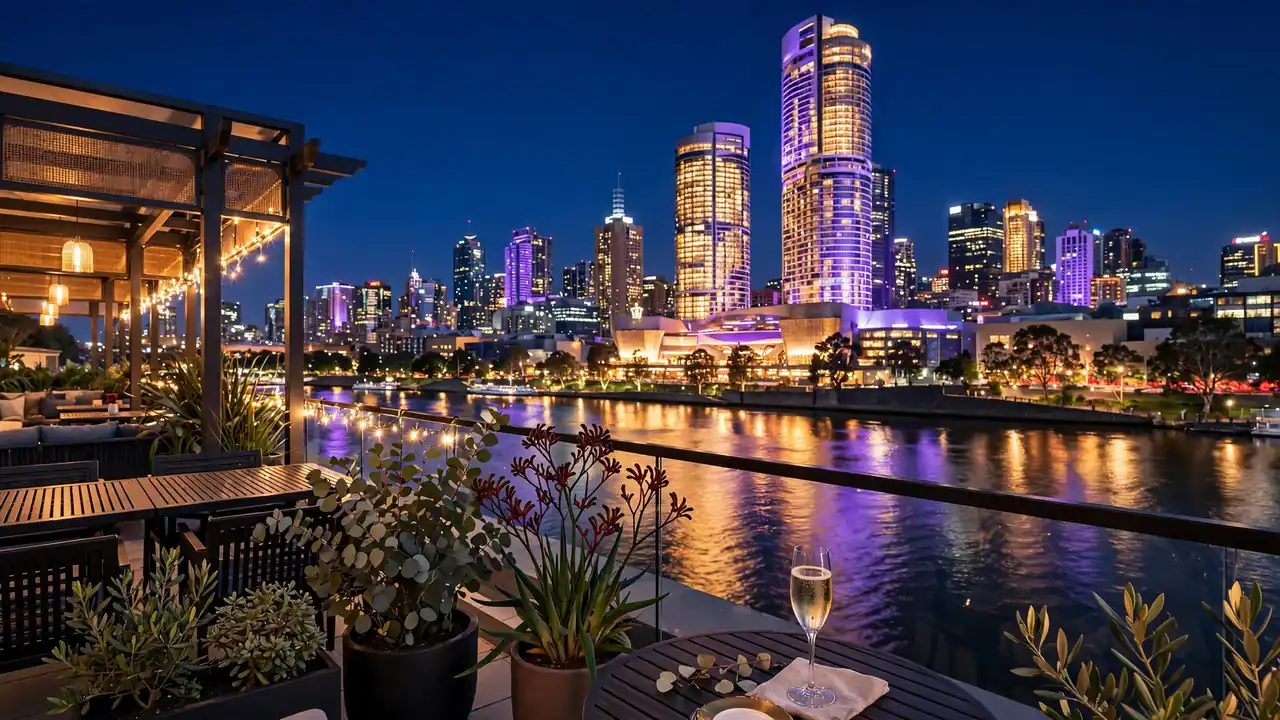
A Melbourne casino hotel can mean a room at a property associated with a casino, while “casino hotel deals” may lead you to compare packages, room rates and booking conditions. Those are related searches, but they are not the same decision. First decide whether your priority is being close to the venue, having a particular room setup, or paying less for the stay. The best choice depends on which of those matters most to you.
When you look at hotel rooms, start with what the listing actually describes. Check the room category, bed arrangement, occupancy rules and whether the price applies to the room you intend to book. A low displayed rate is not a useful comparison if it refers to a different room type or has conditions that do not suit your plans.
Read the details about what is included rather than assuming that a package name tells the whole story. If a deal mentions an extra or an added benefit, confirm how it is provided and whether you must meet particular booking conditions. A polished label is not a substitute for the terms.
If you’re choosing a casino to use from Melbourne in 2026, this list gives you operator details to review before deciding which options fit your priorities.
Wild Tokyo
Wild Tokyo lists a A$10 minimum deposit. Its stated payout times are 30–60 minutes for crypto and 1–5 days for fiat.
SkyCrown
SkyCrown lists the Tobique Gaming Commission as its regulator and a A$30 minimum deposit. Its stated payout times are around 10–15 minutes for crypto and 1–5 days for fiat.
Rollero Casino
Rollero Casino lists a Curacao Gaming Control Board licence, OGL/2023/176/0095, held by Hollycorn N.V.
DragonSlots Casino
DragonSlots Casino lists a Curacao Gaming Authority licence, with Jumpman Gaming Ltd identified as the operator.
GoldenCrown
GoldenCrown lists a Curacao Gaming Control Board licence, OGL/2023/176/0095, held by Hollycorn N.V.
Uptown Pokies
Uptown Pokies is listed as operating since 2017 under a Curacao licence and has a A$20 minimum deposit.
Ricky Casino
Ricky Casino lists a A$20 minimum deposit, or A$30 to qualify for the bonus. Its stated payout times are under an hour for crypto and 1–3 business days for PayID.
Vegaz Casino
Vegaz Casino lists a Curacao OGL/2024/1335/0780 licence and a EUR 20 minimum deposit.
7Bit Casino
7Bit Casino is listed as licensed in Curacao and operated by Dama N.V.
Kingmaker
Kingmaker lists a A$30 minimum deposit. Its stated payout times are around 90 minutes for crypto and 1–5 days for fiat.
| Comparison point | What to check |
|---|---|
| Room category | Whether the description matches the space and bed arrangement you need |
| Booking conditions | Whether the rate is flexible or subject to restrictions |
| Included extras | What the offer specifically includes, and how it is accessed |
| Final price | Whether the amount shown covers the full booking and applicable charges |
| Location | The stated relationship between the hotel and the venue |
This table is a way to compare listings, not a claim that any particular room or offer is available. Details can differ by date, room type and booking channel, so compare like with like.
A hotel deal is only better if its full terms suit your stay. Compare the total price for the same dates and a comparable room, then account for any conditions attached to the offer. A rate that cannot be changed may be a poor fit if your plans are uncertain. A package may look attractive, but only if the included items are useful to you and do not come with restrictions you would rather avoid.
Pay attention to payment timing, cancellation rules and any stated requirements for changing a booking. These can matter more than a small difference in the advertised rate. If a listing does not make a condition clear, check the booking terms before you commit rather than filling the gap with an assumption.
Also distinguish a casino hotel from a hotel that is simply convenient for visiting a casino. The wording in a listing should tell you what relationship, if any, the property has to the venue. Do not infer access, services or a particular location from a name alone. Those details affect whether the booking fits your plan, but they need to be stated by the provider.
For a short stay focused on the venue, location may outrank room size. If you expect to spend more time in the room, the room category and included features may carry more weight. If price leads your decision, compare the full booking cost and restrictions rather than selecting the lowest number on a search page. There is no single winner across all three criteria.
Keep a short comparison list and give each option the same checks: room, location, terms and total cost. That makes differences visible without treating a promotion as proof of value. If an offer omits information you need, it has not earned a place at the top of your list.
A “Melbourne casino hotel” is not automatically the best hotel for every visitor. The stronger choice is the one whose room details, location and booking conditions match your priorities. Check those criteria side by side; the headline can wait.
A poker room and a pokie floor serve different purposes. Poker involves players competing against one another under a game’s rules; pokies are electronic games in which each spin produces an outcome. If you are comparing poker at a Melbourne casino, focus on the details that determine whether a particular session suits you: the games offered, tournament format, entry conditions and schedule. Do not treat a poker-room search as evidence that a venue currently runs a particular game or event.
Tournament listings need their own check. A tournament’s format, registration arrangements and start time can matter more than the venue name alone. Those details are specific to the event, so avoid relying on old listings when deciding whether to attend. This is a different comparison from choosing a pokie by its mechanics: tournament play is organised around participants, while a pokie’s result is generated for each spin.
Searches for casino rooms can also mean hotel rooms, rather than poker rooms. Likewise, a sports bar, its current status and whether it is open today are venue-operation questions. They do not establish anything about poker tournaments or how pokies work. Keep those criteria separate when comparing options; otherwise, a room search can end up answering the wrong question.
Every online pokie uses a Random Number Generator, or RNG, to produce its outcomes. The RNG does not keep a record of whether you have just won or lost. Each spin is independent, so earlier results do not make a particular outcome more or less likely on the next spin.
That point matters when a session feels as if it is “due” for a result. A run of losses does not create a debt the game must repay, and a recent win does not predict another one. The mechanism does not remember your session. No pattern of past spins changes the next outcome.
RTP, short for return to player, is a theoretical measure of the share of wagered money a pokie pays back across a very large number of spins. It is not a forecast for one player, one visit or a short session. Your result over a limited number of spins can differ substantially from the theoretical figure. RTP is therefore useful for understanding a game’s long-run design, not for predicting what will happen next.
The criterion depends on what you want to compare. For a poker tournament, look at the event’s format and practical conditions. For a pokie, RNG independence explains why previous spins cannot guide the next one, while RTP describes a long-run theoretical return. Neither measure promises a particular outcome.
There is also a distinction between learning how online pokies work and being able to access them. The mechanics above explain the games; they do not mean online casino play is offered to people in Australia. Keep that boundary clear when comparing a physical venue question with information about online game design. The labels may sit close together in a search, but the subjects are not interchangeable.
A theoretical measure of the share of wagered money a pokie pays back across a very large number of spins, used for understanding long-run design rather than predicting short-term results.
A useful comparison table has separate rows for poker events, venue amenities and game mechanics. Put event details in the first, confirmed venue information in the second, and RNG or RTP explanations in the third. That makes the best choice depend on your actual purpose rather than on a broad label. One criterion at a time.
For a visit to a casino in Melbourne, parking is a practical question, but the answer depends on the specific venue and your travel plans. Do not assume that parking is free, that valet parking is available, or that a particular arrangement applies to every visitor. Confirm the current terms with the venue before setting off, especially if parking is central to your decision.
A useful comparison starts with the detail that changes your trip: whether you need on-site parking, whether you are considering valet service, or whether you can use another way to get there. Check the venue’s own information for any parking conditions and restrictions. If those details are unclear, contact the venue directly rather than relying on an old listing or an assumption based on another casino. “Free parking” is not a safe default.
That is a different task from judging which casino best suits you. For the physical visit, your criteria might be access and parking arrangements; for online play, the legal position matters first. The phrase “best casino in Melbourne 2026” can refer to either, but they are not interchangeable options.
The Interactive Gambling Act restricts operators based in Australia from providing online casino games such as pokies, blackjack and roulette to people in Australia. An Australian-run online casino cannot lawfully offer those services to players here. A website that appears accessible is not proof that its casino games are a lawful Australian service.
This also explains why an online game may not appear when you access a lobby from Australia. Online casinos and game providers can use your IP address to identify your apparent location and block access to games in excluded regions. If a game is geo-blocked, it may simply be absent from the lobby for an Australian IP address. That is a regional restriction, not a fault you should try to work around.
Searches for online casino games in Melbourne can therefore lead to misleading expectations. A physical casino visit and access to online pokies are governed by different arrangements; the existence of a venue does not mean its games are offered online to people in Australia. Do not treat an offshore site’s availability as approval under Australian law.
For your decision, keep the comparison in two columns: travel arrangements for a physical visit, and legal availability for online games. The first calls for current venue information about parking; the second has a clear boundary for Australian-based operators. That distinction is more useful than a broad “best” label.
Legal Restriction
Under the Interactive Gambling Act, operators based in Australia are prohibited from providing real-money online casino games, such as pokies, blackjack and roulette, to people in Australia.
If you are planning a visit, verify parking terms before travelling and weigh them against how you intend to get there. If you are trying to access online casino games, an Australian IP address may result in region-blocked games not appearing. Neither a search result nor a familiar game title changes the restriction.
Choosing accommodation near a Melbourne casino is a location decision first. The useful question is not simply which place looks closest on a map, but whether its position suits the way you expect to travel and the rest of your plans. A room can appear nearby in a straight line yet involve a different route on foot or by car. Check the actual address and route before treating “near” as a meaningful comparison.
Start by locating the casino entrance you intend to use, then compare accommodation against that point rather than relying on a broad map label. Look at the walking route, road access and available transport options for each property. If you will arrive late or leave early, the route at those times may matter more than the daytime estimate. Avoid assuming that a nearby map pin guarantees a direct entrance or an easy journey.
Your best fit depends on the trip. If proximity is the main criterion, prioritise a clearly mapped route and a location that reduces travel between your accommodation and the venue. If you are visiting other parts of Melbourne too, compare the accommodation’s position against those plans as well. A place slightly farther from the casino may be a better overall base if it makes the rest of your itinerary easier. “Best” has a criterion. Pick yours.
You can compare hotels, serviced apartments and other accommodation types without assuming that one category is automatically closest or most suitable. Check the property’s own address and the map route, and confirm that the listing refers to the accommodation itself rather than a nearby landmark. Where a listing uses phrases such as “casino nearby”, treat them as a prompt to check the route, not as a measured distance.
Keep the accommodation search separate from a hotel-room or deal comparison. The first task is finding a suitable place to stay in relation to the venue; rates, room features and promotional terms are separate decisions. If you later compare offers, check what dates and conditions apply instead of assuming that an advertised deal covers your visit. No shortcut there.
A simple comparison table can keep the decision grounded:
| Criterion | What to check |
|---|---|
| Position | The property’s address and its route to the intended venue entrance |
| Travel | Walking, driving or public transport options that fit your plans |
| Trip fit | Whether the location also works for your other Melbourne activities |
| Listing clarity | Whether the address and property details are specific enough to verify |
Do not choose on the word “near” alone. Confirm the address, inspect the route and compare the location with your own itinerary. That gives you a practical basis for choosing accommodation without relying on unverified claims about particular properties, distances or prices.
Contact details and game availability are different questions, even when both point to the same casino name. If you need to reach a Melbourne venue, use the contact channel published on its official website and match your enquiry to the relevant department. A general enquiry about a visit is not the same as a question about a particular game, car park, bar or concert. Keeping the subject clear makes it easier to direct your message appropriately.
For a map or directions, rely on the venue’s official location information rather than a map result that may refer to a different business or entrance. For car-park access, concerts and bar details, check the venue’s own current information before setting out. Those are practical visit-planning matters; a game’s presence in an online lobby says nothing about the facilities or services at a physical casino.
Baccarat and craps are casino game names, but a search for either does not establish where they are offered in Melbourne, or whether an online version can be accessed from Australia. Keep those questions separate. For venue-specific details, check directly with the venue. For online games, availability can depend on the player’s location and the provider’s restrictions.
Online casinos may restrict access to particular games or software providers according to the country they associate with a player. They can use the player’s IP address to estimate geographic location, then block access from locations excluded by the operator or provider. A game subject to such a restriction may not appear in the lobby when you connect from an Australian IP address. The result can be confusing: the game may be listed in general information about a provider but unavailable to you locally.
A game that fails to load can also be affected by a regional restriction. A specialist review has described this as one possible explanation, but a loading problem alone does not prove why a game is unavailable. Check the operator’s own help information rather than treating repeated reloads as a solution. Sometimes the restriction is the answer. That is the point.
A VPN can alter the digital location shown to an online service, making a person in Australia appear to connect from elsewhere. That does not change their physical location or remove the operator’s restrictions. Using a VPN to access a region-blocked pokies site breaches the site’s terms of service and may lead to account suspension.
The practical distinction is simple: use venue contact channels for questions about visiting, and treat online game access as a separate matter governed by location-based restrictions. Do not rely on a changed IP address to make a blocked game available. If you are unsure whether an online service is available to someone in Australia, consult its terms and relevant Australian rules before creating an account or attempting to play.
Breakfast, buffet and resort searches concern the physical venue: they do not establish what is currently served, when it is available or whether a particular meal is included with a stay. Treat those details as separate from rewards. A rewards programme has its own eligibility and conditions; the word “reward” alone does not tell you its value or what you must do to receive it.
For any online gambling promotion, start with the legal distinction. Under the Interactive Gambling Act 2001, operators must not provide real-money online casino games to people in Australia. An offer presented on a website does not change that restriction. Venue rewards and promotional language should not be confused with permission to use an online casino service.
A free-spin offer can look straightforward while attaching a wagering condition to any winnings. A specialist review reports a 30-times wagering requirement on free-spin winnings before withdrawal. Separately, psu.com reports that free-spin winnings may carry requirements from 20 to 50 times the winnings amount. These are reported examples, not a universal rule: the terms for a particular offer determine what applies.
The calculation matters. If a promotion requires wagering before withdrawal, winnings are not immediately withdrawable simply because they appear in an account balance. Check what amount the requirement applies to, which games count, and whether the condition covers winnings or another amount. Pokies are reported to contribute their full stake towards wagering requirements, but the offer’s own wording still decides which games qualify and how play is counted.
A large multiplier can keep funds tied up in play. Read the small print.
The wagering figure is only one comparison column. Bonus terms may also impose a maximum cashout, meaning some winnings cannot be withdrawn even after the wagering condition is met. Other clauses may allow winnings to be voided if the offer’s rules are breached. Look for restrictions on eligible games, bet sizes, expiry and withdrawal before accepting a promotion; a headline bonus does not reveal those conditions.
For a clear comparison, note the reward, the wagering basis, eligible games, any cashout cap and the consequences of non-compliance. If the wording is unclear, do not treat the most favourable interpretation as guaranteed. The better offer, by the criterion of usable winnings, is the one whose restrictions you can understand before accepting it—not simply the one with the largest advertised reward.
A Melbourne casino rewards search may also relate to benefits at a physical venue rather than an online promotion. Keep those categories separate: breakfast or a buffet is a dining question, while a rewards programme is governed by its own conditions. Casino employment searches are different again; job listings do not establish meal availability or reward eligibility. A tidy comparison starts by identifying what kind of benefit is being offered.
Opening hours, entertainment and event listings are venue details that can change. If you are planning a visit, check the casino’s own current announcements before setting out rather than relying on an old listing or a review. The same applies to reopening information: a past closure or reopening notice does not confirm today’s operating status or schedule.
Events can be a useful comparison point when deciding whether a venue suits your plans. Look for the event date, start time, entry conditions and any booking instructions in the venue’s published notice. For entertainment, distinguish a dated performance or special event from general descriptions of what a casino offers. A broad promotional statement is not a schedule.
Employment and development searches are different again. Job vacancies should be assessed from current recruitment notices, which can specify the role, location and application process. Development news may refer to a proposal, construction activity or a completed project; those are not interchangeable stages. Treat a project as confirmed only when the relevant announcement says what has actually happened. Search wording alone is not evidence of a reopening, a new attraction or a job opportunity.
A Melbourne casino review can help you compare the criteria that matter to you, such as the kind of entertainment advertised or how clearly practical information is presented. It cannot substitute for a current event listing or confirm that a particular service is operating today. The better choice depends on your plans: a published event may matter more than a general venue review, while current hours matter most if you are simply arranging a visit. Details first. Appearances later.
Physical-venue opening times and events should not be confused with online casino access. Under the Interactive Gambling Act 2001, operators based in Australia cannot provide online casino games to people in Australia. That restriction covers casino-style games such as pokies, blackjack and roulette; it is not a statement about visiting a physical venue or attending its events.
Offshore platforms are not regulated under Australian law. Their availability online does not make them Australian-regulated services, and an overseas licence is not local oversight. Keep that distinction clear when reading material that places venue news alongside online gambling claims: they concern different services and different rules.
For a visit, rely on current venue information for schedules and event arrangements. For online casino games, do not treat an offshore site’s presence or advertising as confirmation that it is authorised to serve people in Australia. A venue calendar answers when an event is scheduled; it does not answer whether an online gambling service may lawfully be offered here.
A restaurant search can mean two different things: a dining venue inside a casino complex, or an independent restaurant nearby. Those are not interchangeable. Before comparing options, establish which one you mean; otherwise, a map result or a general Melbourne dining page can look more relevant than it is.
For a restaurant described as being at a casino, the first criterion is a clear connection to the venue. Look for an official casino page or the restaurant’s own current listing that identifies the location. A restaurant appearing in the same map area is not, by itself, proof that it is part of the casino. If you mean somewhere nearby, assess it as a separate local restaurant rather than treating it as a casino venue.
The next criterion is whether the information is current and specific. A useful listing should identify the restaurant, show what kind of dining it offers, and provide details that help you decide whether it suits your visit. Menus can change, and a page that gives only a broad description may not answer practical questions about dishes, dietary needs, bookings or service. Check those details with the venue before making plans, particularly if one of them determines whether you can dine there.
Opening times need their own check. A venue’s general operating schedule does not necessarily establish when a particular restaurant serves customers. Nor does an old menu or an undated directory entry settle whether the restaurant is currently operating. Prefer a current, restaurant-specific source; if the information conflicts, contact the restaurant directly rather than relying on the more convenient result.
A compact comparison table can keep the decision grounded:
| Criterion | What to establish |
|---|---|
| Location | Is it inside the casino, part of its complex, or a separate nearby venue? |
| Dining style | Does the current description match the kind of meal you want? |
| Menu | Is there a current menu, and does it address your dietary requirements? |
| Booking | Does the restaurant explain how reservations are handled? |
| Service details | Are the relevant dining times and conditions stated by the venue? |
The best choice depends on your criterion. If you want to dine within the casino, location matters most; if you are comparing independent places nearby, the restaurant’s own menu and practical details matter more. Do not treat a search result, photograph or old review as confirmation of current offerings. Verify the restaurant itself, then compare what it says. Simple, but decisive.
This approach keeps a restaurant search focused on dining rather than turning it into a general venue guide. It also avoids assuming that every result associated with “casino” is inside the casino, or that a named dish, service or schedule remains available because it appeared online once. The current listing is the starting point; direct confirmation is the better basis for a plan.
An address is useful only when it identifies the venue you intend to visit. “Melbourne casino” can be used loosely, so match the full venue name on your booking or plans with its current address before setting off. If you are comparing map results, check that the listing refers to the casino itself rather than a nearby hotel, office or other business. A familiar landmark is not a substitute for the street address.
Dress expectations can differ between spaces within the same venue. A general rule for a casino may not settle what is acceptable at a particular bar or lounge, especially if it has its own entry policy. Check the venue’s current guidance for the specific area you plan to visit; if the wording is unclear, ask the venue before you go. That is more reliable than treating an old social post or a visitor’s account as a standing rule.
The same distinction matters when looking for bars. A venue directory can help you identify which bar names and locations are currently listed, but it does not establish that every listing is open at the time you want to visit. Check the relevant venue information for current details rather than assuming that a result in a map or directory reflects today’s arrangements.
A day spa search calls for more than confirmation that a property has spa-related facilities. Before planning around one, look for current information that identifies the facility, the services offered, booking arrangements and access conditions. Do not infer that treatments are available to all visitors, or that a spa is operating, from a hotel description alone. If a particular treatment or appointment matters to your plans, confirm it directly with the venue.
Game information also needs a precise setting. A listing for games at a physical casino is not evidence that the same games are available online, and an online game catalogue does not establish what a Melbourne venue offers on site. Treat each as a separate question and check the relevant venue or service information.
Career enquiries are separate again: use the employer’s current recruitment information for vacancies and application instructions. A general venue page may not cover hiring.
The practical comparison is simple: address accuracy matters for arrival, specific dress guidance matters for entry, and current facility details matter before you book around a spa or bar. For careers and games, use the information tied to that particular service. Without those venue-specific details, naming an address, dress rule, spa or bar as confirmed would create certainty where there is none.
Food and pool searches can point to different needs: somewhere to eat, a food-court-style option, a swimming pool, or pool tables. Those are venue questions, and a name that includes “casino” does not confirm which facilities are available. Treat each one separately rather than assuming that food service or a pool is part of the visit.
For food, decide whether you need a quick meal, a range of casual choices, or a sit-down experience. These preferences help you assess any current venue information you find, but they do not establish what is on site. Check the venue’s own published details for the options it lists, and confirm that they apply to your planned visit. A broad reference to food is not the same as confirmation of a food court.
“Pool” needs a little more precision. If you mean swimming, look for an explicit listing of a swimming pool and any access conditions. If you mean billiards, check for pool tables or a games area instead. The terms are easy to confuse; the facilities are not interchangeable.
Keep these checks distinct from information about pokies. Electronic Gaming Machines (EGMs) are a separate form of gambling, not a food or leisure facility. In Australia, the Interactive Gambling Act 2001 prohibits operators from providing real-money online casino games, including pokies, to people physically located in Australia. A venue-based question about food or pool does not indicate that online play is available.
A practical comparison is simple: confirm the specific facility, check its current availability, and match it to your purpose. If a listing does not clearly identify a swimming pool, pool tables, or a particular food option, do not infer it from the venue name or from a general description. That is a better basis for planning than treating an assumption as an amenity.
Yes. The Interactive Gambling Act restricts operators based in Australia from offering online casino games such as pokies, blackjack and roulette. Offshore platforms are not regulated under Australian law.
A VPN can make your internet connection appear to come from another country by changing your digital location. However, a casino or game provider may still block access, and offshore platforms are not regulated under Australian law.
An RNG generates the outcome of each spin, and spins are independent, so earlier results do not affect what comes next. RTP describes the theoretical share of wagers paid back over a very large number of spins, not what you should expect from a short session.
Region blocking is when a casino or software provider restricts games in certain countries. It can prevent games from appearing in the lobby or stop them loading.
The casino or provider can use your IP address to estimate your location and block access from excluded countries. A game may then be hidden from the lobby or fail to load.
Check the game’s RTP as a theoretical long-run measure, and remember that every spin is independent. If it offers free spins or a buy-bonus feature, review the wagering requirements and the cost before playing.
In NSW, players must be 18 or older to gamble on poker machines, and mandatory pre-commitment systems require players to set a loss limit before playing.