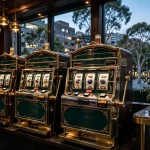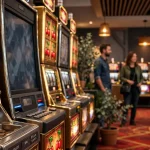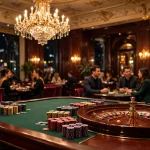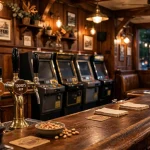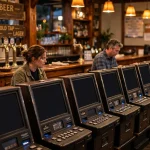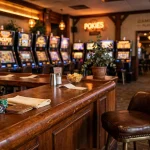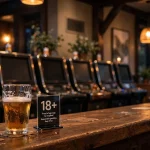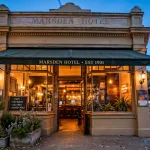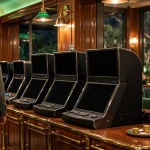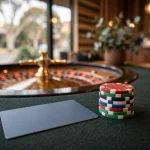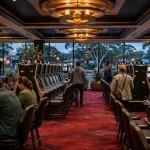
The phrase can refer to a physical casino or be used loosely, so venue location and the distinction between land-based and online play matter.
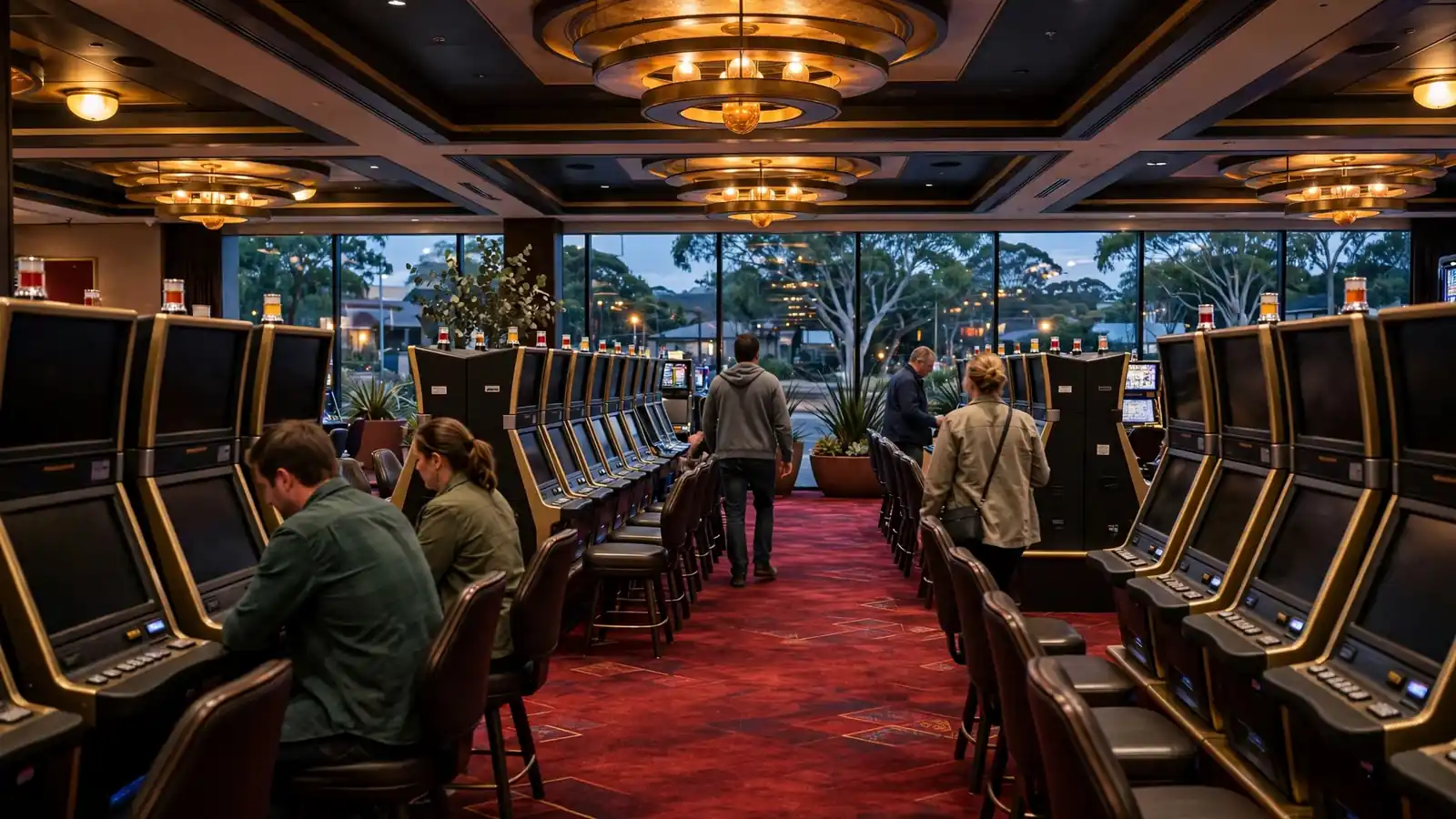
“Pokies parlour” is an informal phrase, not a formal category in Australia’s casino licensing system. A person using it may mean a physical casino where poker machines are available, or may simply be looking for a place to play pokies. The word “parlour” does not, by itself, tell you what kind of venue is involved, where it is, or which authority regulates it.
That distinction matters because a casino is not defined solely by the presence of machines. The Australian casino market consists of properties licensed in the state or territory where each property operates. The relevant jurisdiction matters more than the wording someone uses to describe the venue. A label on a sign, a directory entry or a review may be useful as a starting point, but it is not a substitute for identifying the property and its location.
The phrase can therefore point towards a real, land-based casino without naming one. It may also be used loosely in material that treats very different kinds of gaming venue as interchangeable. If you are trying to understand what a particular reference means, first establish whether it identifies a physical property. Then check which state or territory it is in and whether the name refers to the casino itself or to a broader venue or complex.
When looking for a pokies parlour-style casino online in Australia in 2026, it helps to check the practical details that are available, such as licensing, minimum deposits and payout options. Use this list as a quick reference when deciding what to look into further.
Wild Tokyo
Wild Tokyo lists a A$10 minimum deposit. Its stated payout times are 30–60 minutes for crypto and 1–5 days for fiat.
SkyCrown
SkyCrown lists the Tobique Gaming Commission as its licensing authority. Its stated payout times are around 10–15 minutes for crypto and 1–5 days for fiat.
Rollero Casino
Rollero Casino is listed under Curacao Gaming Control Board licence OGL/2023/176/0095, held by Hollycorn N.V.
DragonSlots Casino
DragonSlots Casino is listed under the Curacao Gaming Authority, with Jumpman Gaming Ltd named as the operator.
GoldenCrown
GoldenCrown is listed under Curacao Gaming Control Board licence OGL/2023/176/0095, held by Hollycorn N.V.
Uptown Pokies
Uptown Pokies is listed as operating under a Curacao licence and as having operated since 2017. Its stated minimum deposit is A$20.
Ricky Casino
Ricky Casino lists crypto payouts in under an hour and PayID payouts in 1–3 business days. The minimum deposit is A$20, or A$30 to qualify for the bonus.
Vegaz Casino
Vegaz Casino is listed under Curacao licence OGL/2024/1335/0780. Its stated minimum deposit is EUR 20.
7Bit Casino
7Bit Casino is listed as operating under a Curacao licence, with Dama N.V. named as its operator.
Kingmaker
Kingmaker lists crypto payouts at around 90 minutes and fiat payouts in 1–5 days. Its stated minimum deposit is A$30.
The difference is practical. A location-based description is about a place you can identify on a map; a general phrase such as “pokie parlour” may be little more than a category label. It does not establish that a specific property exists, that the description is official, or that every venue using similar language has the same status. Names can sound precise while leaving the important details blank.
Australia’s casino framework is jurisdictional rather than one national venue licence. Each casino property operates under a licence issued by its local state or territory authority. That means the same broad label can refer to properties governed under different local arrangements. For a reader, the useful comparison is not between phrases such as “parlour casino” and “pokies parlour casino”; it is between identifiable properties, their jurisdictions and the details that can be checked for each one.
A specialist casino review has described the Australian market as having more than 20 full-scale casinos spread across all eight states. Treat that as a description from that type of publication, rather than a permanent count: venue inventories and classifications can change. The more durable point is structural. Casino properties are distributed across different jurisdictions, so a national phrase does not point to a single regulator or one standard location.
This is why “pokies parlour” can be a poor guide to the kind of place being discussed. It may communicate the broad idea of a physical venue associated with poker machines, but it does not tell you whether the venue is a licensed casino, what facilities it includes, or whether the word is being used casually. A casino may also sit within a larger hotel or entertainment complex, making it important to distinguish the licensed casino property from the surrounding business.
When comparing descriptions, keep three questions separate: Is the reference to a physical place? Is that place a casino property? Which jurisdiction issued its licence? Answering them in that order prevents a loose label from doing too much work. If the description gives only a general name and no location, there is not enough information to make a meaningful comparison. If it supplies a city or address, you can connect the description to a specific property and its local setting.
The word “pokies” can also make the phrase feel more specific than it is. It signals the kind of gaming a reader may have in mind, but it does not identify a particular casino or prove that the venue’s official classification is “parlour.” The exact wording is not the deciding criterion. Location and jurisdiction are.
So, in Australian use, “pokies parlour” is best read as a loose description that may lead you to a physical casino, not as a legal or licensing term. To understand a particular reference, look for the actual property and the state or territory responsible for it. The phrase is a starting point, not an address.
A sign-up bonus can sound like a useful shortcut: create an account, meet the stated conditions and receive a promotional credit or other benefit. A no-deposit offer may appear even simpler because it suggests that no initial payment is required. Neither description tells you whether the service is permitted to provide online casino gambling to people in Australia.
That distinction matters more than the wording of the offer. Under the Interactive Gambling Act 2001, operators cannot legally provide real-money online casino games to people physically located in Australia. A bonus does not change the nature of the service it is attached to. If the promotion leads to online slots, poker or table games for real money, the offer itself is not evidence that the operator is authorised to provide them here.
A promotion is a claim made by a business. It may describe what the business says it will provide after registration, or the conditions it says apply to a promotional credit. It cannot, on its own, establish the business’s legal status in Australia.
| What the wording tells you | What it does not establish |
|---|---|
| The page is advertising a sign-up incentive | That the service is permitted to provide online casino games in Australia |
| The offer is described as requiring no initial deposit | That the service has been approved by an Australian regulator |
| A registration process is being presented | That the account is with a licensed Australian online casino |
The distinction is easy to lose when a promotion is presented alongside familiar casino language. “Pokies parlour” may describe a physical venue in ordinary Australian usage, while a sign-up offer is generally framed around creating an online account. Shared wording does not make those two things the same service.
Treat the venue and the offer as separate claims. A physical casino operates under a licence issued by its state or territory. That does not grant an online service permission to provide real-money casino games to Australians. Nor does a name, logo or reference to a land-based venue establish that an online account is connected to that property.
If you encounter a sign-up or no-deposit promotion, separate its practical wording from what it might imply. The page may describe eligibility, account steps or restrictions on using a credit. Those details concern the promotion as presented; they do not answer whether the underlying service may legally offer online casino gambling in Australia.
Be wary of treating phrases such as “available to Australian players” or “local-friendly” as regulatory explanations. They are promotional descriptions, not proof of permission. Likewise, a foreign licence, a polished website or an Australian-facing support page does not turn an offshore online casino into an Australian-authorised one. The relevant question is not whether the offer sounds accessible, but what service is being offered and whether that service may lawfully be provided here.
Legal Prohibition
Under the Interactive Gambling Act 2001, operators cannot legally provide real-money online casino games to people physically located in Australia.
“No deposit” also describes only one claimed feature of an offer. It does not mean that participation has no conditions, that a later payment will never be requested, or that the service has been checked by an Australian authority. Read the wording narrowly. Do not infer safeguards or approval from the absence of an upfront payment.
A useful comparison separates three things: the promotional claim, the account or service behind it, and the legal position for people in Australia. The offer may be the most prominent part of the page, but it is the weakest of those three as a guide to authorisation.
This is also why the size or apparent generosity of an incentive is not a sensible basis for choosing an online casino. A larger promise does not make a prohibited service permissible; a smaller one does not make it safer. The outcome depends on the criterion you care about, but legality is not something a bonus can settle.
If your interest is a physical casino, check information about the venue itself rather than assuming that an online registration promotion belongs to it. If the offer is for online real-money casino play, the Australian legal position is the key distinction—not whether the promotion uses the words “sign-up,” “no deposit” or “pokies parlour.”
Promotional wording is not authorisation. That is the test.
A casino-style website can load on your device without being permitted to provide its service in Australia. Those are separate questions: one concerns whether a page is reachable; the other concerns whether the operator may legally offer the gambling service to people physically in the country. A working login or account page does not settle the second question.
Under the Interactive Gambling Act 2001, operators cannot provide real-money online casino games to people in Australia. That prohibition covers casino-style services such as slots, poker, blackjack and roulette. An overseas address, a familiar-looking brand or an alternate domain does not create an Australian authorisation. There is no lawful route for an operator to provide these online casino services to Australians simply by making its website available.
That distinction matters when a search for online pokies leads to a page that appears functional. A website may accept account traffic, or one address may stop resolving while another appears. Neither circumstance establishes that the service is permitted. Domain access is a technical matter; legal status depends on the rules governing the service and the operator’s conduct. A page opening is not a licence.
The Australian Communications and Media Authority (ACMA) is the federal regulator responsible for enforcing the Interactive Gambling Act and monitoring compliance with federal interactive-gambling laws. When an operator provides or advertises a prohibited service, ACMA can investigate and take enforcement action.
One of its available measures is to ask Australian internet service providers to block access to websites that provide prohibited interactive gambling services or advertise them in Australia. Blocking can change which addresses resolve through Australian providers. It can also mean that an address associated with a service is inaccessible while a different domain later appears. These changes do not amount to approval of any replacement address. The underlying legal question remains the same.
ACMA’s enforcement figures show the scale of this work, but they need to be read with their time frame attached. Since November 2019, the regulator has blocked more than 1,455 illegal gambling and affiliate websites following enforcement actions. The count concerns websites, not a count of individual players or a list of services currently available.
There is a reported discrepancy in the number of illegal services that have withdrawn since enforcement began in 2017: one figure says more than 210, while another reports more than 190. Both describe withdrawals from the Australian market since 2017, but they do not agree on the total. The difference is a reason to state the figures carefully, not to treat either as a precise, settled current count.
A block is an enforcement measure, not a consumer rating. It does not establish that every inaccessible site was identical, nor does a site’s continued availability prove that it has avoided scrutiny or is authorised. Similarly, a domain change may alter access without changing the nature of the service. The address is not the deciding criterion.
If you are assessing a claim that an online casino is available to Australians, separate the claim into two parts: can the page be reached, and is the service legally permitted to be offered here? Only the first can be answered by loading the page. For online casino-style gambling, the federal law supplies the relevant boundary; a site’s own statements, account functions or alternate web address cannot override it.
That is the useful distinction behind online play from Australia: access describes a connection, not permission. ACMA’s blocking and enforcement role exists because prohibited services can remain visible, change domains or continue to attract traffic. A functioning website is therefore not evidence of lawful availability. Just a connection.
Words such as “free chips”, “free spins” and “play for free” describe promotional language, not a verified feature of a casino or other service. They may appear beside a venue’s name, in an advertisement, or on a page that has no clear connection to the physical venue a reader has in mind. The wording alone does not establish who is making the claim or what it covers.
That distinction matters because a “pokies parlour” can suggest a place to visit, while chips and spins are often used to describe online promotions. A phrase combining them does not resolve the ambiguity. It could refer to a claim about an in-person casino, an online service, or simply a page using familiar gambling terms to attract attention. The label is not a reliable description of the underlying offer.
A claim of free play can sound complete while leaving important details unstated. The word may refer to a promotional credit, a limited feature, or an introductory description that depends on conditions elsewhere on the page. It does not, by itself, tell you whether a payment is needed, who can participate, what restrictions apply, or whether the claim is current.
Nor does “free” mean that a reader can assume there are no obligations. Any terms attached to a promotion would need to explain what is offered and what conditions apply. If those terms are absent, difficult to find, or inconsistent with the headline, the headline is not enough to establish what a person would receive. Promotional wording is not a substitute for clear details.
A phrase such as “free chips” can also be used loosely. It may describe a bonus rather than physical casino chips, and it does not confirm that a particular venue has made the claim. “Free spins” is similarly a promotional label, not proof that a service is available to Australians or that the wording has been authorised by the named venue.
For a physical casino, useful details identify the venue and describe something that can be checked directly, such as its location or entry information. A promotional phrase copied onto a third-party page does not verify those details. Look for who published the claim and whether the named venue itself confirms it; do not treat a matching logo or name as confirmation on its own.
If the wording points to an online service, the same caution applies, with a further distinction: a promotion does not establish that the service may lawfully provide online casino games to people in Australia. A page loading, or using an Australian-sounding label, is not proof of permission. The offer and the service’s legal status are separate questions.
The practical test is simple: identify what “free” is said to mean, who is making the statement, and whether the details support it. If those points are unclear, treat the phrase as advertising language rather than a confirmed benefit. A catchy label can be precise about nothing.
A useful review should make clear what it is reviewing. “Pokies parlour” can describe a physical casino in casual language, but a page may instead discuss an online service—or slide between the two. Before weighing its verdict, identify the subject. A review of a venue can tell you about its location, entry arrangements and facilities; an online-service review is a different kind of material, and its claims should not be treated as evidence that real-money casino games may legally be offered to people in Australia.
A simple comparison helps:
| Check | A physical casino review | An online-service review |
|---|---|---|
| What is being assessed? | A named venue and its on-site facilities | A website, account service or online game offer |
| What can you verify? | The venue’s address and published entry information | Whether the page clearly identifies the service and its claims |
| What should not be confused? | A positive venue description with a guarantee of entry | A working website or persuasive review with Australian authorisation |
That distinction is the first test, not a technicality.
For a physical venue, look for details that can be checked independently: the property’s name, address, jurisdiction and current visitor information. A description of the atmosphere is an opinion; an address is a factual claim. Treat them differently. If a review gives entry guidance, compare it with the venue’s own published conditions. Major Australian casinos require valid photo identification, and the minimum casino-entry age nationwide is 18.
For online claims, keep the legal context in view. Under the Interactive Gambling Act 2001, operators cannot provide real-money online casino games to people located in Australia. A reviewer’s positive label, a foreign licence reference or an account-access claim does not change that rule. Nor does a page become reliable simply because it looks detailed. The internet has no shortage of confident adjectives.
Reviews often combine reported facts, personal impressions and sales language. Mark which is which. “The venue has a particular facility” is checkable; “the experience is unbeatable” is a judgement with no stated criterion. Promotional wording may also make benefits sound certain while leaving conditions unclear. If a review does not explain how it reached a verdict, the verdict has little value.
Notice whether the writer names the basis for comparisons. A review might favour a venue for its location, while another reader may care more about accessibility or facilities. “Best” means little unless the review says best by what measure—and whether that measure matters to you.
A credible review should distinguish its own assessment from information attributed to the venue, and should not present uncertain details as settled facts. Check whether the page has a publication or update date, whether its links lead to relevant information, and whether it discusses limitations as well as positives. A page that only repeats promotional language offers little basis for a decision.
Finally, check that the review does not blur venue access with online access. A physical casino’s location and entry rules are not evidence about an online service. Keep the categories separate, then judge each claim on the evidence it can actually support.
Casino locations are easier to compare when the state or territory is the first column and the venue’s address is the second. The available details are uneven: some identify a street address, while others give only a precinct or regional count. Treat counts attributed to a specialist casino directory as a dated snapshot, not a permanent map of Australian gaming venues.
Located at 93 Barrett Drive, Alice Springs, NT 0870, Australia.
Located on Broadbeach Island in the Gold Coast area.
That directory lists three casinos across three Northern Territory cities. It identifies Alice Springs as the city with the most casinos in the territory, while assigning it one. Read literally, that makes the location count useful for orientation, not for implying that Alice Springs has a larger cluster than the other cities. Venue listings can change, so confirm the address with the casino before setting out.
One named location is Lasseters Casino, at 93 Barrett Drive, Alice Springs, NT 0870, Australia. The full address is more practical than a city name alone: it distinguishes the casino from other places and businesses in Alice Springs and gives you a specific destination to verify on a map. If you are comparing listings, keep the venue name and address together; a result that shows only “Alice Springs” is less precise.
The directory’s territory-wide count and its Alice Springs entry describe different levels of detail. The first gives a broad sense of distribution; the second points to a particular city and venue. Neither should be stretched into a claim about the size, facilities or current operating status of a casino. Location data answers where a venue is listed, not what a visit will involve.
On the Gold Coast, Jupiters Gold Coast Casino & Hotel is located on Broadbeach Island. That places it in a named precinct, rather than providing a street number. When comparing this listing with the Alice Springs address, note the difference: one is a complete street address, the other identifies an island precinct in the Gold Coast area. They are both useful location clues, but they do not offer the same level of navigation detail.
For a practical comparison, record the jurisdiction, city or area, and the most specific location provided. Then check the venue’s own current directions before travelling. A map pin, street address and precinct name are not interchangeable; each provides a different degree of precision. Small distinction, useful outcome.
If you are looking for a physical casino, separate three things in any listing: the venue’s name, its city or region, and its actual address or precinct. This prevents a broad regional label from being mistaken for a door location. It also makes inconsistencies easier to spot—for example, when a listing gives a city but no venue address, or uses a venue name that differs from the one shown elsewhere.
The named Northern Territory and Gold Coast locations illustrate two different kinds of geographic detail: a specific Alice Springs street address and a Gold Coast precinct. Use those details as starting points, then verify the destination directly before travelling. A regional count can help you understand distribution; it cannot replace a current address check.
A bonus claim attached to a casino or parlour name is a promotional statement, not proof of the venue’s status or the service’s legal standing. Treat the wording as something to assess, not as a credential. A polished banner can describe an incentive; it cannot establish that the business is authorised to provide the activity it promotes.
The first useful distinction is what the claim refers to. It may concern a promotion at a physical casino, or it may be advertising an online gambling service. Those are not interchangeable. The Interactive Gambling Act 2001 prohibits operators from providing real-money online casino games to people in Australia, and advertising real-money online casinos to Australian audiences is also prohibited. A bonus label does not change that position.
For a promotion connected with a physical venue, read the conditions rather than relying on the headline. Look for the venue or business named, what the promotion applies to, who may take part, and any stated restrictions. If those details are unclear, the claim is difficult to evaluate. The word “bonus” does not tell you whether the promotion is available to you or what participation involves.
Gambling promotions are subject to restrictions, including rules on inducements. Advertising of gambling services must comply with applicable restrictions, with particular care required between 5:00 AM and 8:30 PM. That matters when a claim appears in an advertisement, not just when it appears on a venue’s own page. Promotional language is not exempt from the rules because it is framed as a reward or perk.
A quick comparison helps separate a concrete claim from an attractive label:
| What you see | What to establish |
|---|---|
| A bonus attached to a venue name | Whether it refers to a physical casino or an online service |
| A headline describing a reward | The stated eligibility and conditions |
| Promotional copy presented as reassurance | Whether it offers verifiable information beyond the claim |
Use the same standard for a “pokies parlour bonus” or any similar phrase: identify what is being promoted and check the actual conditions. Do not treat a bonus as evidence of licensing, approval or permission to offer a service. Promotion is not proof.
A “VIP” label describes how a venue or experience is presented; it does not establish that anyone can walk in. It may refer to a members-only casino, a restricted area within a venue, or simply promotional wording. Treat access as a separate question from the label.
For physical casino entry, age is a clear baseline: the minimum age is 18 across Australia. Major Australian casinos also require valid photo identification. Bring acceptable ID and check the venue’s own entry information before travelling, particularly if you are unsure whether your document will be accepted. A glossy description is not an entry policy.
Other conditions can depend on the particular venue or area. If a page mentions membership, guest access, reservations or an invitation, look for the corresponding terms from the venue rather than assuming that “VIP” means unrestricted entry. Check whether the stated conditions apply to the whole casino or only to a particular space. That distinction matters: access to a restaurant or entertainment area does not automatically establish access to casino gaming areas.
A useful comparison is straightforward:
| What the label says | What you still need to establish |
|---|---|
| VIP access | Whether entry is open, member-based or invitation-based |
| Premium area | Which parts of the venue the condition covers |
| Guest access | What the venue permits and what ID is required |
If the information is unclear, contact the venue directly before making plans. Do not rely on an unofficial description to settle an access question. The right choice depends on what you need: public entry, membership access or a specific facility. The label alone cannot tell you which applies.
A parlour-pokies search can sound as though it points to one room or a single kind of venue. The national figure offers a different frame: 3,308 gaming machines are endorsed on venue licences and installed in Australian casinos.
That total describes machines across the casino sector, not the number at any one property. It also does not tell you how many are available in a particular area, or whether a venue has changed its floor since the figure was compiled. A national count is useful for scale; it is not a venue directory.
The wording matters. In Australia, “pokies” is a familiar term, but a broad search can blur a physical gaming venue with other kinds of gambling. The machine total concerns casino premises. It should not be read as a count of machines in every pub, club or gaming venue, nor as a measure of online services.
If you are comparing claims about scale, keep the criterion consistent: does the number refer to machines licensed and installed in casinos, or to a wider category of venues? Those totals answer different questions. A larger figure is not automatically more informative if its scope has expanded.
Nor does the national total indicate how a particular venue is arranged or what its entry conditions are. Those details need to be checked against information about that property, rather than inferred from the countrywide count. The total is a snapshot of scale, not a promise about what you will find on a casino floor.
For a reader assessing the phrase “parlour pokies”, the clearest takeaway is modest: Australian casinos collectively have thousands of installed, licensed gaming machines. The number helps establish the size of that specific part of the casino market, while leaving venue-level details separate.
Useful context. Not a map.
“Real money” describes what may be at stake, not where the gambling takes place. A person looking for a pokies parlour may mean a physical casino, where gaming takes place at a licensed venue. Someone else may be referring to casino-style games offered through a website or app. Those are different settings, with different legal treatment in Australia.
Land-based casinos operate under licences issued by the state or territory where each property is located. Online casino games are not simply the same activity moved onto a screen. Under the Interactive Gambling Act 2001, it is illegal for operators to provide real-money online casino games to people in Australia. That covers casino-style slots, poker and table games, including blackjack and roulette.
So a physical casino and an online casino service should not be treated as interchangeable options. A page using “parlour” may describe a venue, while language about an account or remote play points to an online service. Promotional wording does not change the distinction, and a website’s presentation does not turn prohibited online casino gambling into an authorised Australian service.
When you assess a result, identify the setting first: is it describing a physical venue, or an online service? Then read any claims in that context. A real-money label alone tells you neither that a venue is licensed nor that an online service may lawfully offer casino games to Australians. The format matters.