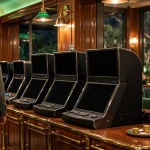
Venue listings can be outdated, so current opening status and pokies availability need to be confirmed separately.
If you are trying to find pokies available in Geelong right now, the useful first step is not to assume that a venue is open because it appears in a directory, on a map, or in an older listing. Those details can lag behind changes to a venue’s schedule. A result that says a club or gaming room is open may not confirm that it is open at the moment you plan to arrive, or that its gaming area is available.
Check directly with the venue before setting out. Use its current contact details and ask whether it is open now and whether pokies are operating. Those are separate points: a venue may be open while a particular area or service is unavailable. If you are planning an early or late visit, make the timing explicit rather than relying on a general listing. A direct answer is more useful than a search result with no recent confirmation.
This matters whether you are looking for somewhere open in the morning, later in the evening, or simply want to know what is available today. A page can remain visible after details change, and a listing may describe the venue rather than the current status of its gaming facilities. Treat online information as a lead, not as confirmation of access.
If you’re looking for online pokies options from Geelong, this list gives you a quick reference to the available licensing, deposit and payout details. Use the information shown to decide which details matter most to you.
Wild Tokyo
Wild Tokyo lists a A$10 minimum deposit. You can also note its stated payout times: 30–60 minutes for crypto and 1–5 days for fiat.
SkyCrown
SkyCrown lists a Tobique Gaming Commission licence and a A$30 minimum deposit. You can check its stated payout times of around 10–15 minutes for crypto and 1–5 days for fiat.
Rollero Casino
Rollero Casino lists a Curacao Gaming Control Board licence, OGL/2023/176/0095, under Hollycorn N.V. You can use that licensing information as a point of reference.
DragonSlots Casino
DragonSlots Casino lists a Curacao Gaming Authority licence, with Jumpman Gaming Ltd named. You can refer to these details when considering the operator.
GoldenCrown
GoldenCrown lists a Curacao Gaming Control Board licence, OGL/2023/176/0095, under Hollycorn N.V. You can use the stated licence details as a reference.
Uptown Pokies
Uptown Pokies states that it has operated since 2017 and lists a A$20 minimum deposit. Its listed licence is Curacao.
Ricky Casino
Ricky Casino lists a A$20 minimum deposit, or A$30 to qualify for the bonus. You can also note its stated payout times: under an hour for crypto and 1–3 business days for PayID.
Vegaz Casino
Vegaz Casino lists a Curacao OGL/2024/1335/0780 licence and a EUR 20 minimum deposit. You can use those details as a quick reference.
7Bit Casino
7Bit Casino lists Curacao as its licence jurisdiction and names Dama N.V. as its operator. You can refer to those details when assessing the casino.
Kingmaker
Kingmaker lists a A$30 minimum deposit. You can also note its stated payout times of around 90 minutes for crypto and 1–5 days for fiat.
Before travelling, check the current schedule with the venue and ask about the specific access you need. If you are unsure whether the pokies area is available, say so. A general answer about opening may not resolve that point. If staff cannot confirm, avoid treating an old listing as a substitute.
It can also help to check again if your plans change. A status you checked earlier may no longer answer whether the venue is open when you arrive. The practical standard is simple: confirm the relevant detail close to your visit, directly with the venue.
Do not read certainty into phrases such as “open now” unless the information is current and applies to the gaming area. A page may show opening details without making clear when they were last checked. If the listing gives no clear date or direct contact route, call the venue rather than filling in the gap yourself.
The right choice depends on what you need to confirm: immediate access, a visit at a particular time, or simply whether a venue can accommodate your plans. There is no useful “best” answer to an opening-status question without that criterion. A venue that suits one schedule may not suit another, and a broad local listing cannot settle the detail for you.
For an immediate visit, ask whether the venue is open at that moment and whether its gaming area is operating. For a planned visit, confirm the schedule for the time you intend to arrive. If you are travelling with someone else, check any access conditions that matter to your group directly with the venue too. Do not infer them from a short directory entry.
The same approach applies when a listing uses broad wording such as “open late” or “open early.” Those labels can mean different things and may not describe the specific day you have in mind. Ask for the relevant schedule rather than interpreting the label as a promise.
A short call can save a wasted trip. Keep the question direct: is the venue open at the time you plan to arrive, and are pokies available then? If the answer is unclear, ask for clarification. If you cannot reach the venue, treat its current status as unconfirmed instead of assuming that an old page is accurate.
You must also be at least 18 to gamble in Australia. If you are below that age, you cannot use a venue’s pokies, even if it is open.
The reliable answer to “Are there pokies open in Geelong now?” depends on a current confirmation from the venue itself. Use listings to identify where to ask, not as proof that the doors or gaming area are available. Check first. Then travel.
“Best” only means something once you decide what you are comparing. A pokie that suits you because its rules are easy to follow may not suit someone focused on its return setting. And a familiar title is not automatically the best-paying option: the name alone cannot tell you which RTP setting applies.
RTP, or return to player, describes a game’s return percentage. A specialist review reports that some providers let casinos choose between different RTP settings for the same pokie. As a result, two versions with the same title may not have the same return percentage. If RTP matters to your comparison, look for information about the specific version and setting rather than relying on the game’s name or reputation.
That detail can change the comparison. A game title is an identifier, not a complete specification. Even if you recognise a pokie from elsewhere, you cannot assume that the setting is identical at another casino. Where the relevant RTP information is not available, the honest comparison is limited: you can assess the title’s other known features, but you cannot establish its return setting from the name alone.
A useful comparison starts with a criterion you can actually assess. Before deciding which pokie seems preferable, separate the questions:
These criteria answer different questions. A higher stated RTP, if you can confirm it for the exact version, addresses return percentage; it does not tell you whether the game’s features appeal to you. Clear rules make a game easier to assess, but they do not establish a better return. Preference is a valid criterion, just not a substitute for measurable information.
For someone comparing the best pokies in Geelong, the same discipline applies whether the interest is in a local gaming room or a game encountered elsewhere. First decide what “best” means to you. Then check what can be established about the specific game and setting. If there is no reliable information about an attribute, leave it out of the ranking rather than filling the gap with guesswork. A tidy table with an empty cell is more useful than a confident claim with no basis.
RTP is not a promise about what you will receive in a particular session. Each spin is generated through a Random Number Generator, and the result of one spin does not determine the next. A past result, a run of wins or losses, or a belief that a game is “due” cannot tell you what the next spin will produce.
This matters when you see a game described as best paying. That phrase can blur two separate ideas: a stated return setting and the outcome a player happens to experience. The former is a characteristic of a particular configuration; the latter is uncertain. Even a confirmed RTP does not guarantee a return to an individual player, and it does not turn a random result into a predictable one.
Check if the return percentage is stated for the particular version you are considering.
Ensure you understand how the game works and the conditions attached to its features.
Look for clear information on how wins may be distributed rather than relying on reputation.
Assess whether the pace and presentation suit what you want from a session.
The comparison should therefore be precise. If the criterion is RTP, compare confirmed settings for the same version. If the criterion is ease of understanding, assess the rules. If the criterion is personal enjoyment, decide whether the design and pace suit you. Do not use one measure as a shortcut for another.
A Geelong venue’s game selection, a title’s popularity, or a player’s anecdote cannot by itself establish that a pokie is the best-paying choice. The winner depends on your criterion, and some criteria need information that may not be available for every version. Keep the distinction clear: name what you can verify, qualify what you cannot, and do not treat any past spin as evidence about the next one.
The label is not the setting.
A phone or computer does not change the rules that apply to real-money pokies. If you are in Geelong—or anywhere else in Australia—the Interactive Gambling Act 2001 makes it illegal for an operator to provide real-money online casino games to people in Australia without a domestic licence. No Australian online casino licences have been issued, so there is no locally licensed online casino to turn to.
That distinction matters when an online offer appears to be aimed at Geelong players. A location-specific label, mobile-friendly page or promise of a bonus does not change the operator’s legal position. Nor does it establish that the service is licensed in Australia. The legal boundary concerns who provides the gambling service, not whether you access it on a phone, at home or while travelling.
The Act targets operators rather than individual players. Australians are not made criminally liable simply for playing on an offshore site that accepts them. That does not make the offshore service lawful in Australia, and it does not give you the protections or remedies available through a domestic licensing system.
The Australian Communications and Media Authority (ACMA) enforces the Act and blocks access to illegal offshore gambling sites. Internet service providers must comply with ACMA’s blocklist. Access may therefore be disrupted; a page loading successfully at one moment is not proof that the operator is permitted to serve Australian customers.
This is a narrow but important distinction: the operator’s conduct is prohibited, while the player is not penalised merely for playing. Neither point should be mistaken for an endorsement. There is no Australian-licensed online casino. A neat distinction, not a safety net.
If an offshore casino refuses to pay winnings, Australian players have no legal recourse in Australia against that casino. That is the practical consequence to weigh before treating a real-money offer as a dependable way to play. A site’s own terms may describe a dispute process, but that does not create an Australian legal remedy.
The same applies to claims about high limits, maximum bets or “no deposit” bonuses. Those claims are not evidence of Australian licensing, and they do not alter the position if a withdrawal is disputed. A local place name on a page does not make an offshore operator a Geelong venue or bring it under Australian casino licensing.
Legal Recourse
If an offshore casino refuses to pay winnings, Australian players have no legal recourse in Australia against that casino.
For the same reason, searches for online pokies near Geelong or a casino experience on a mobile browser should not be read as proof that an Australian-licensed option exists. The legal position is national, not specific to Geelong. A browser can make an offshore service visible; visibility is not permission.
When deciding what an online offer means, separate three questions: whether the operator may lawfully provide the service in Australia, whether the player faces a penalty simply for playing, and what recourse exists if the operator does not pay. The answers are different. Operators cannot lawfully provide these services to Australians without a domestic licence; the law targets operators, not individual players; and Australian players have no legal recourse here if an offshore casino withholds winnings.
So a real-money online offer should not be treated as an Australian-licensed casino option, whether it is described as Geelong-focused, mobile, or promotional. The location wording may be local. The legal boundary is not.
A map search can help you plan a trip, but a result labelled near Geelong, North Geelong, the CBD or the airport is not, by itself, confirmation that a venue offers pokies or that its location details are current. Treat the map as a starting point. Before setting out, check the venue’s own current address and contact it if anything is unclear. That is more useful than relying on a pin whose label happens to match your destination.
Airport wording needs the same care. A search for pokies at Geelong Airport may reflect a hope for somewhere inside the airport, nearby, or simply convenient after arrival. Those are different location questions. Check the address rather than assuming that a result is inside the terminal or on airport grounds. If you are travelling from the airport, confirm the route and destination before you leave; a nearby label does not establish how close a venue actually is.
For a CBD trip, distinguish the place you want to reach from the area name attached to a search result. Verify the street address and route, and make sure the venue itself—not just a nearby landmark—is the destination. If you are already in Geelong, “near me” results can also depend on your device’s location settings. A result appearing on screen is not a substitute for checking where it is.
A simple comparison table can keep the practical details separate:
| Check | What to confirm |
|---|---|
| Destination | The venue’s address, not just an area label |
| Starting point | Your actual location, airport or CBD |
| Route | The route to the confirmed address |
| Contact | Whether the venue can clarify any uncertainty |
The best option for you depends first on the location criterion: shortest practical trip, a specific starting point, or a destination you have independently confirmed. Without a confirmed address, ranking places by proximity would be guesswork.
It is also worth deciding what boundaries you want in place before you travel. Deposit limits, loss limits and session time limits are responsible-gambling tools; use them to set a clear stopping point rather than making decisions once you are at a machine. Self-exclusion is another tool if you want to prevent yourself from gambling at venues that offer it. Check how an option works and whether it applies to the venue you intend to visit—do not assume one setting automatically covers every place.
If the trip is mainly about playing, pause before leaving and decide whether it still fits your budget and plans. A location result cannot tell you whether gambling is right for you, and a convenient route does not make a session more predictable. Keep the journey and the gambling decision separate: confirm where you are going, then stick to the limits you chose.
That is the useful distinction behind searches for venues near Geelong, the airport or the CBD. Confirm the destination directly, plan the route from your actual starting point, and use responsible-gambling tools to set boundaries. No local shortlist is a substitute for those checks.
A venue’s machines alone do not tell you how seriously it handles gambling harm. If you are assessing a gaming room in Geelong, use oversight as a practical criterion: who is responsible for responding to concerns, and how are incidents recorded? That is a more useful basis for judging venue care than calling one room “best” without a clear measure.
A report published by regionriverina.com.au says that, from 1 July, venues with more than 20 gaming machines are required to have a dedicated responsible gambling officer (RGO) on duty whenever those machines are operating. The threshold matters: the reported requirement applies to venues above it, not automatically to every gaming venue. If you want to understand the arrangement at a particular location, ask whether it has an RGO and how patrons can contact that person. A clear answer is more informative than a general statement that staff are available.
The same report describes a requirement for venues to keep a gambling incident register. It is intended to record events where a patron’s behaviour suggests they may be at risk of gambling harm or already experiencing it. The register is a venue record, not a public scorecard, so you should not expect to inspect it or use it to compare clubs. The useful check is whether staff can explain how concerns are recognised and passed to the responsible person.
These safeguards address different parts of the response. An RGO provides a designated point of responsibility while machines are operating; an incident register creates a record of relevant occurrences. Neither tells you how often a venue has dealt with concerns, and neither proves that no harm occurs there. A safeguard is a process, not a guarantee.
When speaking with staff, keep the questions specific. Ask who handles a concern about a patron’s gambling, how you can reach that person, and whether staff can explain how an incident is documented. You can also observe whether the answer is direct and consistent. You do not need to disclose personal details simply to ask how the process works.
For a fair comparison, apply the same checks at each venue you visit. If your priority is access to a named contact, the RGO arrangement may be the more relevant criterion. If you are looking for evidence that concerns are formally recorded, ask about the incident-register process. Those are distinct measures; one does not substitute for the other.
This approach will not produce a ranking of Geelong gaming rooms, and it should not. Without venue-specific information, assigning a winner would confuse a general safeguard with proof of better local practice. Check the arrangements directly, and judge each venue by the same questions. Clear criteria first. Ranking later.
A venue’s opening hours and its pokies operating hours are not automatically the same thing. A place may be open for food, drinks or other activities while its gaming machines are switched off. Conversely, a listing that describes a venue as open around the clock does not, by itself, establish that pokies can be played at every hour.
That distinction matters when you are trying to find a Geelong venue for a particular time. A “24-hour” label can refer to the business generally, may be out of date, or may not specify machine access at all. Treat it as a claim to confirm, not as proof of continuous gaming.
For a specific visit, contact the venue directly and ask two separate questions: when is the venue open, and during which hours are its gaming machines operating? If you are checking a listing or an older notice, confirm that the details are current. That is more useful than assuming the machine schedule follows the building’s opening times.
There is one operating-hours safeguard worth distinguishing from a venue timetable. RegionRiverina.com.au reported that, from 1 July, venues operating more than 20 gaming machines are required to have a dedicated Responsible gambling officer (RGO) on duty for the period those machines are running. This requirement links the officer’s presence to machine operation; it does not state when a particular venue may start or stop operating its pokies.
So the RGO rule cannot verify a “24-hour” claim, identify a late-night venue or supply Geelong opening hours. Nor does the presence of an officer tell you that machines are available at the moment you arrive. It concerns oversight while machines are in operation, not a promise of access.
When checking hours, look for information that answers the exact point you need. “Open” may describe the venue, while “pokies operating” refers to the machines. If the distinction is unclear, ask directly rather than relying on a general label. The best answer depends on your purpose: for a meal, venue hours may be enough; for gaming-machine access, you need the machine schedule.
A clock icon or an all-day description can be convenient, but neither settles the question. Confirm the venue’s current details before making the trip, and keep opening hours separate from machine operating hours. Different questions.
A mention of Crown alongside Geelong does not, by itself, establish that a Crown casino or Crown pokies venue is in Geelong. Treat the name and the location as separate details to confirm. Before making plans around a Crown-branded gaming room, check the venue’s own current information and contact it directly if the location or services are unclear.
That distinction matters when you are looking for a particular kind of visit. A search for Crown pokies may lead you to information about a Crown venue elsewhere, while your practical need is access to pokies in Geelong. A shared name in a result is not proof that the venue is local, that it has the gaming facilities you have in mind, or that those facilities are operating when you plan to go.
Use the location as your first filter, then confirm the venue name and the specific service. Check the address against a reliable map, read the venue’s own description, and contact staff to resolve anything that remains ambiguous. Do not rely on a brief listing or a page title to establish where a gaming room is. Small detail, large detour.
The phrase “best pokies room” also needs a criterion before it can be useful. You might mean a room that is easy for you to reach, offers a particular setting, or has facilities that suit your visit. Without a confirmed venue and a defined preference, “best” is just a label. A Crown reference does not settle the question, and it does not make a venue in Geelong the winner by default.
Likewise, a question about the maximum cash payout on pokies cannot be answered from a venue’s name alone. Do not assume that one headline figure applies to every machine or every venue. If a stated payout matters to your decision, ask the venue for the terms that apply to the specific machine or game and have staff clarify any conditions before you play. A maximum is not a promise that a particular outcome will occur.
Keep the checks separate: first establish that the venue is actually in the place you intend to visit; then verify what it offers; then ask about any payout conditions relevant to your choice. That is more useful than treating “Crown” and “Geelong” as interchangeable.
If you are looking for pokies at a club in central Geelong, the useful first distinction is between a venue’s location and its gaming facilities. A club may describe itself as being in Geelong without being in the CBD, and a general venue listing does not establish whether pokies are available there.
A sound comparison would need a confirmed club name and address, evidence that it has gaming machines, and current venue-level information. The better choice depends on what matters to you, such as proximity, accessibility or the venue’s approach to responsible gambling.
Before making a trip, contact the club directly. Ask whether it has pokies, whether they are available to visitors, and what conditions apply to access. Check the address against a current map as well: “Geelong” and “Geelong CBD” are not interchangeable labels. Treat third-party directory entries as a starting point, not confirmation of what is operating at a particular address.
Machine numbers alone would not settle which venue is preferable, even if you found them. They describe the scale of a gaming area, not whether the venue suits you or what support is available. Look for clear information from the club about its policies and who to speak to if gambling is becoming difficult.
If you want to exclude yourself from pokies, ask the venue what self-exclusion process it offers and how it works in practice. Confirm whether it applies only at that club or has a broader scope, and ask what steps are needed to activate it. Do not assume that a policy mentioned online covers every venue or is automatically in effect.
For a practical shortlist, compare only clubs whose address and gaming access you have confirmed directly. Then judge them by the same criteria rather than by an unverified label such as “best in the CBD.” If the venue cannot answer basic questions about access or exclusion clearly, that is useful information too. A confident description is not the same as a confirmed facility.
A mention of Parkes alongside Geelong does not identify a particular gaming venue. The place names may have been combined in a broad search, copied from separate searches or used to ask about more than one area. None of those possibilities tells you where a venue is, whether it has pokies, or whether it is open.
Treat the locations separately before making plans. If you mean Geelong, confirm the venue’s address and gaming-machine access directly with the venue. If you mean Parkes, check that location independently rather than assuming a Geelong listing also covers it. A shared result or phrase is not evidence that the places are connected.
The same distinction applies to “best”. A place-based request and a game comparison are different tasks. A game’s name cannot establish that it is available at a particular venue, and a venue’s location does not show that one game is better than another. Some providers allow casinos to choose among different return-to-player settings for the same game, while each spin remains an independent random event. Those details matter when comparing games, but they cannot answer where a specific pokie can be played.
For a useful comparison, keep the questions in separate columns: which location you mean, which venue you have confirmed, and what game information the venue can provide. If the location remains unclear, the comparison has no reliable starting point. A tidy table cannot repair a misplaced place name.
Avoid treating “Parkes and Geelong” as a single local area unless a venue confirms that it serves both. Before travelling, check the exact address and whether the gaming area is accessible; do not rely on a search phrase to settle either point. That simple check is more useful than guessing which town a listing was meant to describe.
The practical answer is straightforward: establish the town first, then verify the venue. Only after that does it make sense to consider what is available there.
A cashless option can mean different things: paying at a venue without notes or coins, using a card at a machine, or transferring money through a bank service. Those are separate arrangements. Do not assume that Geelong venues offer cashless play, or that a payment method available elsewhere can be used at a local machine. The practical check is direct: ask the venue which payment methods it accepts for gaming and whether any conditions or fees apply.
The same distinction matters when comparing Geelong with Newcastle. A payment feature would not, by itself, show that one venue has better pokies or is a better fit for you. If cashless access matters, compare venues on that specific criterion and confirm the details with each one. A name or payment logo is not enough.
PayID is an Australian bank-transfer feature, not a venue payment system. It links a transfer to an alias such as an email address, mobile number or ABN through the New Payments Platform. That platform is available through major Australian banks and protects transfers with end-to-end encryption. These details describe how PayID transfers work; they do not establish whether a Geelong gaming venue accepts PayID, or whether a gambling service is licensed or fair.
Before making a payment, be clear about where the money is going and what the payment is for. A bank-transfer option and cashless machine play are not interchangeable. If a venue cannot clearly explain its payment process, pause rather than guessing. For an in-person visit, the venue is the right place to confirm its current arrangements.
Yes, Australian players can legally play on offshore sites that accept them, but companies cannot legally offer real-money online pokies to Australians without a domestic licence, and none have been issued. If an offshore casino refuses to pay, you have no legal recourse in Australia.
A wagering requirement is the amount you must bet before bonus winnings can be withdrawn. For example, a 40x requirement on a $500 bonus means $20,000 in bets; if it applies to a $500 deposit plus a $500 bonus at 35x, that means $35,000 in bets.
There is no Australian-licensed online casino, and you have no legal recourse in Australia if an offshore casino refuses to pay your winnings. Treat that lack of domestic protection as a significant risk when considering an offshore site.