A practical look at venue hours, getting there, pokie availability, returns and safer-play considerations in Tasmania.
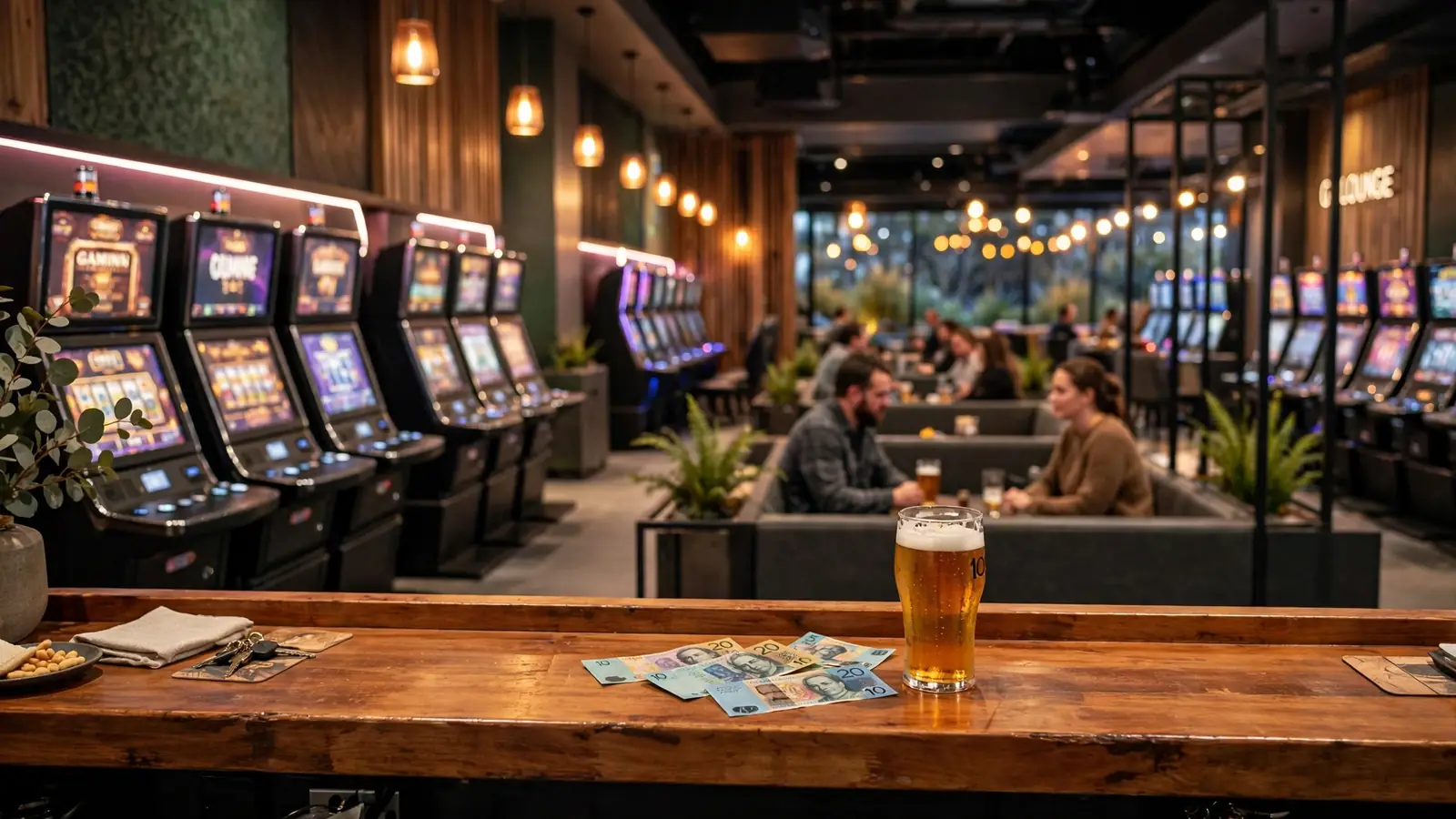
A venue’s connection with pokies does not tell you whether it is open now. A machine may be part of a venue’s facilities, but that alone is not confirmation that the doors are open, that the gaming area is operating, or that either will be available when you arrive. Check the particular venue’s current information before setting out.
Start with the venue’s own website or another channel it controls. Look for opening details that apply to the day you plan to visit, rather than relying on an old listing or a general description of its services. If the information is unclear, contact the venue directly and ask two separate questions: whether the venue is open at your intended arrival time, and whether pokies will be operating then. Those are related details, not interchangeable ones.
Opening information can be easy to misread when it covers a venue as a whole. A page may describe facilities without confirming when each one is available. An event notice or older post may also remain visible after the details have changed. Check when the information was published and whether it refers to the date you have in mind.
Be precise when you contact staff. Instead of asking only whether the venue is open, give your intended day and approximate arrival time, then ask whether the pokies area will be operating. If you are planning around an early or late visit, make that clear. This avoids treating a general opening statement as an answer about a particular service.
A third-party listing can help you identify a venue’s contact details, but it is not the same as a current confirmation from the venue. If two sources disagree, the venue’s own recent information or a direct reply is the more useful basis for your plans. Do not assume that a listing remains accurate simply because it still appears online.
A mention of pokies tells you something about what a venue may offer; it does not establish its hours. Nor does the presence of machines prove that they are operating at the time you visit. The practical check is therefore venue-specific and time-specific: confirm the venue’s opening status, then ask about the machines.
This distinction matters when a result uses broad wording such as “gaming available” or describes a venue as a place to play. Such wording can describe a facility without answering whether it is open at a particular hour. If the page does not state the day and time you need, avoid filling the gap with an assumption.
There is also a staffing condition relevant to larger venues. A report published by regionriverina.com.au describes a requirement, effective from 1 July, for venues with more than 20 gaming machines to have a dedicated responsible gambling officer (RGO) present while those machines are operating. That detail concerns the conditions under which machines operate; it does not, by itself, confirm a venue’s opening hours.
If you are checking a larger venue, you can ask whether the pokies are operating at your intended time and whether the required RGO is on duty. The key point is not to infer one answer from the other: a venue’s advertised opening time does not automatically confirm machine operation, and a staffing requirement does not give you a live timetable.
Use a short sequence rather than relying on a single clue:
If you cannot get a clear answer, treat the opening status as unconfirmed and check again before travelling. That is more reliable than interpreting a general venue description as a live update. For searches about Tasmanian pokies being open now, the useful answer is the one tied to the specific venue, date and time—not a broad statement that a venue has machines.
Choosing pokies in Tasmania means finding an option that fits your preferences and deposit or payout needs. These details offer a starting point for checking what each listed operator has to offer.
Wild Tokyo
Wild Tokyo accepts a minimum deposit of A$10. Its stated payout times are 30–60 minutes for crypto and 1–5 days for fiat.
SkyCrown
SkyCrown lists the Tobique Gaming Commission as its licensing authority. Its stated payouts take around 10–15 minutes for crypto and 1–5 days for fiat, with a A$30 minimum deposit.
Rollero Casino
Rollero Casino is licensed by the Curacao Gaming Control Board under OGL/2023/176/0095, with Hollycorn N.V. identified as the operator.
DragonSlots Casino
DragonSlots Casino is associated with the Curacao Gaming Authority, and Jumpman Gaming Ltd is identified as its operator.
GoldenCrown
GoldenCrown is licensed by the Curacao Gaming Control Board under OGL/2023/176/0095, with Hollycorn N.V. identified as the operator.
Uptown Pokies
Uptown Pokies is listed as operating under a Curacao license since 2017. Its minimum deposit is A$20.
Ricky Casino
Ricky Casino lists crypto payouts in under an hour and PayID payouts in 1–3 business days. The minimum deposit is A$20, or A$30 to qualify for the bonus.
Vegaz Casino
Vegaz Casino lists a Curacao license, OGL/2024/1335/0780, and a minimum deposit of EUR 20.
7Bit Casino
7Bit Casino is listed as Curacao-licensed and operated by Dama N.V.
Kingmaker
Kingmaker states crypto payout times of around 90 minutes and fiat payout times of 1–5 days. Its minimum deposit is A$30.
“Best” needs a measure. If you are comparing pokies in Tasmania, return to player (RTP) is one useful criterion: it describes the share of wagered money a game is designed to return over extended play. It is not a promise about what you will receive in a particular session, or a way to predict the next result.
That distinction matters when looking for the best-paying pokies. A game’s title alone does not tell you its return setting. A specialist review reports that some providers let casinos choose between different RTP configurations for the same pokie. The percentage can therefore depend on the casino’s version, not just the game’s name. To compare like with like, look for information about the specific setting available at the venue you are considering.
If the setting is not disclosed, you cannot make a sound RTP comparison from the title alone. A familiar game may appear in more than one version, and a result quoted for one casino does not establish the setting used elsewhere. Treat any comparison as incomplete unless it identifies the relevant RTP and where that configuration applies. A neat game-name list is not a substitute for the missing measure.
RTP is a theoretical measure across many plays. It can help distinguish settings when reliable information is available, but it does not forecast an individual outcome. A higher stated return may be a relevant comparison point if your priority is the published long-run return. It does not mean that a particular machine will pay sooner, that a short session will produce a return, or that one casino’s game is a better choice for every player.
The strongest comparison is therefore specific: same game, identified RTP setting, and confirmed casino context. Without those details, claims about the “best” option are difficult to test. If your priority is something other than the stated return, RTP alone cannot settle the choice. “Best” depends on the criterion you actually value.
This also limits what can honestly be said about Tasmanian venue pokies. Naming a game as a top pick would imply that its relevant setting and performance can be compared. Without that information, a ranked list would look precise while leaving out the detail that gives the ranking meaning. A criterion first; a ranking second.
Each spin is generated separately by a Random Number Generator (RNG). In practical terms, the previous result does not make a particular outcome due, and a run of wins or losses does not establish what the next spin will do. The game does not owe a return on a timetable.
That independence is why recent outcomes are a poor substitute for RTP information. A machine that has not paid recently cannot be identified as more likely to pay on the next spin from that fact alone. Nor does a recent win show that another win is more likely to follow. Short runs can feel like patterns; they are not a reliable comparison method.
RTP and randomness answer different questions. RTP concerns a game’s theoretical return over extended play. The RNG determines the result of each spin. Neither gives you a dependable way to predict a short session’s outcome. Keep those measures separate when comparing casino pokies: one may describe a configured long-run rate, while the other explains why individual results remain uncertain.
For a practical comparison, ask whether the RTP is stated for the exact version, whether the casino context is clear, and whether the claim is being treated as a long-run measure rather than a session forecast. If the answer to the first two is no, the return cannot be compared confidently. If someone uses recent wins or losses as proof, that is not a substitute for either measure.
This approach applies whether you are considering a city venue, a CBD location or another Tasmanian setting. Location does not reveal a game’s RTP, and the name of a casino does not establish which configuration is in use. Compare only what is identifiable; leave the rest unranked. No false precision.
A venue described as “near the airport” is only useful if you know which airport and which destination the description refers to. Tasmania-wide searches can bring together places that are not close to one another, while “CBD” may mean the central area of a particular town or city. Before planning a trip, identify the specific venue and confirm its address. A broad label is not a route.
 Pokies in Adelaide: Venue Hours and What to CheckLearn how to verify gaming-area hours, assess “best-paying” claims, plan an airport visit and distinguish local venues from online pokies searches.
 Best Pokies in Melbourne: Locations and Opening HoursCompare Melbourne pokies venues by location, transport access and opening hours, with checks for airport routes, CBD clubs and late-night play.
For travel from an airport, enter the venue’s full address into a current mapping or transport service and check the journey for your intended arrival time. Compare the available route options rather than relying on a short distance shown on a map: road access, transfers and service availability can affect how practical a trip is. If you are collecting someone or arranging a taxi or rideshare, use the confirmed venue address as the destination, not a general search result or an assumed landmark.
The same check applies when travelling from a CBD. Confirm which central area you are starting from, then compare the route to the exact venue. A venue may be described as close to a town centre without being convenient from your accommodation, workplace or transport stop. Walking distance and travel time are different measures, and neither should be inferred from the word “near”.
If you are looking across northern Tasmania or another broad region, narrow the search to a town or a named destination before comparing travel options. A regional label does not establish where a particular venue is. Likewise, a reference to Tasmania and Victoria in the same search does not tell you whether the intended destination is in Tasmania or across the water in Victoria. Check the state and address before setting out.
Keep the details that affect your journey together: the venue’s confirmed address, your starting point, the travel option you plan to use and the time you expect to arrive. Recheck transport information close to departure, since routes and service details can change. If a result gives only a venue name or a general area, find a more precise address before relying on it. Guesswork is a poor travel plan.
If you are already nearby, check the route from your actual location rather than treating “near me” as a fixed area. Location results depend on where your device places you, and the first result is not necessarily the closest suitable destination. Compare addresses and routes directly. This is especially useful when you are unfamiliar with the area or travelling between an airport and a central district.
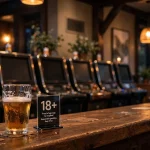
Age is a separate requirement from distance: gambling in Australia, including playing pokies, is for people aged 18 or over. Getting to a venue does not change that rule. Plan around the destination you have confirmed, not an assumed location.
When comparing physical pokies venues in Tasmania, oversight is a more useful criterion than a venue’s name or appearance. Two venues may both offer pokies, but the practical question is whether staffing and incident-recording arrangements are in place. These details do not identify a “best” venue on their own; they give you a concrete basis for judging how a venue handles gambling-related risks.
A report published by regionriverina.com.au says that, from 1 July, venues operating more than 20 gaming machines are to have a dedicated responsible gambling officer (RGO) present whenever those machines are running. The threshold matters: this staffing condition applies to venues above it, rather than every venue simply because it has pokies. For a larger venue, the relevant point is that the officer’s duty is tied to machine operating hours, not just general venue opening hours.
The RGO is a venue-level role. When assessing a particular place, you can ask whether a responsible gambling officer is on duty while its machines are operating. A clear answer is more informative than a general statement that a venue takes responsible gambling seriously. If you are comparing locations in or around a CBD, apply the same question to each one; a central address does not tell you anything about staffing arrangements.
The same report describes a requirement for venues to maintain a gambling incident register. It is intended to capture details of relevant occurrences, including situations where a patron’s behaviour suggests they may be at risk of gambling harm or already affected by it. This makes incident recording a separate comparison point from having an RGO on duty. One concerns who is present during machine operation; the other concerns whether specified events are documented.
For a simple comparison, use two checks:
| Oversight point | What to establish |
|---|---|
| RGO coverage | For a venue above the machine threshold, whether a dedicated RGO is on duty while the machines operate |
| Incident recording | Whether the venue keeps a register for relevant gambling-related occurrences |
These checks are specific, but they do not amount to a ranking. A venue with a suitable staffing arrangement may still differ from another in other ways, and a register is a record-keeping measure, not proof that no harm occurs. Treat both as evidence about oversight rather than as a promise about outcomes.
If staff cannot explain who is responsible for gambling-related concerns or how incidents are recorded, that is useful information for your comparison. You need not infer anything about a venue from its size, location or branding alone. Ask about the arrangements directly, and compare the answers on the same basis. The better fit depends on the criterion you value: visible staffing, documented incident handling, or both.
Paperwork matters.
Questions about pokies aboard the Spirit of Tasmania and questions about online deposits concern different things. A ferry’s name, or a mention of pokies in a search result, does not establish that gaming machines or a gambling service are available on board. Treat any claim about onboard play as something that needs direct confirmation from the ferry operator; do not infer availability from unrelated venue information.
Legal Warning
Under the Interactive Gambling Act 2001, providing real-money online casino games to people in Australia without a domestic licence is prohibited, and no such licences have been issued.
The same distinction applies to searches mentioning a Tasmanian casino or Crown. A name in a listing does not confirm that a venue is open, that it offers pokies, or that it is connected with an online service. Check the specific venue’s own current information before relying on a claim. An online page using a familiar venue name is not proof of an official connection.
PayID is a way to address a bank transfer, not a casino or a gambling licence. It works through Australia’s New Payments Platform and links a payment to an alias such as an email address, mobile number or ABN. For real-money online play, using PayID requires linking it to a bank account first. That describes the payment mechanism; it does not establish that a gambling service is lawful, fair or safe.
In Australia, the legal distinction matters. The Interactive Gambling Act 2001 prohibits operators from providing real-money online casino games, including pokies, to people in Australia without a domestic licence, and no such licences have been issued. PayID’s availability cannot change that position. Nor does a payment option prove that a site is authorised or that it will handle a dispute in your favour.
Phrases about online pokies, real-money play or a no-deposit bonus should therefore not be treated as evidence of an approved offer. A bonus label does not create an exception to the law or verify who runs the site. Offshore operators may accept Australians, but if one refuses to pay, Australian players have no legal recourse in Australia. ACMA blocks illegal offshore gambling sites, and access to a site or a working payment route is not a guarantee of protection.
Keep the comparison clear: ferry access is a question for the ferry operator; a physical venue’s facilities are a question for that venue; PayID is only a bank-transfer alias. None of those details, alone, verifies an online gambling service. Different questions, different checks.
A venue that stays open late is not automatically a place where pokies operate all night. The hours of a bar, club or hotel may not match the hours for its gaming area. If you want to know whether you can play overnight, check the specific venue’s current information and confirm that it refers to the pokies, not just the building.
This distinction matters when comparing Tasmanian venues. A general opening-hours listing can tell you when a venue welcomes customers, but it may not say when its gaming machines are available. Look for a separate statement about gaming hours. If the venue’s information does not make that clear, contact the venue directly before travelling. A listing that says “open now” is not, by itself, confirmation that pokies are operating.
The same care applies to claims of round-the-clock access. Treat “24-hour pokies” as a claim about machine operation, not a shorthand for a venue with long opening hours. Check the exact location and the relevant day, since information for one venue cannot establish the hours at another. Without an explicit, current confirmation of overnight machine access, do not assume it is available.
There is also a staffing condition relevant to machine operation at larger venues. A report published by regionriverina.com.au says that, from 1 July, venues with more than 20 gaming machines are required to have a dedicated responsible gambling officer (RGO) on duty whenever those machines are operating. That requirement concerns staffing while machines run; it does not establish that a venue operates them at any particular time.
For a practical check, separate the questions: is the venue open, and are its pokies operating during the hours you plan to visit? Confirm both against venue-specific information. If you cannot find a clear answer about machine hours, ask the venue rather than relying on a broad opening-hours result or an old listing.
That keeps “open late” and “pokies available late” from being treated as the same thing. For an all-night visit, the useful detail is the venue’s stated gaming hours—not a general promise of access. Verify the detail close to your planned visit, because venue information can change. Clear confirmation beats guesswork.
A familiar pokie title is not enough to establish its return setting. A specialist review reports that some game providers let casinos choose between multiple RTP configurations for the same game. As a result, two casinos can offer a pokie with the same name but different stated return percentages.
That distinction matters when you compare pokies in Tasmania. A game’s title identifies the product, not necessarily the version or configuration available at a particular venue. If return is your comparison criterion, look for information that identifies the setting, rather than relying on the name alone. If the venue does not make that detail clear, you cannot make a like-for-like comparison from the title.
To make a like-for-like comparison, you must identify the specific RTP setting available at the venue. Because the same game can have different configurations across different casinos, a figure found in one place cannot safely stand in for another venue’s configuration.
RTP is only one piece of a game’s information. It does not, by itself, tell you the maximum bet or the maximum cash payout. Those are separate details, so a return percentage should not be treated as an answer to either question.
The same applies when you are comparing a game across different venues. First confirm that the return figure refers to the version offered there. Then check the game’s own displayed information and the venue’s terms for any separate bet or payout conditions. If those details are not available, mark them as unknown in your comparison rather than filling the gap with an assumption.
A useful comparison table can stay simple:
| What to check | What it tells you |
|---|---|
| Game title and version | Whether you are comparing the same configuration |
| Published RTP setting | The stated return setting for that version |
| Maximum bet information | A separate limit, not implied by RTP |
| Maximum payout information | A separate payout detail, not implied by RTP |
This approach makes “best” depend on a stated criterion. A higher published return setting may be the relevant comparison if return is your priority, while someone focused on bet size or payout conditions needs those separate details. The title alone settles none of them.
Do not assume that a percentage listed for one casino applies everywhere the same pokie appears. The setting may differ between casinos, so a figure found in one place cannot safely stand in for another venue’s configuration. Check the specific offering you are considering; otherwise, the comparison is incomplete.
The practical rule is plain: compare settings, not just names. A game can look identical on a screen and still have a different configured return elsewhere. Familiar title, incomplete evidence.
Searching for online pokies around Tasmania does not make an offshore website a local casino. The legal distinction is about who provides the service: under the Interactive Gambling Act 2001, companies cannot offer real-money online pokies to people in Australia without a domestic licence. No such licences have been issued, so there is no Australian-licensed online casino.
That matters whether you are looking for online play from Tasmania, a venue near central Tasmania or games described as paying more. A website’s location claims, game selection or payment options do not change its legal status. Nor does a claim that a pokie pays well establish what you might receive: the search phrase is not a reliable measure of return.
Offshore sites may still accept Australian customers, but access is not the same as local authorisation or protection. ACMA, the Australian Communications and Media Authority, blocks illegal offshore gambling sites, and internet service providers must follow its blocklist. A site that appears accessible can be blocked later or through another access route; neither circumstance makes it an Australian-licensed service.
There is also a practical consequence if an offshore casino withholds winnings: Australian players have no legal recourse in Australia to compel that casino to pay. That is a significant gap, not a minor inconvenience. A site’s promises cannot fill it.
The law’s focus is on operators providing prohibited services, rather than imposing a penalty on an individual simply for playing. Still, that does not turn offshore play into a protected local option. If you come across a site, do not treat its availability, branding or claims as proof that it is approved in Australia.
BetStop is not a safeguard against offshore operators: it applies to Australian-licensed operators and does not bind offshore sites. That boundary is important when assessing any self-exclusion claim. For local support, check the terms of the relevant service rather than assuming a tool covers every website.
For a clear comparison, separate physical venues from online services. A Tasmanian venue’s existence does not establish that a corresponding online casino is lawful, and an offshore site’s acceptance of Australian players does not create Australian oversight. If your criterion is legal protection within Australia, there is no locally licensed online casino to compare.
A CBD address does not tell you whether a club has a stronger approach to safer play. Nor does a list of nearby venues establish which one is “best”. For a practical comparison, look at the safeguards a venue makes clear and how it responds when someone appears to be experiencing gambling harm.
A report by regionriverina.com.au describes a requirement for venues to keep a gambling incident register. It is intended to record relevant events, including occasions when a patron’s behaviour suggests they may be at risk of, or affected by, gambling harm. The register is a record of incidents, not a promise that harm will be prevented. Its value depends on staff noticing concerns and responding appropriately.
For you, a useful point of comparison is whether the venue explains how to raise a concern or ask for support. Notice whether staff can direct a patron to the right assistance without making the process harder. This is more meaningful than treating a club’s location or appearance as evidence of safer practice.
Personal controls can also help set boundaries before gambling begins. Deposit limits restrict how much you put in; loss limits set a ceiling on losses; and session time limits help define when to stop. Self-exclusion is an option for people who want to prevent themselves from gambling at a venue or service. These are standard responsible-gambling tools, but they work only if the limits suit your circumstances and you use them consistently.
Pay attention to the environment as well. Venue signage should not direct patrons to gaming lounges when it is within sight of ATMs or EFTPOS terminals. Signage directing patrons to ATMs should not be visible from gaming machines. These details matter because they can affect how easily someone moves from a spending decision to further gambling.
A simple comparison table can keep the criteria separate:
| What you compare | What to look for |
|---|---|
| Incident response | A clear way to raise a concern and seek help |
| Personal safeguards | Deposit, loss and session limits, plus self-exclusion |
| Signage | No directions to gaming lounges near ATMs or EFTPOS terminals, or to ATMs within sight of machines |
The better fit depends on what you need: visible support, practical limits, or a way to step away. No single feature settles the question. Small details matter.
A cashless-pokies label does not confirm that a Tasmanian venue offers a particular machine, card system or account-based payment option. Treat it as a feature to verify directly with the venue, not as a description that applies across the state. The same applies when a place name is attached: wording about Newcastle and Tasmania does not, by itself, identify a venue or establish what payment facilities it provides.
Keep venue payments separate from online transfers. Information about transferring money online says nothing about whether a physical venue accepts cashless payments at its pokies. If you are checking a venue, ask what payment methods it accepts and whether any conditions apply before you travel.
Online gambling payments carry different uncertainties. A specialist gambling-payment review reports that Australian banks and card companies are increasingly blocking transactions to known gambling sites. A declined payment may therefore reflect a bank restriction, not a problem with your card details. This does not make another payment route a safer or more appropriate choice.
The same type of specialist review notes that a credit or debit card gambling deposit may be classified by the bank or card issuer as a cash advance. That can mean a fee of 3–5% and interest starting immediately, rather than the treatment of an ordinary purchase. Check your card’s terms and contact the issuer if the classification is unclear; the cost depends on the issuer’s decision.
A payment method is not evidence that a gambling service is lawful, fair or suitable. For Tasmanian venue machines, confirm the actual arrangement with the venue. For online transactions, consider both bank restrictions and possible charges before taking any action. A cashless label settles neither question.
Yes, Australian players can legally play on offshore sites that accept them, but no Australian-licensed online casino exists. The law targets operators offering real-money pokies without a domestic licence, and you have no legal recourse in Australia if an offshore casino refuses to pay your winnings.
Yes, PayID is treated like any other qualifying deposit method at the recommended sites.
It is the amount you must bet to meet a bonus’s turnover condition before withdrawing winnings. For example, a $500 bonus with a 40x requirement means betting $20,000; if the requirement applies to both a $500 deposit and the $500 bonus at 35x, it means $35,000 in bets.