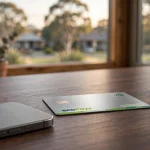
Carrier billing charges a mobile account, while banking-app approval moves funds from the linked bank account.

“Pay by phone” can describe two different things. In one, a purchase is added to your mobile phone bill or deducted from prepaid phone credit. In the other, your phone is simply the device you use to approve a payment from your bank account. The screen may be the same; the payment source is not.
That difference matters when you encounter wording such as “pay by phone bill” alongside casino or mobile gaming terms. A charge to a phone account is carrier billing. A payment confirmed inside a banking app is a bank transaction. Calling both methods mobile payments does not make them interchangeable.
With carrier billing, the mobile provider collects the charge through the customer’s phone account. Depending on the account arrangement, that means the charge could appear on a later bill or reduce prepaid credit. The phone service is the billing channel.
With a bank payment approved on a phone, funds come from the linked bank account. Your handset is an interface: it lets you access the bank’s app and authorise a transfer. It does not turn the transfer into a charge on your mobile bill.
If you’re looking at pay-by-phone casino options in Australia for 2026, use this list as a starting point and check each casino’s available payment methods and terms before depositing. The details below highlight only the information available for each operator.
Wild Tokyo
Wild Tokyo lists a minimum deposit of A$10. Its stated payout times are 30–60 minutes for crypto and 1–5 days for fiat.
SkyCrown
SkyCrown is licensed by the Tobique Gaming Commission. You’ll find a minimum deposit of A$30, with stated payouts of around 10–15 minutes for crypto and 1–5 days for fiat.
Rollero Casino
Rollero Casino is listed with Curacao Gaming Control Board licence OGL/2023/176/0095, held by Hollycorn N.V. That licensing detail is the available point of note.
DragonSlots Casino
DragonSlots Casino is listed with a Curacao Gaming Authority licence and is operated by Jumpman Gaming Ltd. This is the available identifying detail for your review.
GoldenCrown
GoldenCrown is listed with Curacao Gaming Control Board licence OGL/2023/176/0095, held by Hollycorn N.V. The licence is the available detail to consider.
Uptown Pokies
Uptown Pokies is described as operating under a Curacao licence since 2017. Its stated minimum deposit is A$20.
Ricky Casino
Ricky Casino lists a minimum deposit of A$20, or A$30 to qualify for the bonus. Its stated payout times are under an hour for crypto and 1–3 business days for PayID.
Vegaz Casino
Vegaz Casino is listed with Curacao licence OGL/2024/1335/0780. Its stated minimum deposit is EUR 20.
7Bit Casino
7Bit Casino is listed as licensed in Curacao and operated by Dama N.V. Those are the available details for you to use when assessing it.
Kingmaker
Kingmaker lists a minimum deposit of A$30. Its stated payout times are around 90 minutes for crypto and 1–5 days for fiat.
PayID illustrates the distinction. A casino payment flow may ask you to choose PayID, enter an amount, and confirm the transaction in your banking app. The app’s presence does not mean your mobile provider is collecting the money. The bank account is the relevant source of funds.
A bank wire can also be arranged by phone, as well as in person at a bank or online from a computer or mobile device. Here, “by phone” describes how you give instructions. It does not mean the wire is billed to your phone account. The payment rail and the device used to initiate it are separate details.
A quick way to read payment language is to ask two questions: who takes the money, and where does the charge appear? If the mobile provider adds it to your phone account, that is carrier billing. If you approve a bank transfer in an app, the payment comes from your bank. If the description leaves those points unclear, the label alone does not settle the question.
The phrase “mobile casino pay by phone bill” can suggest that a deposit will be charged to a phone account. But a reference to paying on a mobile device may instead mean that a bank payment is approved through an app. Those are different arrangements, with different payment sources and account records. Do not treat a phone-shaped icon or the words “mobile payment” as proof of carrier billing.
 Payments & Crypto for Australian CasinosExplore Australian casino payment topics spanning cards, e-wallets, bank-transfer options and cryptocurrencies, including named coins and services.
 Aristocrat online pokies in Australia: what's verifiedLearn why Aristocrat branding, online availability and Bitcoin payments are separate claims, and what the available facts establish about free and real-money…
There is also a legal boundary behind casino-related wording. Under the Interactive Gambling Act 2001, providing real-money online casino games to people physically in Australia is unlawful for operators. That covers casino-style online games such as slots, poker and table games. A payment label does not change the legal status of the service, and using a phone rather than a computer does not change it either.
So the useful distinction is not “mobile versus desktop.” It is “phone account versus bank account.” A payment may be initiated on a phone without being charged to phone credit, just as a bank wire can be arranged over the phone without becoming a mobile-bill purchase. The device tells you how you accessed the payment process, not necessarily who supplied the funds.
When a payment description is vague, look for the stated payment source and the account that will be debited before taking any action. For a banking-app payment, that means understanding which bank account is involved and what the confirmation screen authorises. For carrier billing, the relevant question is whether the mobile provider will add a charge to your phone account. These are not cosmetic details: they identify who processes the payment and where the transaction is recorded.
Keep the wording precise. “Pay on your phone” can describe a device. “Pay by phone bill” describes a billing route. And “PayID through a banking app” describes a bank payment approved using your phone. Similar wording; different plumbing.
Legal Warning
Under the Interactive Gambling Act 2001, providing real-money online casino games to people physically in Australia is unlawful for operators.
A PayID deposit is a sequence of actions across a payment page and your banking app: select PayID, enter an amount, then review and confirm the transfer in the app. That describes the payment mechanics, not an endorsement of any casino or a claim that a particular service is available to Australian residents.
That distinction matters in Australia. The Interactive Gambling Act 2001 prohibits operators from providing real-money online casino games to people in the country. A payment page labelled “PayID” does not change that legal position. Treat claims that a casino accepts deposits as information about a payment process, not as confirmation that the service may lawfully be offered to you.
Where a PayID payment request is presented, the practical sequence is straightforward:
A correct reference is a small detail with a practical consequence. Without the required account identifier, a payment may remain pending and need manual handling rather than being credited automatically. Keep the payment record, too, so you can describe the transaction accurately if you need to follow up.
PayID casino deposit minimums are commonly listed in the AUD 10–20 range. Some payment pages may state a lower minimum for a bank transfer, including AUD 5, but that figure should not be treated as a PayID minimum: the method and its conditions need to be checked separately.
The minimum is only one part of the decision. A low entry amount does not establish that a service is lawful, suitable, or available to you. Nor does it show what rules apply after a payment is made. Read the payment instructions closely, and do not assume that a displayed minimum will apply to every user or transaction.
PayID Deposit Process
Selection
Select PayID on the payment page, ensuring it is the chosen method.
Amount Entry
Enter the deposit amount, checking that it fits both the payment page's minimum and your bank's limits.
Review
Check the PayID recipient name and the amount within your banking app before proceeding.
Reference Addition
Include your player ID or username in the payment reference to ensure the deposit is matched automatically.
Confirmation
Confirm the transfer in your banking app to release the funds.
First check the transaction status in your banking app and confirm that the amount and reference were entered as requested. If the player ID or username was omitted, the casino may not be able to match the transfer automatically. In that situation, use the service’s stated support process and provide the transaction details it requests; do not send another payment simply to try to make the first one appear.
A pending payment is not proof that a transfer failed, just as a completed bank transfer does not prove that an account has been credited. Keep those two statuses separate when checking what happened. The bank handles the transfer; the receiving service must still identify and post it to an account.
PayID payments to casinos are described as arriving within seconds, with a typical interval of three to fifteen seconds. That timing concerns the transfer reaching the receiving end, not every stage of account crediting. A missing reference, a processing issue, or a separate review can affect what you see on the account page. Fast transfer, separate crediting.
When people look for a way to pay by phone, they may mean a payment linked to their mobile number. In Australia, PayID can fit that description, but it is not a charge added to a mobile phone bill. It is a payment service that works through the New Payments Platform (NPP), using an identifier such as a mobile number or email address to send or receive money.
The distinction matters: a phone number can identify a PayID, while the money moves through a bank payment system. PayID is not a separate pool of phone credit, nor does the identifier itself show what a payment is for. The underlying service is part of Australia’s banking infrastructure.
The NPP is the payment infrastructure through which PayID transfers are made. Payments settle in real time, so the network can move funds between participating accounts without the delay associated with some older transfer methods. The identifier makes it easier to direct a payment without relying on a long account number and bank code.
That description concerns the payment rail, not every service that might display PayID as an option. A payment method’s existence does not establish that a particular business can lawfully offer a service in Australia, or that a payment will be accepted for a particular purpose. The recipient and the context still matter.
The phrase can point to two different ideas. One is a transaction identified by a mobile number, as with a PayID linked to that number. The other is a payment charged to a mobile account. These are not interchangeable: PayID is a bank payment service, not carrier billing.
So, when someone uses wording such as “pay by phone casino”, the practical question is not simply whether a phone is involved. It is whether the proposed transaction is a bank payment using PayID, a mobile-bill charge, or something else. The label alone does not establish the payment path.
Nor does a fast-settling payment network make an online casino service lawful. Under Australia’s Interactive Gambling Act 2001, operators are prohibited from providing real-money online casino games, including slots, poker and table games, to people physically located in Australia. Payment infrastructure and gambling law address different things. A payment method does not change the rules governing the service being paid for.
PayID tells you about how money can be addressed and transferred through the NPP. It does not tell you that a particular casino accepts PayID, that a transaction will be available to an Australian customer, or that a payment recipient is trustworthy. Those conclusions cannot be drawn from the word “PayID” in a payment description or promotional claim.
This is why broad labels such as “top PayID casinos” are not a useful way to understand the system. They blur the difference between a real-time bank payment network and the legality or status of a separate gambling service. The network can settle a transfer in real time; it cannot validate the purpose of the payment or turn a prohibited offering into a permitted one.
The grounded interpretation is narrower: PayID is an Australian payment service operating through the NPP, with identifiers such as mobile numbers and email addresses used to direct payments. “By phone” may describe the identifier or the device involved, but it does not mean the charge goes onto a phone bill. The payment rail is clear. The rest requires separate scrutiny.
A payment method can look attractive on one measure and perform poorly on another. Compare the deposit ceiling, whether the method can also be used for withdrawals, and the time between a request and cleared funds. There is no universal winner: the right result depends on which of those criteria matters most to you.
PayID limits are determined by your bank, not by a single network-wide allowance. Banks set different transaction and daily limits, so the amount available to you may not match another person’s. Check your own banking settings before relying on a payment option for a particular amount.
Other methods have different constraints. POLi is primarily used to deposit, so do not assume it will also be offered for cashing out. Visa and Mastercard can be accepted for deposits, while their withdrawal availability may depend on the payment processor; a card that works for money going in may not be an option for money coming back. A specialist review gives PayID withdrawal thresholds ranging from AUD 20–50 at the lower end to AUD 5,000–10,000 per transaction at the upper end. Treat those figures as that review’s account, not as a standard that applies across the market.
A useful comparison asks not only how quickly a deposit is made, but how winnings can be withdrawn. Operators may ask for a withdrawal to return through the deposit method where that is possible. Confirm the available route before depositing rather than assuming a method works both ways.
For timing, separate the casino’s approval stage from the payment provider’s transfer. A specialist review reports that, after approval, PayID and some e-wallet or cryptocurrency withdrawals can arrive within minutes to hours. The same type of review gives one to five business days as a possible timeframe for bank transfers and card withdrawals. These are reported ranges, not guarantees: processing can vary, and an internal review may add time before funds are released.
If fast access is your priority, compare the whole process, not just the payment rail. If withdrawal availability matters more, a method with a clear cash-out route may suit you better than one that is convenient only for deposits. Dry, but useful.
A deposit bonus does not show that a payment option is faster, safer, or easier to withdraw through. Compare the payment conditions on their own, then assess any promotion by its written terms. A headline offer is not a payment feature.
There is also an important Australian context: the Interactive Gambling Act 2001 prohibits operators from providing real-money online casino games to people in Australia. Payment information does not make such a service lawful or establish that it is available to you. Keep the comparison focused on understanding payment mechanics, rather than treating a payment label or promotional claim as an endorsement.
A deposit method and a promotion answer different questions. PayID, a card or another payment option describes how money is transferred; it does not tell you whether an offer exists, who can claim it, or what conditions apply. The same distinction holds for a no-deposit offer: the phrase describes a promotion’s advertised entry point, not a payment feature or a guarantee that you can withdraw any resulting balance.
In Australia, that distinction has an important legal context. The Interactive Gambling Act 2001 prohibits operators from providing real-money online casino games to people physically in Australia. A promotion labelled “no wagering” or “no deposit” does not change that position. Nor does using a phone, a phone number or a banking app make an online casino offer lawful to provide.
If you encounter promotional terms, read the conditions rather than treating the headline as the offer. Check whether wagering requirements apply, whether maximum-bet rules restrict play while a bonus is active, which games count toward any requirements, and whether time limits or a maximum cash-out condition apply. These details determine what the promotion actually permits. “No wagering” in a headline is not enough to establish that there are no other restrictions.
Keep the payment and bonus questions in separate columns:
| Payment question | Promotion question |
|---|---|
| Which payment method is involved? | Is the offer available, and to whom? |
| Does the payment method affect deposit or withdrawal handling? | What wagering, bet, game, time or cash-out conditions apply? |
| Is the payment reference or account information correct? | Can the advertised benefit be withdrawn, and under what terms? |
A payment reference, phone number or method used to deposit does not settle the promotion question. Some operator terms may also say that withdrawals should return by the deposit method where that is possible; a specialist review has described this as an operator condition, not a universal rule. Read the applicable payment and withdrawal terms separately from bonus conditions. One does not replace the other.
The practical comparison is not “which payment method unlocks the best bonus?” It is whether the payment process and the offer’s stated conditions are independently clear. A payment method cannot remove a wagering condition, waive a maximum cash-out rule or establish that an offer is available to you. If the terms are unclear, the headline is not a substitute for them.
Dry, but useful.
A payment label cannot answer a BetStop question. Whether a site mentions phone billing, PayID or another method does not establish whether its operator is connected to BetStop, whether an exclusion applies, or whether the service is lawful for someone in Australia. Payment availability is not a status check.
That distinction matters when you see claims about a casino that is “not on BetStop.” A payment route cannot prove that claim, and the absence of a particular billing provider does not prove anything about an operator’s relationship to a safeguard. Do not treat “pay by phone” or “not Boku” as evidence that a site is outside an exclusion system—or as a way around one.
There is a separate legal issue. Under Australia’s Interactive Gambling Act 2001, operators may not provide real-money online casino games to people physically located in Australia. This applies to casino-style services, not just to a particular payment method. A phone-bill option, a no-deposit label or a claim about BetStop does not change that.
Keep the checks in the right order. Before sharing personal or banking information, consider whether the service is lawful for your location and whether you should be using it at all. If you have an exclusion or other safeguard in place, do not use a change of payment method to try to get around it. A payment screen cannot confirm that doing so is appropriate.
Payment and account verification are also separate matters. A specialist review reports that identity checks are commonly required before a first withdrawal, and that completing them early can reduce paperwork delays. If a service asks for KYC verification, follow its stated process and submit only through the official account channel. Do not assume that a successful deposit means your identity has been checked or that a later withdrawal will be approved.
The useful criterion here is not whether a payment method appears to be accepted. It is whether you can establish the service’s status and understand the safeguards that apply before you provide details or funds. If those points are unclear, a payment option cannot fill the gap.
A billing method is not a safeguard.
A payment method tells you how a transaction is initiated; it does not tell you what games a website offers, whether a particular game is available to you, or whether a bonus applies to it. The same distinction matters when a phone is involved. With PayID, the deposit flow can involve choosing PayID, entering an amount and confirming the transfer in your banking app. None of those steps identifies or verifies a game.
That matters when you are trying to understand claims about games, pokies or a phone-based casino bonus. A payment label is not evidence of a particular game catalogue or promotion. Nor does a page that mentions phone payments establish that a bonus is available, that its conditions are suitable, or that a game qualifies for it. Those are separate claims, and should not be inferred from the payment process.
There is also a legal boundary in Australia. The Interactive Gambling Act 2001 prohibits operators from providing real-money online casino games to people located in Australia. The prohibition covers casino-style services such as pokies, poker and table games. Offshore online casino services are actively blocked and enforced against. A payment option does not change those rules or make an otherwise prohibited service lawful.
For the same reason, a site described as German-facing—or as serving another country—does not establish that its games or payment features are available to people in Australia. A country label is not a legal or access check. Labels prove little.
Keep the categories separate:
A phone-related payment description can answer only a narrow question about the transaction. It cannot verify a game, a bonus, or a site’s status. Treating those as interchangeable would be like reading a payment button as a catalogue.
A page describing mobile payments for online slots can make several different arrangements sound alike. The important distinction is what the payment channel actually does. PayID is a service on Australia’s New Payments Platform (NPP): it lets people send or receive money using an identifier such as a mobile number or email address. That identifier routes a bank payment; it does not mean the amount is added to your phone bill.
PayID payments settle in real time through the NPP. That describes the payment network, not every step on a merchant’s side. A payment rail can settle while a recipient’s separate account process still determines how a transaction is handled. Nor does the presence of a PayID logo or a mobile-number field establish that a particular overseas casino accepts PayID.
That matters when comparing claims about casinos based in Curaçao or elsewhere, or pages aimed at customers in Germany. A country label, a phone-payment option and an Australian payment identifier are separate details. None proves the others. In particular, the fact that PayID works through an Australian banking system does not show that an overseas operator has access to it or will accept a transfer.
The New Payments Platform (NPP) is the infrastructure for PayID transfers, allowing funds to move between participating accounts in real time using identifiers like mobile numbers or email addresses.
There is also a legal boundary in Australia: under the Interactive Gambling Act 2001, providing real-money online casino games, including slots, to people physically located in Australia is illegal for operators. A payment method does not change that rule or establish that an online casino service is lawful.
So assess the rail on its own terms: PayID is an identifier-based service on the NPP, with real-time settlement. Treat claims about phone billing, foreign casino acceptance or a casino’s status as separate claims that need their own evidence. A familiar payment logo is not a legal check.
A payment described as phone billing and a PayID transfer have different limits because they use different payment arrangements. Phone billing refers to charging a purchase to a mobile account or using prepaid phone credit. PayID moves money from your bank account, with the transfer ceiling set by your bank. A phone’s credit balance does not determine how much you can send through PayID.
For PayID, banks set their own transaction and daily caps, so the amount available to you depends on your account and bank settings. Most major Australian banks allow transactions in the AUD 1,000–5,000 range per payment, while daily limits can range from AUD 10,000 to 20,000. These are banking limits, not a promise that any particular recipient will accept a transfer of that size. A casino’s own payment conditions may set a lower deposit cap.
That distinction matters if you are comparing searches for mobile-billed casino payments in Europe or Ireland with payment options relevant to Australia. A carrier-billed service and PayID are not interchangeable: one relates to a mobile account, the other to a bank transfer. A label mentioning phone payment does not tell you which mechanism applies or what its cap is. Check the actual payment method and its stated limits rather than treating phone credit as a substitute for bank funds.
If you use PayID, your practical ceiling is the lower of the bank’s applicable limit and the recipient’s accepted amount. Your bank’s app or support team can clarify your account’s current settings; limits vary between banks. No guesswork needed.
The distinction is also important in Australia’s legal context. The Interactive Gambling Act 2001 prohibits operators from providing real-money online casino games to people located in Australia. Payment limits explain how a bank transfer is bounded; they do not establish that an online casino service is lawful or available to Australian residents.
A free-spins or credit offer is a promotion, not a payment method. Paying through a phone-based process does not confirm that an offer exists, that it applies to you, or that any winnings can be withdrawn. Treat those as separate checks.
Before accepting an offer, read its conditions in full. Check wagering requirements, maximum bet limits, game weighting, time limits and any cap on cash-outs. These terms determine what you must do before withdrawing and what restrictions may apply. If a condition is unclear, do not assume the more favourable interpretation.
The same applies to credit described as “free”. The label does not tell you whether the funds are withdrawable, which games qualify or what steps are required first. A promotion’s value depends on its terms, not on whether you can make a deposit from your phone.
KYC verification is another separate requirement. A specialist review reports that identity checks are generally requested before a player’s first withdrawal; completing them early may reduce paperwork delays later. Have the requested documents ready and resolve any account details that do not match before requesting a payout.
Keep the decision simple: verify the promotion’s conditions, then verify your account requirements. Neither a free-spins label nor a credit offer changes how the payment itself works. Conditions first.
Minimum deposits commonly start at AUD 10–20. The maximum depends on the casino’s limit and your bank’s PayID limits; major Australian banks commonly allow AUD 1,000–5,000 per transaction, with daily limits of AUD 10,000–20,000.
Some casinos offer PayID withdrawals, but availability depends on the operator. PayID itself can receive real-time payments; casino processing and approval still apply.
PayID casino deposits commonly start at AUD 10–20. Some casinos accept deposits as low as AUD 5 via bank transfer.
PayID is available through Australian bank accounts that support the New Payments Platform, letting account holders send and receive payments using an identifier such as a mobile number or email address.
PayID deposits typically reach the casino within 3–15 seconds. A missing or incorrect player ID or username in the payment reference can delay crediting.
Verified accounts at top-rated PayID casinos may have withdrawal requests reviewed and approved within 2–6 hours. After approval, PayID withdrawals can arrive within minutes to hours, though casino processing can cause delays.