A practical comparison of AUD-to-SOL funding, offshore casino terms, bonus wagering, legal context and withdrawal checks.
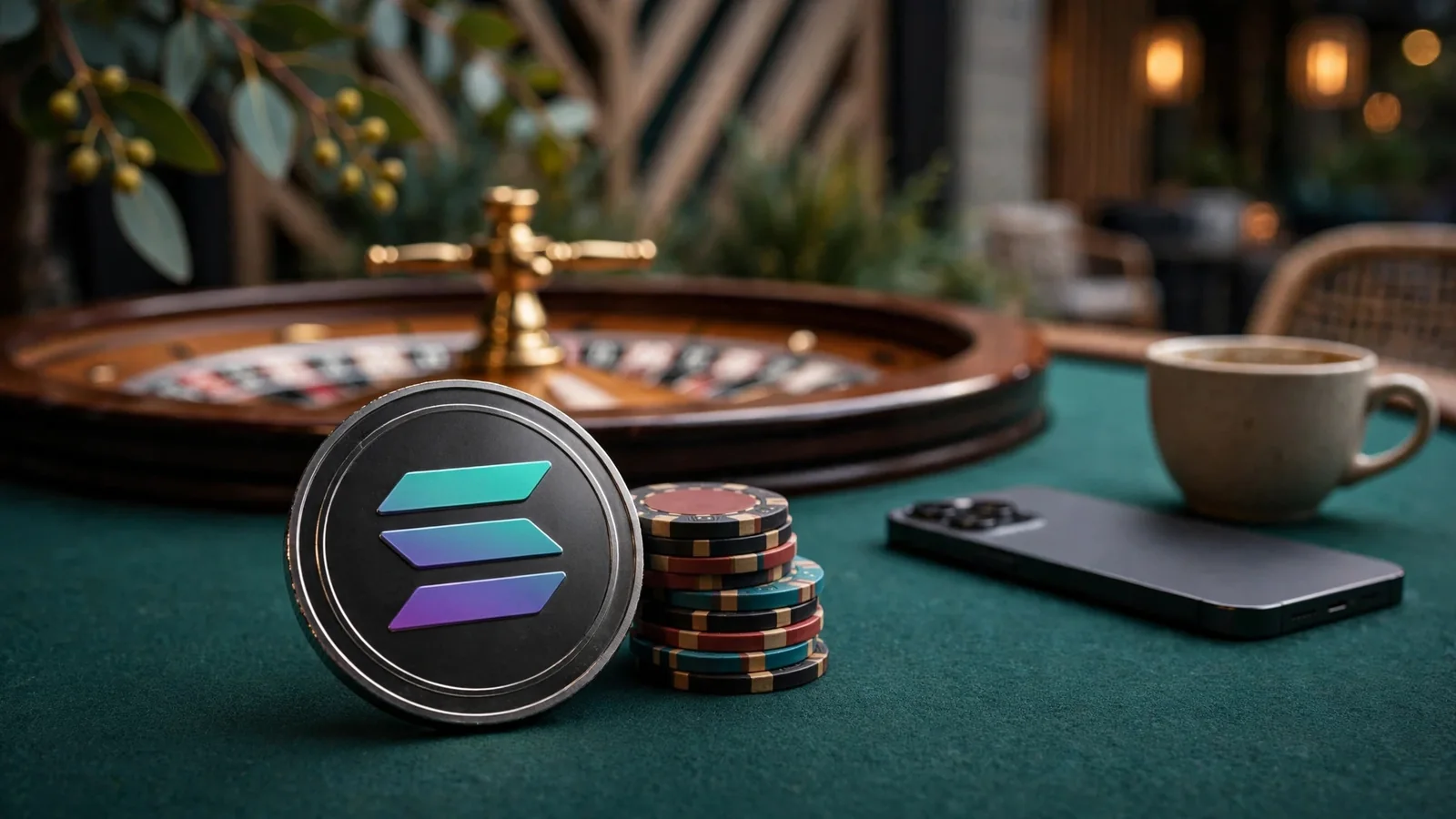
The route from Australian dollars to a casino balance generally has two stages: fund an Australian crypto exchange, then send SOL from the exchange to the casino’s wallet address. Most Solana casinos do not take AUD directly by bank transfer or credit card. The exchange is therefore the on-ramp; the casino receives cryptocurrency, not an AUD payment.
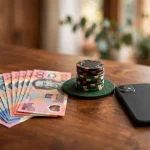
That distinction matters before you start. A bank transfer or PayID payment to an exchange is not the same as paying a casino by card. Australian exchanges including Swyftx, CoinSpot and Coinbase AU support AUD deposits through PayID or bank transfer. Once AUD reaches your exchange account, you can buy SOL there and arrange a withdrawal to the casino. On-ramp services are subject to KYC and anti-money-laundering checks, so allow for account verification before relying on an exchange account to fund anything.
Start by checking that your exchange account is set up for AUD funding and that its payment instructions match the method you intend to use. Follow the exchange’s own deposit details: use the correct reference or payment instructions if provided, and make sure the payment comes from an account accepted by the exchange. Do not send AUD to a wallet address. A crypto address is for a blockchain transfer, not a bank payment.
If you’re comparing Solana casino options in Australia for 2026, use this list as a starting point for checking each operator’s available details. The information here does not confirm which casinos support Solana, so verify payment options before you sign up.
Wild Tokyo
Wild Tokyo lists a minimum deposit of A$10 and a Curacao license. Its stated payout times are 30–60 minutes for crypto and 1–5 days for fiat.
SkyCrown
SkyCrown is licensed by the Tobique Gaming Commission. Its stated payout times are around 10–15 minutes for crypto and 1–5 days for fiat, with a minimum deposit of A$30.
Rollero Casino
Rollero Casino is listed under Curacao Gaming Control Board license OGL/2023/176/0095, held by Hollycorn N.V.
DragonSlots Casino
DragonSlots Casino is listed under the Curacao Gaming Authority, with Jumpman Gaming Ltd identified as the operator.
GoldenCrown
GoldenCrown is listed under Curacao Gaming Control Board license OGL/2023/176/0095, held by Hollycorn N.V.
Uptown Pokies
Uptown Pokies is described as operating since 2017 and licensed in Curacao. Its minimum deposit is A$20.
Ricky Casino
Ricky Casino lists crypto payouts in under an hour and PayID payouts in 1–3 business days. The minimum deposit is A$20, or A$30 to qualify for the bonus.
Vegaz Casino
Vegaz Casino lists Curacao license OGL/2024/1335/0780 and a minimum deposit of EUR 20.
7Bit Casino
7Bit Casino is listed as licensed in Curacao and operated by Dama N.V.
Kingmaker
Kingmaker lists crypto payouts at around 90 minutes and fiat payouts in 1–5 days. Its minimum deposit is A$30.
After the AUD deposit is credited, choose SOL and review the exchange’s order details before confirming the purchase. The amount of SOL you receive depends on the price and the exchange’s displayed transaction costs at that time. There is no fixed AUD value for a given SOL balance: the price can move, and the balance you buy is denominated in SOL rather than Australian dollars.
Next, open the casino’s deposit instructions and select SOL. The site should display a wallet address for the transfer. Compare the address shown there with the destination you enter in your exchange withdrawal form. Check that the selected asset is SOL and that the withdrawal network is Solana. A correct-looking address on the wrong network, or a different asset sent to the address, may not arrive as intended.
Treat the address as the critical detail, not a formality. Copy and paste it rather than retyping, then check the beginning and end against the casino’s displayed address before authorising the withdrawal. SOL transfers are irreversible: if you send funds to the wrong address, they can be permanently lost. There is no bank-style reversal button waiting in the background.
Before sending, check that the deposit page is still open and that the address belongs to the account you intend to fund. Do not rely on an address saved from an earlier visit or a message from someone claiming to provide support. Use the platform’s own deposit screen and follow its instructions for the asset and network.
The casino may set a minimum SOL deposit. One specialist review reports minimums ranging from 0.01 to 0.1 SOL, equivalent to AUD$2.80–$28 at April 2026 prices. Treat that as a reported range, not a promise that every platform accepts those amounts. The operator’s current deposit screen is the practical reference for the account you are using; a transfer below its stated minimum may not be credited.
Keep a record of the exchange withdrawal and the casino deposit address. If the balance does not appear, those details help you identify which transfer you made and provide the relevant information to the platform’s support channel. Do not send another transfer simply because the first has not appeared yet. First compare the destination address and transfer details, and check the casino’s own deposit status.
A wallet transfer is not the same as a guaranteed casino credit. The network can carry a transaction, but the operator still controls whether it credits the account. Solana’s speed does not remove the need to verify the destination or the platform’s instructions.
There is also a legal boundary that belongs in the funding decision: the Interactive Gambling Act 2001 prohibits offshore operators from providing online casino games to people in Australia. The law targets operators rather than directly penalising individual players, but that does not make offshore play legally safe. Australian authorities do not provide recourse if an offshore platform withholds funds or closes. A VPN does not solve that problem; using one may lead to account seizure and loss of funds.
Legal Risk
The Interactive Gambling Act 2001 prohibits offshore operators from providing online casino games to people in Australia, and Australian authorities provide no recourse if funds are withheld.
Read the cash-out terms before depositing, not after a balance has accumulated. Larger withdrawals or bonus cashouts may trigger KYC checks requiring identity documents, and a platform may ask for those before releasing funds. Make sure you understand what information could be requested and whether you are prepared to provide it. If you are not, sending SOL first is the wrong order.
The practical sequence is simple: fund an exchange in AUD, buy SOL, check the casino’s current deposit instructions, then verify the address and network before sending. The difficult part is that the final transfer cannot be recalled. Take the extra moment.
A “best” label does not tell you whether a bonus is usable. One offer may advertise a larger reward but attach tougher playthrough conditions; another may look smaller while allowing more of its games to count. The useful comparison is not the headline amount. It is how much of the bonus could remain withdrawable after you meet every condition.
This is a way to assess the terms shown by offshore platforms, not a recommendation to play. Under the Interactive Gambling Act 2001, offshore operators are prohibited from providing online casino games to people in Australia. A comparison table cannot change that status or make an offshore site legally safe.
Record the bonus amount, the wagering requirement, which balance the requirement applies to, game contribution rates, the expiry period and any maximum cashout. These details work together. Looking at one in isolation can make an offer appear more generous than it is.
Start with the playthrough rule. Check whether the required wagering is calculated on the bonus alone or on the bonus plus your deposit. The difference affects the amount of qualifying bets needed before withdrawal. A specialist review reports a 35x requirement calculated on the bonus only; treat that as a specific reported offer, not as a standard term across Solana casino sites.
Bonus funds are not the same as cash in your account. Winnings generated from bonus funds must be wagered with real money before they can be withdrawn. That makes the wording around “bonus balance,” “cash balance” and “withdrawable winnings” worth reading carefully. If the rules do not make clear which balance is being wagered, or when winnings become eligible for withdrawal, the headline offer is not enough to judge its value.
A wagering requirement can look manageable until you check the game contribution table. If a game category contributes only part of each bet toward the requirement, more betting is needed to complete the same stated target. If a category is excluded, play on it may not advance the requirement at all.
For comparison, write down the contribution percentage for the games you actually intend to play. Do not assume that every game counts equally, or that the contribution shown for one category applies to all games. A bonus designed around one type of play may be a poor fit if your preferred category contributes less.
The effective value of an offer therefore depends on more than its advertised size. Playthrough, contribution rates, the time limit and the maximum cashout all need to be considered together. A large bonus with restrictive terms may leave less value than a modest one with conditions better aligned to your intended play. No single headline figure settles it.
An expiry period determines how long you have to meet the requirements. Compare it with the amount of qualifying play the offer demands and the contribution rates that apply. A short window can make an otherwise clear offer impractical. If the terms say that unused bonus funds or associated winnings expire, note exactly what is lost and when.
Next, look for a maximum cashout. A cap can limit what you may withdraw after meeting the playthrough, even if your balance is higher. Check whether the cap applies to bonus winnings, the whole balance, or another defined amount. If this is unclear, do not count the full advertised bonus as potential value.
Compare offers line by line rather than relying on labels such as “top,” “best” or “VIP.” The strongest option on one criterion may be weaker on another. For instance, a more generous headline offer may have lower game contributions or a tighter expiry; a smaller offer may have a less restrictive cashout cap. The winner depends on which conditions matter to you, not on the platform’s description of itself.
| Term | What to record |
|---|---|
| Playthrough | The multiplier and whether it applies to the bonus alone or another balance |
| Game contributions | The percentage that counts for the games you plan to play |
| Time limit | When qualifying play must be completed and what expires |
| Maximum cashout | What winnings are capped and how the cap is applied |
| Bonus-to-cash rules | What must happen before bonus-related winnings can be withdrawn |
Read the full terms before depositing, not after a win. Promotional summaries may omit conditions that appear in the detailed rules, and the offer can be worth less once those conditions are included. If the operator’s wording leaves a key term unresolved, treat that uncertainty as part of the comparison—not as a detail to sort out later.
This method will not identify a universally best Solana casino. It can show which advertised offer is less restrictive on the criteria you care about, while keeping the limits visible. “Best” without a criterion is just a label.
Australians may legally buy, hold and transfer SOL. That does not make every use of it lawful. Under the Interactive Gambling Act 2001, overseas operators are prohibited from providing real-money online casino services to people in Australia. The restriction covers casino-style play, including slots and table games; using SOL rather than Australian dollars does not change the nature of the service.
The distinction is between the operator’s conduct and the player’s position. The Act targets operators offering prohibited services to Australian residents, rather than directly penalising individual players for using an offshore site. That does not make offshore play legally safe. A lack of direct player penalties is not approval, protection or a guarantee that a dispute will be resolved in your favour.
The Australian Communications and Media Authority (ACMA) enforces the Act and blocks unlicensed offshore gambling websites. A site being reachable at a particular moment is therefore not proof that it is permitted to serve people in Australia. Access can be restricted, and a website’s availability does not establish that its operator is accountable to Australian authorities.
A Solana casino can present its service as global, accept digital assets and operate through an offshore business. None of those features overrides the Australian restriction on providing online casino games to residents. Nor does a foreign licence, where an operator claims to have one, make the service lawful to offer here.
Avoid treating a change of web address or a workaround as a solution to the legal issue. Using a VPN may expose your account to seizure and put funds at risk. It does not turn a prohibited service into an authorised one.
The practical risk is not limited to whether a site loads. If an offshore operator freezes an account or withholds winnings, you have no legal protection under Australian law against that outcome and no recourse through Australian authorities to compel the operator to pay. An operator may be outside the systems available to local consumers, while the Act’s enforcement is directed at providers rather than designed as a recovery route for players.
That matters before you decide to use a site, not just after a balance becomes difficult to withdraw. A platform’s own statements about fairness or service do not supply the protections that would come from an Australian legal remedy. If funds are withheld, being able to point to a transaction on Solana does not by itself provide a way to recover them from the operator.
There are two separate questions: whether you can lawfully own and transfer SOL, and whether an offshore business may provide casino games to you while you are in Australia. The first is permitted; the second is prohibited for the operator under the Interactive Gambling Act 2001. The player is not directly penalised under the Act simply for taking part, but that limited distinction should not be mistaken for a safe or protected route to gambling.
For a comparison of offshore Solana casinos, the Australian legal position is therefore a constraint, not a feature to score as though one platform could remove it. No operator’s payment method, site access or marketing claim changes the restriction or supplies Australian consumer recourse. The legal risk stays with the service arrangement, and the exposure to withheld funds stays with you.
When you assess a slot bonus, separate the headline amount from the work required to turn bonus funds into withdrawable winnings. The key question is how each bet counts toward the wagering requirement. Slot play is commonly assigned a 100% contribution, meaning each eligible stake counts in full. Blackjack and roulette, by contrast, may count at only 10–20%. The same requirement can therefore take less qualifying turnover to complete on slots than on those table games.
A 35x requirement on the bonus alone is calculated differently from a requirement that includes deposited funds, which changes the total amount of qualifying turnover needed.
That difference is about contribution, not a promise of profit. A full contribution rate does not remove the house edge or make a bonus worthwhile by itself. If you would not otherwise choose slots, switching to them just to clear a requirement may expose you to more play than you intended. Compare the requirement with the contribution rules for the games you actually plan to play.
Read the promotion’s terms to see which slot bets qualify. A stated contribution rate may apply only to eligible games or play, and the operator’s rules determine what counts. Also check whether the requirement applies to the bonus alone or to the bonus plus your deposit: that distinction changes the amount of qualifying turnover.
For example, a 35x requirement on the bonus alone is calculated differently from a requirement that includes deposited funds. Do not assume the larger-looking bonus is better. The relevant comparison is how much eligible wagering is required, how much time you have to complete it, and whether a cashout cap limits the result.
This is arithmetic, not generosity.
Free spins are not always treated like cash in your balance. Their winnings may be credited as bonus funds, then made subject to a separate wagering condition before withdrawal. A specialist review describes an example of free-spin winnings carrying a 50x requirement; that is an illustration of a possible term, not a rule that applies to every promotion.
Check whether spin winnings are withdrawable immediately or must first meet their own requirement. Then look for any limits on eligible games, bet size, expiry, or maximum cashout. A promotion can have one set of rules for the original bonus and another for winnings generated by free spins. Counting only the headline offer misses the second layer.
For a Solana slot machine promotion, the token used for play does not change the operator’s bonus accounting. What matters is the written rule for qualifying bets and credited winnings. Before depositing, save or read the full terms and identify the requirement attached to each part of the offer. If the terms do not clearly explain how slot play and free-spin winnings count, treat the advertised value as uncertain rather than assuming every spin moves the same balance toward cashout.
The useful comparison is therefore not “which Solana casino sites offer the biggest bonus?” It is which terms fit your intended play, with contribution, turnover, time limits and cashout conditions all considered together. A high slot contribution can make progress easier to measure; it cannot make unclear terms clear.
“NFT casino” can describe several different things: a casino that accepts Solana, a site that displays NFT artwork, or a service claiming that an NFT unlocks a benefit. Those are not equivalent. A Solana payment feature can be checked as a technical function; a claim about what a particular token does needs evidence tied to that token and the operator’s terms.
The network’s measurable contribution is speed and transaction cost. A specialist review reports that Solana transactions confirm in about 400 milliseconds, with balances updating immediately. The average transaction fee is $0.00025 USD, effectively zero. These properties can make on-chain transfers quick and inexpensive. They do not show that an NFT changes game outcomes, grants usable access, pays rewards, or can be sold for a particular amount.
Treat a claimed NFT benefit as a separate promise to verify. Look for a clear explanation of what the token provides, how the casino recognises it, whether the benefit can be withdrawn or transferred, and what happens if the operator changes its terms. If the only evidence is promotional wording or an image on a page, that does not establish practical utility or market value. An NFT may be technically present while its promised casino function remains unclear. A fast chain cannot make that distinction for you.
Nor does an NFT label establish that a casino is trustworthy. It says nothing by itself about who controls the platform, whether an account can access the advertised feature, or whether the operator will honour a benefit. Separate the verifiable payment properties from claims about ownership, access, rewards or resale. The first can be assessed at the network level; the others depend on the specific token and the operator’s rules.
For Australian readers, this distinction does not change the legal position: the Interactive Gambling Act 2001 prohibits offshore operators from providing online casino games to people in Australia. Using an offshore casino is not legally safe simply because individual players are not directly penalised. Consumer protection is limited, and Australian authorities cannot provide recourse if an offshore operator withholds funds. Promotional NFT language does not alter that.
If you send SOL, check the destination carefully: transfers are irreversible, and sending funds to the wrong address can mean permanent loss. Using a VPN may also lead to an account seizure and loss of funds. Neither an NFT badge nor a low network fee reduces those risks. The useful test is not whether a casino mentions Solana or NFTs, but whether each claimed feature can be explained and substantiated independently. Network speed is not proof of value.
Australian tax treatment can look contradictory when a recreational win is paid in SOL. The distinction is between the gambling result and the cryptocurrency: recreational gambling winnings are generally not taxable, while the Australian Taxation Office treats cryptocurrency as an asset for capital gains tax purposes. Profits from gambling with SOL can therefore have a separate CGT consequence.
That means the label “gambling winnings” does not settle the tax position by itself. If you use SOL to gamble and make a profit, the crypto-related gain may be relevant for CGT even where the activity is recreational. Keep records that let you trace the SOL involved and the outcome of the gambling. Without a clear history, it can be difficult to work out what happened to the asset and explain the figures later.
A crypto casino balance is not automatically equivalent to cash for tax purposes. SOL can change in value, and the ATO’s treatment of cryptocurrency as an asset means that its use in gambling may matter independently of whether recreational gambling winnings are generally taxable. Do not assume that a casino result, a wallet balance and a taxable gain are interchangeable concepts.
Losses need particular care. Gambling losses can be offset against gains only where the player is regarded as a professional gambler, a classification described in a tax specialist’s guidance as difficult to establish. Being a regular player, using a Solana wallet or keeping detailed records does not, on its own, establish professional status. Do not treat ordinary losses as a deduction against unrelated income or assume that a losing session cancels a crypto gain.
A practical record should distinguish the gambling outcome from the SOL transactions around it. Retain relevant wallet and casino statements, and note the values and dates needed to understand each movement. This is recordkeeping, not a guarantee that a particular tax treatment applies. If the amounts are material or your circumstances are unusual, ask a registered tax professional to assess them against your own records.
For anyone using a Solana crypto casino, the useful working rule is simple: recreational gambling winnings are generally not taxed as income, but SOL used for gambling can still raise a CGT issue. Treat those as separate questions. The distinction matters.
A dice game can make bonus turnover look simple: place repeated bets and watch the wagering counter rise. The counter is only one part of the calculation. Before depositing, check how much wagering is required, which bets count, whether the requirement applies to the bonus or another amount, and what conditions must be met before cashout.
One specialist review describes a 40x requirement on a 5 SOL bonus. On that stated basis, you would need to place 200 SOL in bets before withdrawing winnings tied to the bonus. That is total betting volume, not an amount you need to deposit or lose. Still, it is substantial turnover for a bonus worth 5 SOL.
The house edge changes the value of that turnover. Consider an illustrative 4% house edge: if it applied across 200 SOL of bets, the theoretical loss would be 8 SOL. That exceeds the bonus amount. It does not mean every player will lose exactly 8 SOL; actual results vary. But it shows why a bonus can have negative expected value even when the advertised amount looks generous. The arithmetic is less generous.
Dice play does not remove this risk. A fast sequence of small bets can still build the required turnover, but each eligible bet exposes funds to the game’s edge. If some bets are excluded, or only part of each stake counts, the actual volume needed may be higher than the headline figure suggests. Read the specific terms rather than assuming every dice wager advances the counter in full.
Check whether the operator caps bonus winnings, sets a time limit, or cancels the bonus if you withdraw early. Those conditions can determine whether completing the turnover has any practical value. A cashout restriction that applies after the counter is complete still matters; reaching the target does not automatically make all displayed funds withdrawable.
Dice Bonus Math
Calculate Turnover
Multiply a 5 SOL bonus by a 40x requirement to find the necessary 200 SOL in total bets.
Estimate House Edge
Apply a 4% house edge to the 200 SOL turnover, resulting in a theoretical loss of 8 SOL.
Compare Value
Compare the 8 SOL theoretical loss against the original 5 SOL bonus to determine the expected value.
For a useful comparison, write down the bonus amount, required turnover, eligible bets, game edge and cashout conditions. Then judge the offer against the dice play you would choose without a bonus. If the requirement pushes you into more betting than planned, the bonus is not a discount. It is a reason to keep playing.
A bonus can look identical on the offer page and work very differently once you choose what to play. The key is the contribution rate: the share of each qualifying bet that counts toward the wagering requirement. A game that contributes less makes the required turnover harder to complete, even if you stake the same amount.
Slots typically count at 100%. Blackjack and roulette may count at only 10–20%. If your play is mostly on table games, only a fraction of your stakes may reduce the remaining requirement. Check the terms for each category before deciding whether a bonus suits your plans. A headline wagering multiple alone does not tell you how much eligible play is needed.
For a simple comparison, imagine the same bonus and wagering condition applied to two play patterns. The slots pattern receives full contribution, so each eligible stake counts in full. The table-game pattern receives partial contribution, so the same stake moves the counter less. That difference affects the total amount you must wager and the time or funds required to finish. The smaller contribution is not a technical footnote; it changes the task.
A specialist review has reported a 35x wagering requirement on the bonus only. Treat that as a specific set of terms, not a standard across casinos. Even with the same stated multiple, the effective workload depends on the eligible games and their contribution rates. Confirm whether the requirement applies to the bonus alone or to another amount before you compare offers.
Contribution is only one part of the calculation. House edge affects the expected cost of wagering: a game with a higher edge can expose your balance to greater expected losses while you work through turnover. A full contribution rate does not make a bonus valuable if the play itself is costly, and a lower-edge option may still be a poor fit if its contribution is restricted. Both figures belong in your comparison.
Use the games you actually intend to play as the test. If you prefer table games, assess the offer using their listed contribution rather than the more generous slot rate. If the terms exclude your preferred category or count it at a reduced rate, the bonus may add little practical value. No headline label fixes that.
The better fit depends on your game choice. Check the contribution table and the relevant house edge before accepting bonus funds; otherwise, the wagering counter may move more slowly than your balance. Dry arithmetic, useful results.
A casino balance denominated in SOL moves with the market price of SOL. A balance held in USDC on Solana is denominated in a token designed to track the US dollar, so its value is less exposed to SOL price swings. That difference matters when you compare a displayed balance with what it may be worth outside the casino.
Value moves with the market price of SOL, exposing the balance to volatility between deposit and withdrawal.
Denominated in a token designed to track the US dollar, reducing exposure to SOL price swings.
Some specialist reviews report that certain Solana casinos accept USDC on the Solana network for deposits and play, as well as SOL. Support is platform-specific, so check the cashier’s listed token and network before treating USDC as an available option. A token name alone is not enough: USDC exists on multiple networks, and a transfer must use a network the receiving platform supports.
The practical distinction is denomination, not a guarantee of value. SOL can rise or fall between the time you acquire it and the time you withdraw or convert it. A balance that shows the same number of SOL may therefore represent a different amount in Australian dollars later. SOL price volatility can reduce the value of winnings before you cash out.
USDC can make the balance easier to read against a US-dollar reference, but it does not remove every source of uncertainty. The casino must support the specific token and network, and the value you ultimately receive in AUD can still depend on conversion. Neither token makes an offshore account a protected store of funds.
Keep the comparison simple: decide whether you prioritise exposure to SOL’s changing market price or a balance designed to track the US dollar. Then confirm the platform’s token and network support and read its cash-out terms before depositing. SOL transfers are irreversible; sending funds to the wrong address or network can mean permanent loss. A cheaper-looking or more stable balance is no help if it cannot be credited correctly.
There is also a legal boundary. Under the Interactive Gambling Act 2001, offshore operators are prohibited from providing online casino games to Australian residents. The absence of direct penalties for individual players does not make offshore play legally safe, and Australian authorities cannot provide recourse if an operator withholds funds or closes an account. A token choice cannot change that position.
So the relevant comparison is not simply “SOL or USDC?” It is how each balance is valued, what the platform actually accepts, and whether you are prepared for the risks attached to that choice. The better fit depends on your priority.
Read the cash-out terms before depositing, not after a balance turns into winnings. Check the minimum withdrawal, any operator fee, whether bonus conditions must be cleared, and whether the casino can pause payment for checks. Some casinos charge a withdrawal fee of 0.1% to 1% of the amount, so compare the amount you can actually receive, not just the displayed balance.
Solana’s network can confirm a transfer quickly, but that does not set the time for a casino to approve it. Specialist reviews describe native SOL withdrawals on competent platforms as taking 30–60 seconds to process, and identify under 10 minutes as a fast network-side withdrawal. Those are benchmarks, not promises. Casino processing can take 5–15 minutes when automated, while manual review may take as long as 72 hours. Congestion can also affect the transfer. Internal processing is often the slower step.
Larger withdrawals or cashouts involving bonus funds may trigger KYC checks, including a request for identity documents. Read the operator’s verification rules in advance and consider whether a pending check could delay access to your money. Offshore casinos offer limited consumer protection; if funds are withheld or a platform closes, Australian authorities cannot provide recourse.
The value of a SOL balance can change between deposit and withdrawal. If SOL falls in price while a withdrawal is pending, your winnings may be worth less in AUD even when the number of SOL is unchanged. Network speed cannot remove market risk.
SOL transfers are irreversible. Check the address and network carefully: a mistake can mean permanent loss. Using a VPN may also lead to account seizure and lost funds. Offshore casinos are prohibited from providing online casino games to Australian residents under the Interactive Gambling Act 2001; the absence of direct player penalties does not make using them legally safe.
You can deposit AUD into an Australian crypto exchange using PayID or bank transfer, buy SOL, then send it to the casino’s SOL address over the Solana network. Check the casino’s current deposit instructions, minimum and withdrawal terms before sending; transfers cannot be reversed, and offshore casino services are prohibited from serving Australian residents.
Recreational gambling winnings are generally not taxable in Australia, but the ATO treats crypto as an asset, so profits involving SOL may have capital gains tax implications. Gambling losses can generally offset gains only if you meet the high threshold of being considered a professional gambler.
You have no protection under Australian law if an offshore casino freezes your account or withholds winnings. ACMA blocks unlicensed offshore gambling sites, and using a VPN may lead to account seizure and loss of funds.
Unlike a direct AUD payment by bank transfer or card, a Solana deposit usually requires you to fund an exchange, buy SOL and transfer it to the casino. Solana fees average about US$0.00025 per transaction, but transfers are irreversible and the exchange and casino may each have their own requirements or costs.
Australians can legally buy, hold and transfer SOL, but the Interactive Gambling Act 2001 prohibits overseas operators from offering online casino services to Australian residents. The Act targets operators rather than directly penalising players, but you have no Australian legal protection if an offshore casino withholds your funds.
Solana transactions confirm in about 400 milliseconds, and balances can update immediately, but the casino must still credit deposits. Native SOL withdrawals can take 30–60 seconds on competent platforms; casino processing may extend the wait to 5–15 minutes for automated operators or up to 72 hours for manual processes.